
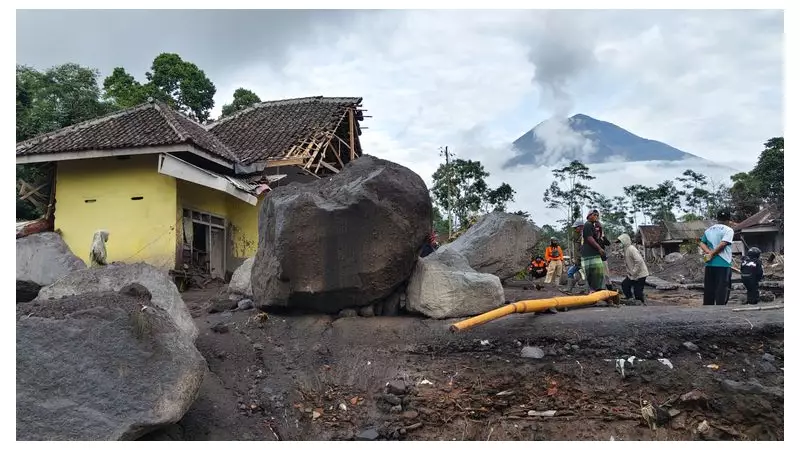
Major Volcanic Eruption Sparks Mass Evacuation
Nearly 1,000 residents from three villages on the Indonesian island of Java have been urgently evacuated to safety shelters following a significant eruption of Mount Semeru, the nation's highest volcano. The dramatic event unfolded on Wednesday, 19th November 2025, sending a dense column of searing hot clouds more than a mile into the sky and casting a dangerous shadow over the surrounding region.
Rescue Operations and Immediate Aftermath
In a swift rescue operation, more than 170 individuals were saved from the volcano's slopes. This group included climbers, porters, guides, and tourism officials who found themselves stranded at the Ranu Kumbolo camping area after the eruption began. According to Priatin Hadi Wijaya, head of the Centre for Volcanology and Geological Disaster Mitigation, the party had set out to climb the 3,676-metre peak that same day.
Officials from Indonesia's disaster mitigation agency have confirmed that, thankfully, no casualties have been reported during the evacuation of those most at risk in the Lumajang district. However, Hetty Triastuty from the same centre warned that climbers may have been exposed to hazardous volcanic ash.
Scientific Analysis and Ongoing Threats
The eruption propelled pyroclastic density currents—lethal, ground-hugging flows of ash and debris—up to eight miles (13km) down the volcano's southern slopes through the Besuk Kobokan River valley. Muhammad Wafid, head of Indonesia's geology agency, reported that a thick column of hot clouds rose 1.2 miles (2km) into the air during eruptions that persisted from midday until dusk.
In response to the increasing activity, scientists raised the volcano's alert status to the highest level. "Mount Semeru's seismicity activity indicated that the eruption continued at a high level, with increasing numbers of signals indicating avalanches," Mr Wafid stated. He issued a stern warning for people to stay away from the area along the Besuk Kobokan River, the primary path for the lava flow, noting that the existing five-mile danger zone may be expanded.
The eruptions throughout the day blanketed several villages in thick volcanic ash, so dense that it blocked out sunlight. Local media reported a severe incident where two motorcyclists crashed on an ash-covered bridge, sustaining serious burns.
Historical Context and Regional Vulnerability
This event is a stark reminder of the volcano's destructive power. Mount Semeru, also known as Mahameru, has erupted many times over the past two centuries. Its last major eruption in December 2021 proved tragic, resulting in 51 fatalities, hundreds of burn victims, and the displacement of over 10,000 people.
The Indonesian archipelago is situated on the Pacific "Ring of Fire," a horseshoe-shaped zone of intense seismic and volcanic activity. Despite the known risks, tens of thousands of people continue to live in the vicinity of Indonesia's 129 active volcanoes, highlighting the complex challenges of disaster mitigation in the region. Seismic activity suggests this latest eruption is not over, with officials anticipating it will continue.



