
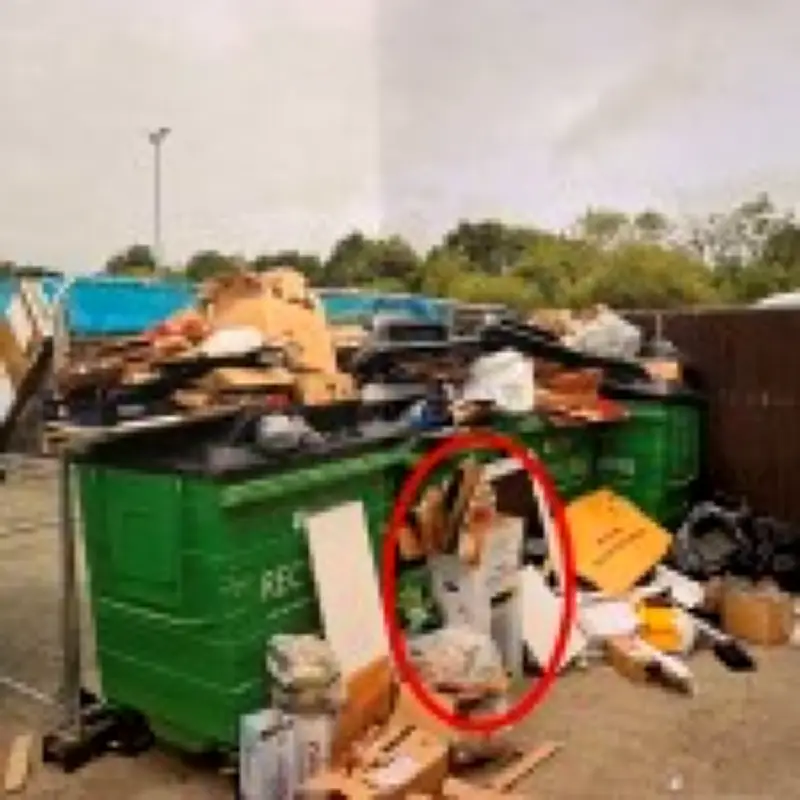
Lee Reynolds, a resident of New Milton, Hampshire, was issued a £1,000 fine for fly-tipping after leaving a cardboard box next to overflowing recycling bins at a Tesco store on May 31. The penalty, imposed by New Forest District Council (NFDC), was later reduced to £150, but Reynolds has vowed to continue his fight against the charge.
Incident Details
Reynolds had visited the recycling site at Tesco in New Milton to dispose of cardboard. Upon arrival, all four recycling bins were overflowing with rubbish. Unable to place his cardboard inside, he left the box on the ground nearby. On June 3, he received a penalty notice for 'illegally depositing waste,' which he described as making him feel 'physically sick.'
Photographs taken at the time of the alleged offence show the bins completely full, with waste piled around them. Reynolds argued that the signage warning against leaving waste was obscured by the volume of rubbish already present. NFDC claimed the bins were emptied three times a week, but Reynolds' evidence contradicted this assertion.
Appeal and Fine Reduction
Reynolds appealed the notice, but NFDC reclassified the offence from fly-tipping to 'failure to control household waste,' reducing the fine to £300, or £150 if paid by July 3. Facing a deadline and the threat of prosecution, Reynolds reluctantly paid the reduced fine. He stated, 'I tried several routes of appeal, and basically NFDC did not accept my argument that the signs were obscured. With the deadline looming I felt I had no choice but to pay the £150, so reluctantly that’s what I did.'
Despite paying, Reynolds remains dissatisfied. He has escalated the matter to the district council's complaints process and, if unsuccessful, plans to lodge a complaint with the Local Government and Social Care Ombudsman. He expressed frustration, saying, 'The level of waste piled up is a fire hazard. There is just rubbish everywhere and the whole area is a mess. It seems extremely unfair that the council fails to keep the area tidy and I’m the one that ends up with a fine.'
Council Response
A spokesperson for NFDC declined to comment on individual cases but stated, 'While we recognise that many residents are keen to recycle and dispose of their waste responsibly, placing waste next to full containers at the community recycling sites is fly-tipping. Fly-tipping and failure to control household waste is an offence, and not only unsightly but causes environmental hazards. It can also lead to additional costs for the council, for example, where waste becomes contaminated and cannot be recycled.'
The spokesperson added that the council had seen an increase in fly-tipping at the location and had taken steps to address it, including remodelling the site and installing additional signage on May 20, prior to Reynolds' incident. However, Reynolds maintains that the signage was not visible due to the overflowing bins.
Broader Context
This case highlights ongoing challenges with waste management at recycling sites, particularly when bins are not emptied frequently enough to meet demand. Reynolds' experience underscores the tension between individual responsibility and council obligations to maintain clean and accessible disposal facilities. The outcome of his complaint may set a precedent for similar disputes in the future.



