
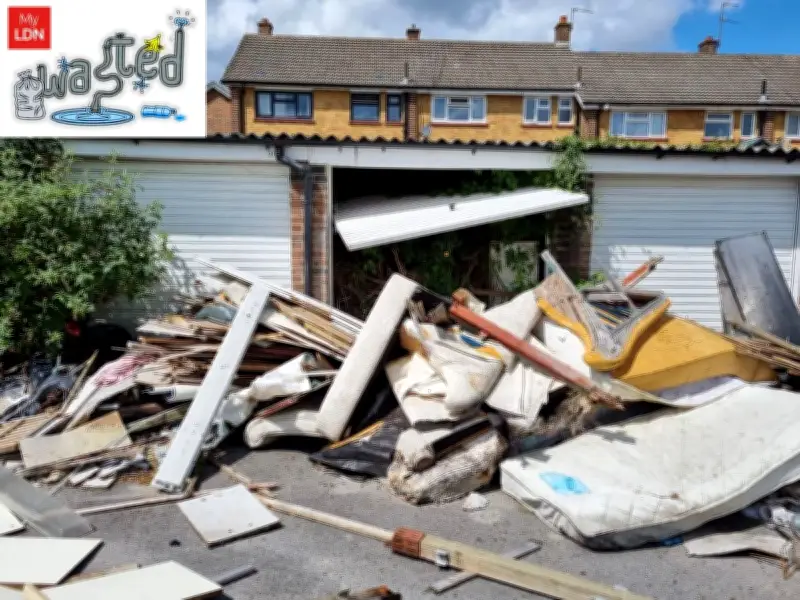
London's fly-tipping crisis has been blamed on a perfect storm of consumerist culture, buildings inadequate for modern waste management, and confusing variances in rules depending on where you live. Other factors include disposal charges stopping people in deprived areas from getting rid of waste responsibly, and a high turnover of residents in certain types of homes.
London has the highest rates of fly-tipping in the UK, with 481,088 incidents recorded in 2024/25 – an increase of 8 per cent on the previous year – representing more than double the number of incidents per head than any other region in England. Almost 60 per cent of incidents involve household waste, according to the Department for Environment Food and Rural Affairs (DEFRA).
Lack of Knowledge and Deprivation
Dr Helen Holmes, Senior Lecturer in Sociology at the University of Manchester, told the London Assembly Environment Committee that some fly-tipping was linked to deprivation and a lack of accessible information, rather than criminal intent. "This includes not having the resources to pay for bulky waste collections or access to transport to move excess waste to municipal recovery facilities," she said. She noted that housing tenure and type play a role: rented accommodation may lack adequate bins, and tenants may not receive proper waste information from local authorities.
Casey Dalton, Chief Executive Officer of Harrow Litter Pickers, added: "Legitimate waste disposal is never the easiest option because you can always take your item out onto the grass verge at eleven o'clock in the evening for free. So what we really need to do is to encourage people to be doing the right thing." She highlighted that awareness of free disposal services is often the biggest gap.
High Density Streets and Consumerism
Dr Holmes suggested that London's concentration of residents and buildings results in less space for easy waste disposal. "We've got high density housing, tightly packed streets, homes without any outdoor space where bins may be able to go or homes which you have communal waste spaces where it's very difficult then to manage what goes in those bins," she said. Dr Anna Scott, Director of Services at Keep Britain Tidy, added that properties built before modern waste management standards "breeds more waste" as people see litter on the streets.
Dr Scott also blamed modern consumerism, noting that people have access to more stuff than ever and want to get rid of it quickly. "Fly-tipping is a by-product of how we don't manage our waste well in this country. These are items that could have been reused, recycled, had a better destination than being left on the street."
Disposal Costs and Criminal Enterprise
Barry Russell MBE, a Regulated Industry Environment Manager at the Environment Agency, said avoiding disposal charges is a "very significant" reason for the increase in illegal dumping. "It could be hazardous waste, which is very expensive to get rid of. The avoidance of those disposal charges are certainly up there as one of the big reasons why we're seeing an increase in illegal dumping," he said. Dan Cooke, Director of Policy at CIWM, noted that small businesses are often barred from household waste recycling centres or charged, making legal disposal complicated.
Over a third of illegal dumping at scale is caused by serious and organised criminal gangs, the panel said. "The perception of the risk is low," Mr Russell said. "It's previously been described as a new narcotics in terms of the money that there is within illegal waste. The perceived risk is very, very low to those involved with it. There's little chance of being caught and weak penalties."
Ministers have recently introduced reforms, including an extra £45 million over three years for the Environment Agency and new powers to close loopholes. Digital waste tracking will make it easier to identify waste origins, but court backlogs are holding up prosecutions.



