
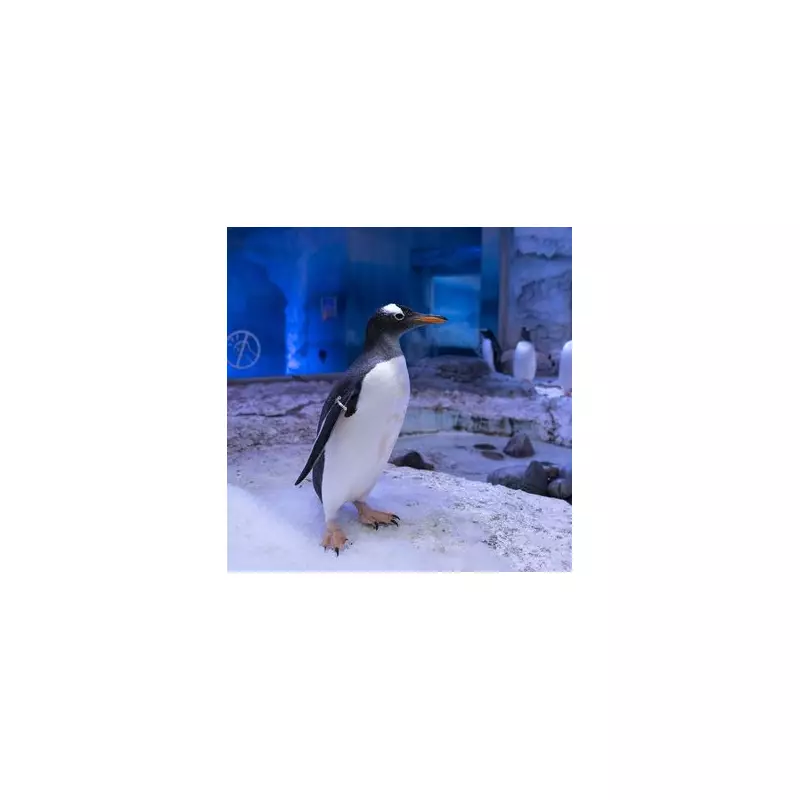
Aquarium Vows to Review Penguin Enclosure After Political Pressure
The owners of the Sea Life London Aquarium have committed to engaging with critics and listening to 'constructive ideas' regarding the care of their gentoo penguins. This significant move follows a mounting campaign against the birds' captivity, which garnered support from 75 Members of Parliament and prominent animal welfare activists.
Merlin Entertainments, the global operator behind the central London attraction, announced it would hold conversations with a diverse range of individuals concerned about the welfare of the 15 penguins housed in an indoor enclosure. The company stated its intention to genuinely listen, learn, and understand different perspectives on the issue.
Political and Public Backlash Intensifies
The decision comes in direct response to a powerful coalition of MPs from across the political spectrum. They signed an open letter to Environment Secretary Emma Reynolds, demanding an urgent review into the welfare of the birds.
The politicians echoed campaigners' descriptions of the penguins as being 'trapped in a basement without sunlight or fresh air' at the riverside venue, located just a short walk from the Houses of Parliament. In their letter, the group asked the minister to 'consider whether the penguins should be relocated to a more suitable facility' that better meets their behavioural and physiological needs.
This public pressure was amplified by a petition from the campaign group Freedom For Animals, which has collected more than 37,000 signatures calling for the penguins' move. The cause has also attracted high-profile supporters, including musician and environmentalist Feargal Sharkey, and naturalist Chris Packham, who attended a protest outside the aquarium.
Aquarium's Defence and Proposed Path Forward
In their defence, Merlin Entertainments challenged the characterisation of the enclosure. A spokesperson clarified that the habitat is on the ground floor, not in a basement, and is cared for daily by a team of animal welfare specialists and aquarists.
The company emphasised that the enclosure is designed to replicate the penguins' natural habitat with a climate-controlled temperature and filtered fresh air. They argued that these specific conditions, which safeguard the birds' health, cannot be easily replicated outdoors. Releasing these penguins, who have always lived in human care, into the wild was stated as not being a safe option.
Despite this stance, the spokesperson acknowledged the strong public sentiment. 'We recognise that some groups and individuals feel strongly that a different approach is needed. We hear that and we respect it,' they said. The company now plans to facilitate one-to-one and group discussions with campaign groups, specialists, and political representatives.
The spokesperson concluded that any alternative would have to guarantee the same high standard of health and wellbeing the penguins currently experience, and that future decisions will continue to rely on expert advice while incorporating this wider range of voices.



