
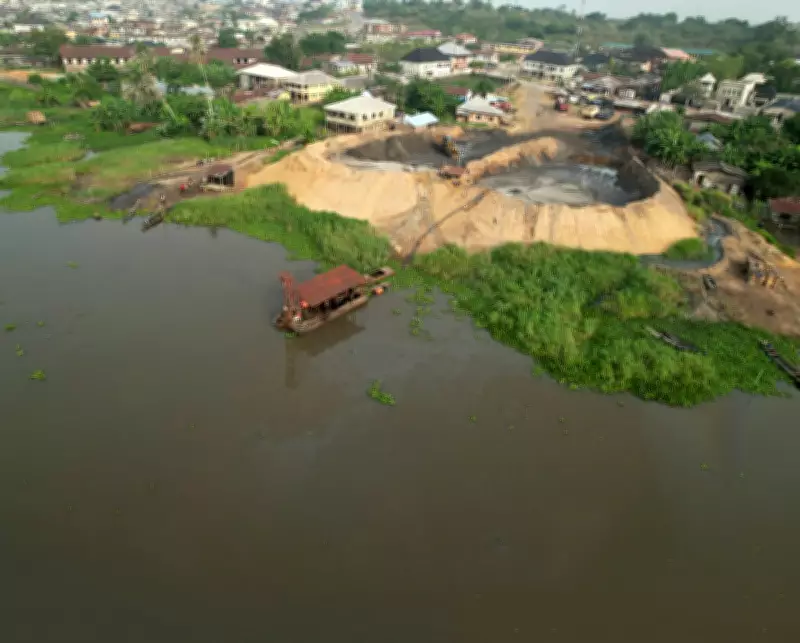
Lagos Lagoon Dredging Crisis: Sand Mining Erodes Coastlines and Livelihoods
Before dawn breaks over Lagos, the city's lagoon stirs not with the natural rhythms of fish or canoes, but with the relentless hum of dredging machines. These industrial behemoths, armed with long suction pipes, extract wet sand from the lagoon bed to fuel a relentless construction boom. This sand is destined for high-rise blocks, sprawling housing estates, and expansive flyovers, driving urban development at a staggering pace.
While sand dredging is technically regulated by the Lagos state government and the National Inland Waterways Authority, enforcement in this megacity of over 20 million people is notoriously weak. The insatiable demand for sharp sand has spawned widespread unregulated operations, leading to severe environmental and social consequences.
Ecological Devastation and Coastal Erosion
A recent study by the Nigerian Institute for Oceanography and Marine Research (NIOMR) reveals alarming data: unregulated dredging and mining have eroded the seabed by nearly 6 meters along a critical 5km stretch between the reclaimed Banana Island and the Third Mainland Bridge. This area serves as a vital channel linking Lagos's island districts to the mainland.
Dr. Nnimmo Bassey, director of the ecological thinktank Health of Mother Earth Foundation (Homef), warns, "When you dredge sand at that scale without proper environmental impact assessments, it wipes out certain species, harming fisheries and everyone dependent on them." The damage extends far beyond the immediate dredging sites, causing significant harm to marine life and disrupting the entire food chain.
Fishing Communities in Peril
For coastal communities like Epe, Oto-Awori, Era Town, and Makoko, the lagoon was once a dependable lifeline. Now, it has become an unpredictable and hostile environment. Fasasi Adekunle, a 55-year-old fisher from Epe with over three decades of experience, describes the drastic change: "We used to cast our nets at 7pm and return before midday with enough tilapia to earn at least 30,000 naira. Now, we travel farther, spend more on fuel, and often return empty-handed."
The economic impact is severe. Ajoke Orebiyi, a 42-year-old fishmonger in Oto-Awori, reports that her income has halved in five years. A decade ago, she needed three boatloads to meet demand; now, she struggles to secure even one. Rising fuel costs and dwindling catches force price increases, straining relationships with customers who can little afford them.
Broader Environmental and Social Impacts
Dredging increases water turbidity, muddying the lagoon and destroying essential breeding grounds for fish. Jeremiah, a 77-year-old fisher, observes, "When the dredgers operate, the water turns cloudy. Fish move away, and sometimes we find them floating dead on the surface." Beyond fisheries, the practice endangers sea turtle nesting sites and migratory bird habitats, pushing regional species toward extinction.
Dr. Joseph Onoja, director general of the Nigerian Conservation Foundation (NCF), notes, "We are seeing early signs of ecosystem collapse. Sand dredging intensifies pressures like sea-level rise and stronger waves, which erode shorelines and displace long-established communities." Each rainy season brings homes perilously closer to the encroaching water, as noted by Ogbemi Okuku, a 20-year-old resident of Era Town, who laments, "As Lagos rises, our land washes away."
Global Context and Local Realities
This crisis is part of a global narrative where sand, the second-most extracted resource after water, is crucial for concrete, glass, and asphalt. In Lagos, the stakes are heightened due to its flood-prone, low-lying geography, making it vulnerable to sea-level rise and sediment disruption. Mark Ofua, West Africa representative for Wild Africa, reports that over 230 fish species in Nigeria's inland waters are declining, partly due to dredging activities.
Despite existing regulations, enforcement is minimal. Dredging often occurs at night to evade detection, with operators frequently changing locations. Allegations of complicity among local leaders further complicate the issue, as community organizers report that traditional endorsements silence opposition and foster fear among residents.
Economic Drivers and Advocacy Efforts
The economic incentives are powerful. Sand mining is highly lucrative, driven by constant demand for land development and the transformation of swamplands into luxury real estate. For local power brokers, covert deals with dredging firms offer discreet profits, while for artisanal miners like Wasiu Olaniyi, a 36-year-old former bricklayer, it provides a vital lifeline in a struggling economy.
Environmental activists at Homef and conservationists at NCF advocate for comprehensive environmental monitoring, habitat restoration, and a moratorium on dredging in sensitive areas. Dr. Onoja emphasizes, "Development must be sustainable so we don't destroy the ecosystems that sustain us. There's a breakdown in scientific assessment, EIA approvals, enforcement, and political commitment—the government must be held responsible."
Requests for comment from the Lagos State Ministry of Waterfront Infrastructure and Development and the National Inland Waterways Authority went unanswered, leaving the future of Epe and other fishing communities uncertain amidst ongoing environmental degradation.



