Japan's Oyster Heartland Confronts Existential Crisis
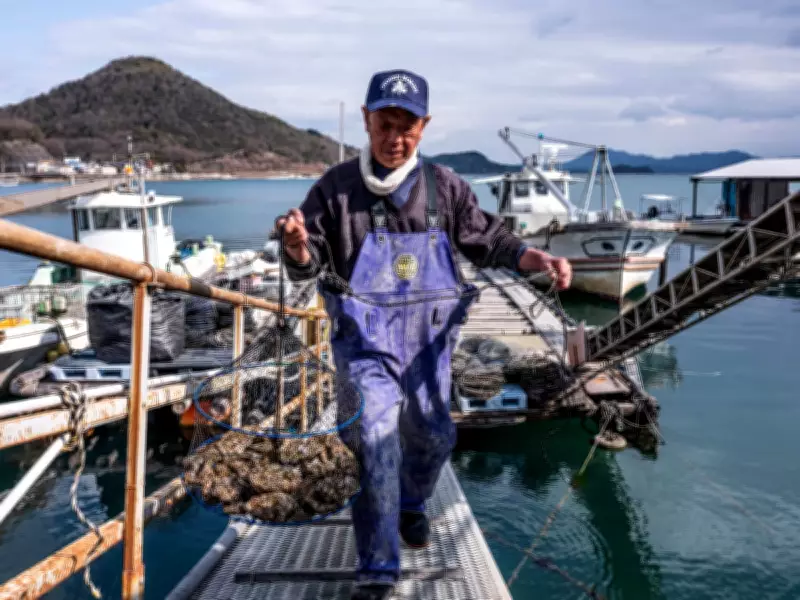
In the coastal city of Kure, where oyster festivals typically celebrate Hiroshima prefecture's most prized culinary contribution, a palpable anxiety has replaced the usual festive atmosphere. Taketoshi Niina, the second-generation leader of Niina Suisan, a family oyster farming business with over 70 years of history, surveys his operations with growing despair.
"This season is a complete disaster," Niina declares, his voice heavy with concern. "When we bring up our oysters, about 80% are already dead. Those that survive are in such poor condition they're unsellable to restaurants and markets."
The Scale of the Catastrophe
Hiroshima prefecture, responsible for nearly two-thirds of Japan's farmed oyster supply, is experiencing unprecedented mortality rates. While typical seasons see 30-50% losses, this year's die-off has reached a staggering 90% in some areas according to fisheries ministry data. The region produced 89,000 tons of oysters in 2023, representing the lifeblood of local economies throughout the Seto Inland Sea.
Tatsuya Morio, an oyster farmer with more than two decades of experience, expresses shock at the situation. "I've never witnessed anything like this in my entire career," he says, reflecting the sentiment spreading through fishing communities from Hiroshima to Hyogo prefectures.
Climate Change's Devastating Impact
The primary culprit behind this ecological and economic disaster is increasingly clear: warming seas driven by climate change. Last summer marked Japan's hottest on record since 1898, with temperatures averaging 2.36°C above normal. This extreme heat created a cascade of problems for oyster cultivation.
Shoichi Yokouchi, head of marine products at the Hiroshima prefectural government, explains the mechanism: "Prolonged high temperatures weaken oysters, making them vulnerable to viruses and bacteria. When water temperatures remain elevated for weeks, the delicate balance these creatures need to survive is completely disrupted."
Data reveals that coastal waters from July to October 2023—critical months for oyster development—were 1.5°C to 1.9°C warmer than the 1991-2020 average. This temperature spike created stratified water layers that prevented oxygen from reaching the seabed where oysters feed and grow.
Economic Ripple Effects
The crisis extends far beyond individual fisheries. Tomonori Uemoto, director of fisheries promotion for Kure municipal government, outlines the broader implications: "Kure's oyster production supports numerous sectors—not just fishing but distribution networks, food tourism, and local employment. The impact will be significant and widespread."
Evidence of the shortage is already visible. The popular Kure Oyster Land restaurant, where diners traditionally steam buckets of fresh oysters at their tables, will close earlier than usual this season. Even Japan's hometown tax support program, which typically rewards donors with raw oysters, has suspended this offering due to insufficient supply.
Scientific Analysis and Potential Solutions
Kazuhiko Koike, a professor at Hiroshima University's Graduate School of Integrated Sciences for Life, provides detailed analysis of the environmental factors: "Multiple abnormal conditions caused by global warming are converging—high air and water temperatures, low oxygen levels, insufficient rainfall, and nutrient shortages. These create a perfect storm for mass oyster mortality."
Koike suggests potential adaptation strategies, including relocating oyster rafts to cooler waters or suspending them at greater depths to avoid surface heat. However, he acknowledges the fundamental challenge: "It's difficult to put the brakes on climate change. If we experience another early, dry rainy season followed by prolonged high temperatures, we'll likely see these conditions repeat."
Government Response and Industry Future
Recognizing the severity of the situation, Japan's fisheries agency announced emergency support measures in December. These include five-year government loans at virtually zero interest and access to mutual aid programs specifically designed for aquaculture businesses facing climate-related challenges.
For multi-generational operations like Niina Suisan, the future appears increasingly uncertain. Taketoshi Niina, who left corporate employment a decade ago to continue his family's tradition, now questions whether there will be anything left for his son to inherit. "My son decided he wants to take over the business, but this year I've begun worrying whether there's any future for him in this industry," Niina confesses.
The crisis in Hiroshima's oyster beds serves as a stark warning about climate change's tangible impacts on traditional industries and food security. As fisheries throughout the Seto Inland Sea confront this new reality, the survival of Japan's oyster culture—and the communities it supports—hangs in precarious balance.