
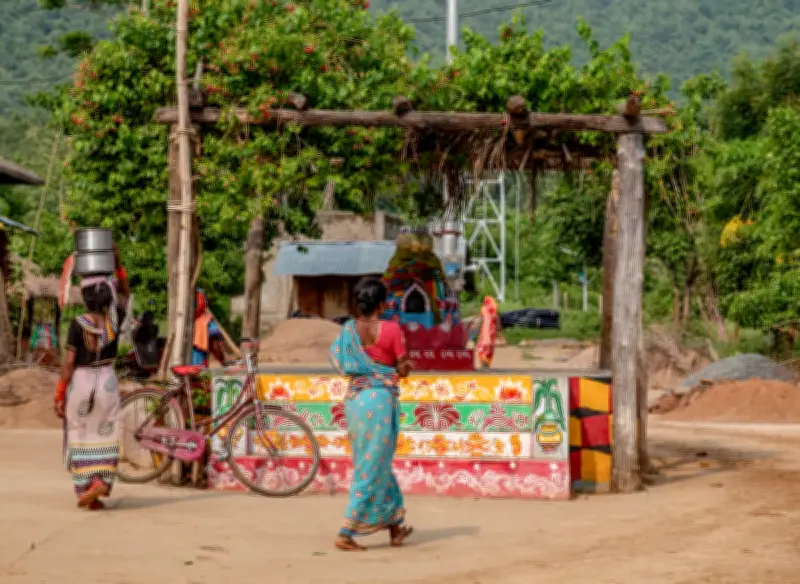
In Laxmipur village, Odisha, farmers recall the 2023-24 El Niño when crops failed. Now, as a 'super' El Niño intensifies, the monsoon arrived late, leaving fields untouched until late June. The Raja festival, traditionally celebrating the start of rains on June 14-16, saw clear skies.
Farmers Celebrate Raja Festival Amid Dry Conditions
Kasturi Gamango and Pramila Sabar describe the Raja festival, where women enjoy three days off while husbands cook and clean. This year, however, the celebration lacked rain. The monsoon did not arrive until the end of June, delaying sowing.
El Niño Weakens Monsoon, Causes Drought
Global experts declared a 'super' El Niño, expected to intensify from July to September. In India, El Niño years bring weak monsoons, delayed rainfall, dry spells, and extreme temperatures, leading to agricultural droughts and water shortages. June ended with a 40% rainfall shortfall, and Odisha has faced at least 19 droughts in 50 years.
Mangala Sabar, 45, remembers failed transplanting attempts during the last El Niño. Sanjith Mandal, 24, recalls taking a loan of 30,000 rupees (about £235) at high interest after crop failure. According to Nitin Bassi of CEEW, nearly 50% of Odisha's cultivated area is rain-fed, and delayed monsoon reduces soil moisture, affecting both summer and winter crops.
Farmers Struggle Without Irrigation
In Mali Jagannathpur village, farmers await canal water from a reservoir. K Sukumari, 28, a widow, cannot farm her husband's plot due to water shortage. Her borewell has dried up, and rainfall has been deficient for years. She works in a brick kiln and others' fields to survive.
Chandni Singh, IPCC lead author, notes that farmers are innovating but cannot endlessly adapt. Distress migration occurs in some areas, but remittances help. Liby Johnson of Gram Vikas emphasizes water security and weather certainty for long-term resilience.
Weather Forecasting and Adaptation Efforts
Gram Vikas installed automatic weather stations, like one on Mangala Sabar's roof, providing weekly forecasts in Odia. The India Meteorological Department delivers tailored forecasts to 38 million farmers via SMS. Government advisories recommend delayed sowing and drought-resilient crops, but uptake is limited. Singh says farmers rely on local knowledge and peers, not just data.
Johnson stresses the need for an evolutionary process in cropping changes, building community confidence in accurate information. S&P Global warned that a weak monsoon could drive up inflation and strain fiscal balances. July rains narrowed the deficit to 21%, but uncertainty remains as El Niño strengthens.
Mangala Sabar remains resolute: 'How can we know if it will rain adequately? We will sow the seeds regardless because we are farmers.'



