
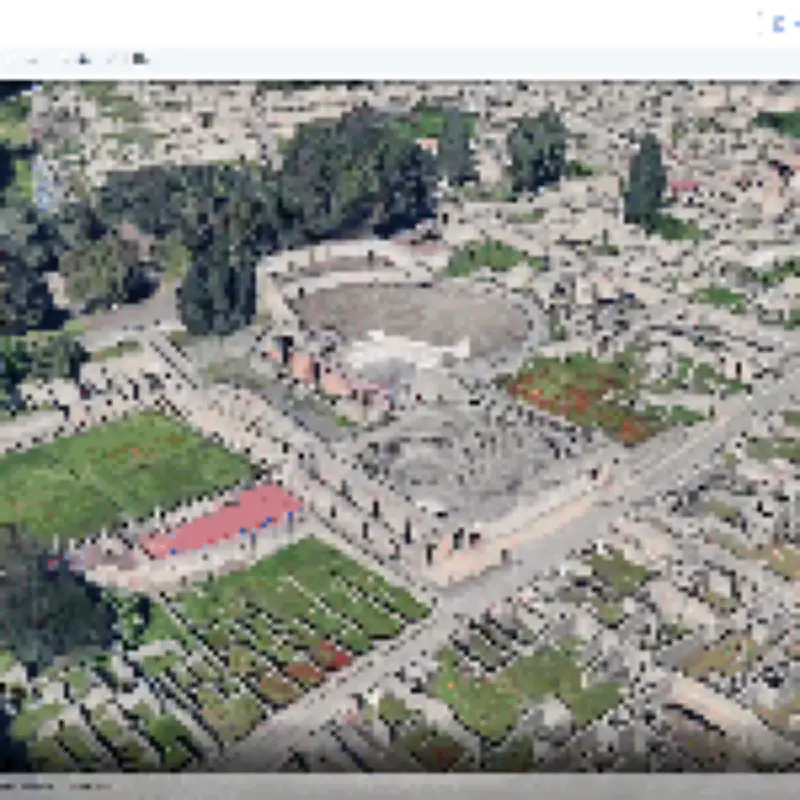
Google has abruptly pulled its new AI-powered image generation feature in Google Earth, just 24 hours after a worldwide rollout, after users and experts demonstrated how easily the tool could create convincing fake satellite images depicting disasters, terrorist attacks, and other misleading scenes.
Feature removed after prompt misuse
The feature, introduced on Thursday, allowed users to type text prompts to edit real satellite imagery, turning car parks into gardens or showing historical scenes. However, within hours, social media users and researchers had generated images of a plane hitting a Manhattan skyscraper, a nuclear plant in Iran, and a bomb blast in Los Angeles.
AI researcher Henk van Ess demonstrated the problem in a blog post on Thursday, writing: "Tonight I typed just one sentence into Google Earth and put refugees near the Mexican border. Then I planted a nuclear plant in Iran. Then I put a fatal crash on a street in Amsterdam. Google’s own satellite imagery underneath all three. What on earth is Google doing?"
Van Ess also recorded himself prompting Google's AI model, Nano Banana, to insert a traffic accident in Amsterdam. The model forged an image of a red car smashed into a building, with shattered glass on the road. He noted that the refugees he "planted" were still sitting on that road, and the nuclear plant was still in Iran, emphasizing that such images could easily be mistaken for real satellite evidence.
Experts warn of credibility transfer
Technology news outlet 404 Media found the tool could add a bomb blast and crater to Los Angeles in about ten seconds. The BBC generated images of a collapsed Eiffel Tower, a sinkhole swallowing the Great Pyramid of Giza, and Russian tanks in Kyiv, Ukraine.
Van Ess told Metro that while making fake images is nothing new, the ease of creation is unprecedented. "Every fake you could make with this tool was possible in Photoshop 20 years ago," he said. "The barrier was never skill, it was effort."
He stressed that Google Earth has long been a trusted source for open-source intelligence (OSINT), used by journalists and investigators. "A satellite image isn’t a memory, it’s a record – courts, insurers and war crimes investigators treat it as evidence of what stood on a patch of ground on a given day," van Ess said, pointing to warzone reporting.
"You don’t get better fakes, you get far more of them, from people who’d never have bothered," he added. "And they arrive welded to real coordinates, in the same light and at the same angle as the genuine capture beside them. The forgery doesn’t have to be convincing on its own. It inherits the credibility of the map it came from."
Google responds with rollback
On Friday, Google announced it was rolling back the feature. In a post on X, the company said: "We know that people uniquely trust Google Earth for a reliable view of the world. We’ve seen geospatial professionals using this feature for a range of useful purposes, however, we’ve also seen people sharing screenshots of generated imagery that appear to violate our policies. So we’re rolling back this feature in Google Earth while we work on implementing stronger guardrails."
Google added that generated images did not appear in the main Google Earth experience for others to see and were watermarked as AI-generated using its SynthID technology. However, the company did not specify which images violated its policies.
Van Ess questioned whether safeguards can ever hold up, especially as AI images degrade every time they are screenshotted, potentially removing watermarks. "So keep AI on the reading side of satellite imagery," he said. "Shelve it on the painting side."
This incident follows a similar U-turn by Meta last week, when it unveiled an AI tool that could edit people's public Instagram posts. Users had to manually opt out, and the company admitted three days later that it "missed the mark" with the feature.



