
Gold Rush Divides Rural Tyrone as Public Inquiry Reopens
In the quiet, hilly landscapes of County Tyrone, Northern Ireland, a bitter conflict over a proposed £21 billion gold mine has torn a small community apart. On Monday, a public inquiry will resume, nine years after Dalradian Gold, a US-owned mining company, first submitted plans to extract gold from the Sperrins mountain range. This long-delayed process has ignited a toxic local battle, pitting environmental activists against proponents of economic development.
Retirement Plans Derailed by Mining Threat
Fidelma O'Kane, a retired social worker and lecturer, envisioned a peaceful retirement filled with travel, wine, and books in her lifelong home in rural Tyrone. Instead, a neighbor's casual remark about gold mining in the Sperrins set her on an all-consuming mission. Her husband, Cormac McAleer, a retired community worker, immediately recognized the dangers, stating, "Goldmining. That's bad news." The couple has since dedicated their lives to opposing the mine, researching global mining impacts and rallying local opposition through groups like Save our Sperrins.
Below their kitchen, where they share tea and toast, lies one of the world's richest unexploited gold seams, valued at over £21 billion at current prices. O'Kane and McAleer are determined to keep it underground, citing risks to the area's natural beauty, wildlife, and public health. "From when we get up in the morning to when we go to bed at night, we are focused on this," O'Kane explains, noting that even their sons plead for conversations unrelated to mining during family gatherings.
Economic Promise Versus Environmental Peril
Dalradian Gold argues that the Curraghinalt mine project will bring substantial benefits, including 1,000 local jobs, a £3 billion tax windfall, and a £1 billion supply chain boost. The company claims the mine will be carbon-neutral, using electric and biofuel vehicles, and will not pose health risks. Gerry Kelly, a 56-year-old local mechanic and chair of The Silent Majority group, supports the mine, stating, "Most people want a quiet life, but they would all grab a good high-paying job on their doorstep if it was available." He believes regulatory authorities can ensure safe operations.
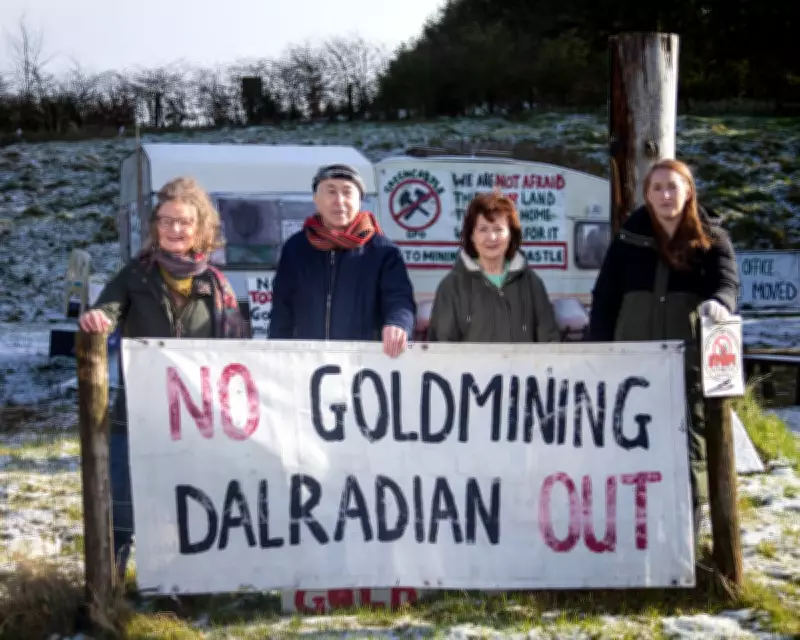
However, opponents like Marella Fyffe, a 67-year-old former yoga teacher who now campaigns full-time, see the conflict as a clash of values. "It's a fight for the heart of humanity," she says. "Our values are our language, our home, our community – that's what's valuable to us. These other people – their values are money, growth, extractivism, capitalism." Campaigners have documented wildlife, including otters and freshwater pearl mussels, and staged occupations at the "Greencastle People's Office" encampment to highlight their cause.
Deep Community Rifts and Intimidation Claims
The decade-long dispute has fractured this tight-knit community, where everyone knows each other's stance on the mine. Former friends no longer speak at local chapels or petrol stations, and both sides report instances of intimidation and death threats. Sinéad Ní Mhearnóg, a 37-year-old Irish language development officer, notes that while the community tries to maintain cohesion, "it has definitely changed the community." Anti-mine campaigners point to over 50,000 letters of objection, while pro-mine voices question the authenticity of some submissions.
The public inquiry, overseen by Northern Ireland's Planning Appeals Commission, will run until early June in Omagh. Commissioners will then recommend a decision to Stormont ministers. Campaigners have crowdfunded to hire experts, including a Utah-based geophysicist, to testify. If the decision goes against them, O'Kane vows, "We literally will have to lie on the ground and put our bodies in front of the machines."
High Stakes and Global Implications
Dalradian has invested over £250 million in the project without guarantee of approval, driven by the Sperrins' staggering mineral wealth. The site contains not only gold but also silver, copper, and critical minerals like antimony and tellurium. With ore carrying up to 300 grams of gold per tonne—far above the global average—the potential annual extraction could be worth nearly £500 million.
This local battle mirrors global conflicts over resource extraction, with campaigners like Fyffe connecting with international environmental defenders. As the inquiry resumes, the outcome will set a precedent for balancing economic development with environmental preservation in Northern Ireland's rural heartlands.



