
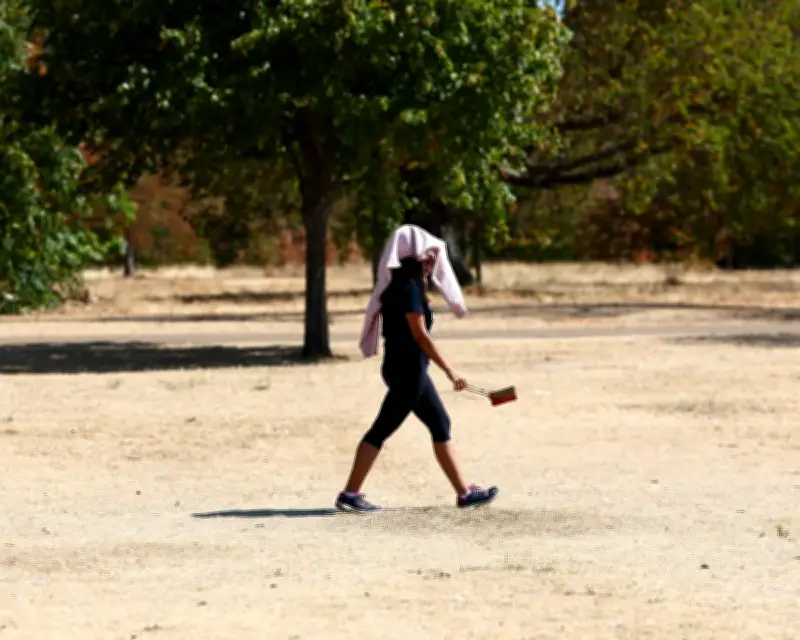
The National Drought Group is set to convene on Monday to assess the situation across England, with expectations that drought will be declared in additional regions, including the north-west. This comes as much of Europe braces for its fifth heatwave of the summer.
Liz Bentley, chief executive of the Royal Meteorological Society, told BBC Radio 4’s Today programme that she predicted north-west England, which currently holds a less severe “prolonged dry weather” status, would be among the areas where drought could be declared. The Environment Agency indicated on Friday that several areas were likely to see dry weather and drought status changes this week.
Record-Breaking Dry July
Last month was the driest July since records began nearly 200 years ago. The UK Centre for Ecology & Hydrology described the lack of rainfall as unparalleled. River flows declined rapidly across the UK during July, with only catchments in the far north of Scotland remaining above normal levels. This month, groundwater levels are expected to be normal to below normal in the chalk and Jurassic limestone aquifers of England, and notably low in the carboniferous limestone in south Wales.
Half of England and all of Wales are officially in drought, and approximately 40% of England’s population is under a hosepipe ban. The expected drought announcement coincides with the UK preparing for its fifth heatwave of the summer. Tom Morgan, a Met Office meteorologist, said Thursday looked set to be the hottest day of the week, with a small chance that temperatures could exceed 36C in some places.
Europe's Heatwave
Many other parts of Europe are also bracing for another heatwave. The French national weather agency said on Monday that the south-east would see temperatures as high as 35C, spreading further across France as the week progresses. Italy and coastal Croatia are already experiencing extreme heat. Countries including Slovakia, Austria, and Hungary have registered record temperatures over the past few days. Last Thursday, the Slovakian hydrometeorological agency reported a new high of 42C in Dolné Plachtince.
This summer’s heatwaves and extreme dry weather have been made more intense and more likely by the fossil fuel-driven climate crisis. Scientists said the June heatwave that affected much of western Europe was only possible due to the climate crisis.
Political Reactions
The Green party leader, Zack Polanski, has accused Labour of “gross negligence” for its failure to act over the heatwaves and said this summer’s heat was the “greatest crisis this country has faced since the second world war”. Downing Street defended the government’s response to the heatwave and wildfires this summer. The prime minister’s official spokesperson said on Monday: “Our climate is changing. Droughts are becoming more common, which is why we’re focused on both the immediate response and long-term resilience.”
Health Alerts and Deaths
England is on track to record its highest ever number of heat-related deaths this summer, after the UK Health Security Agency (UKHSA) announced that an estimated 2,877 people died in the May and June heatwaves. The UKHSA has updated heat health alerts for nine regions in England, warning that rising temperatures this week may increase health risks, particularly for vulnerable groups. Amber alerts will be in place for Yorkshire and the Humber, West Midlands, East Midlands, east of England, south-east, London, south-west and north-west regions from 9am on Tuesday to 9pm on Friday. The north-east will be under a yellow alert during the same period.
Amber alerts mean an increased likelihood of health impacts for those aged 65 and older and people with pre-existing conditions, although there may also be impacts on younger people.
Water Supplies Under Strain
The Environment Agency said last month that reservoir storage had fallen to 7.4% below the average for this time of year. It said water reserves “should be enough for the coming months until the next period of sustained rainfall.” South East Water said last week that supplies in its area were “critically low” and warned customers they may lose supply unless demand for water in the area dropped. Chessington World of Adventures theme park in Surrey was forced to close on Monday due to a water outage affecting the area, working closely with Thames Water and local partners to support a “safe and timely resolution”.
River Action’s head of campaigns, Amy Fairman, called for an urgent review of abstraction licences, which permit water to be extracted from the environment, to understand “what is essential”. River Action’s analysis found there were 14,128 commercial abstraction licences across England and Wales. These licences are separate from those held by public water companies to supply drinking water. While privately owned water companies in England and Wales abstract more than 6tn litres annually for public supply, commercial abstraction licences permit a further 43tn litres each year across thousands of operators.



