
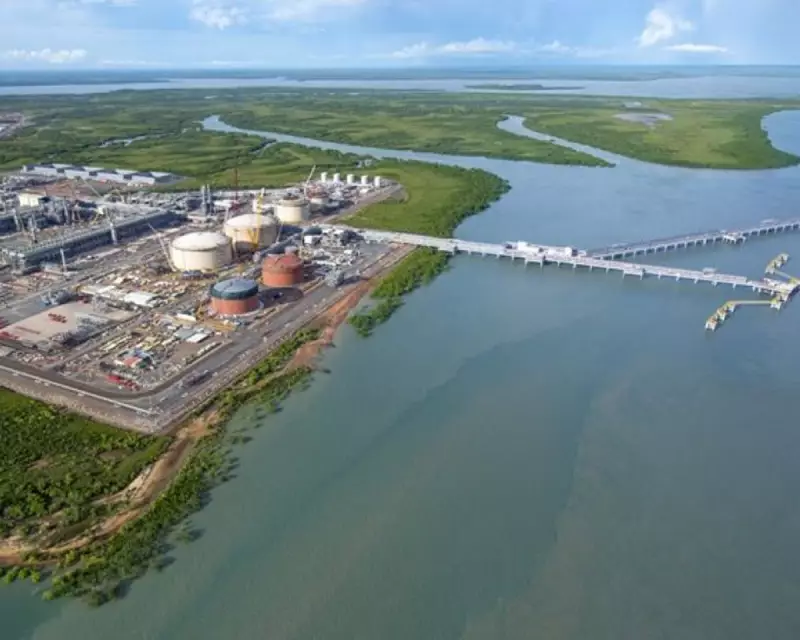
A controversial proposal to establish a carbon capture and storage facility near Charles Darwin's historic home has ignited a fierce debate between climate action advocates and heritage conservationists. The Japanese energy giant INPEX has submitted plans that would see the world's first carbon storage project located in close proximity to Down House in Kent, where Darwin developed his groundbreaking theory of evolution.
The Clash Between Heritage and Climate Solutions
INPEX's ambitious carbon capture and storage proposal aims to transport carbon dioxide emissions from industrial sites across the UK and store them deep beneath the English Channel. The project represents a significant step in Britain's journey toward net-zero emissions, but its chosen location has raised eyebrows among historians and local residents alike.
Down House, where Darwin lived and worked for forty years, remains one of Britain's most important scientific heritage sites. It was within these walls and gardens that Darwin conceived his theory of natural selection, fundamentally changing our understanding of life on Earth. English Heritage, which manages the property, has expressed serious concerns about the visual and environmental impact of the proposed development.
Technical Details and Environmental Implications
The INPEX project involves constructing pipelines that would carry compressed carbon dioxide from industrial emitters to the storage site. The carbon would then be injected into geological formations beneath the seabed, where it would remain permanently stored. Proponents argue that carbon capture technology is essential for meeting the UK's climate targets, particularly for hard-to-decarbonise industries like cement and steel production.
However, critics point to several potential risks, including the possibility of leaks and the long-term monitoring requirements. The Environment Agency has previously raised questions about the project's environmental impact assessment, particularly regarding the protection of local groundwater sources and the area's unique ecological character.
Local opposition has been growing steadily, with community groups organising protests and petitioning local authorities to reject the planning application. Many residents fear that industrial development could irreparably damage the rural character of the area and diminish the visitor experience at Down House, which attracts thousands of international visitors each year.
Broader Implications for UK Climate Policy
This controversy emerges as the UK government intensifies its focus on carbon capture as a key component of its net-zero strategy. The technology has received significant political backing and financial support, with ministers describing it as crucial for maintaining energy security while reducing emissions.
The Darwin carbon capture proposal highlights the difficult choices facing communities and policymakers as Britain transitions to a low-carbon economy. It raises fundamental questions about how to balance the preservation of cultural heritage with the urgent need to address climate change.
Similar conflicts are likely to emerge elsewhere in the UK as more carbon capture projects are proposed. The outcome of the INPEX application could set an important precedent for how such projects are evaluated when they potentially impact sites of historical significance.
As the planning decision approaches, all eyes remain on Kent, where the legacy of one of history's greatest scientific minds intersects with one of humanity's most pressing contemporary challenges. The resolution may well influence how Britain navigates the complex relationship between preserving its past and securing its environmental future.



