
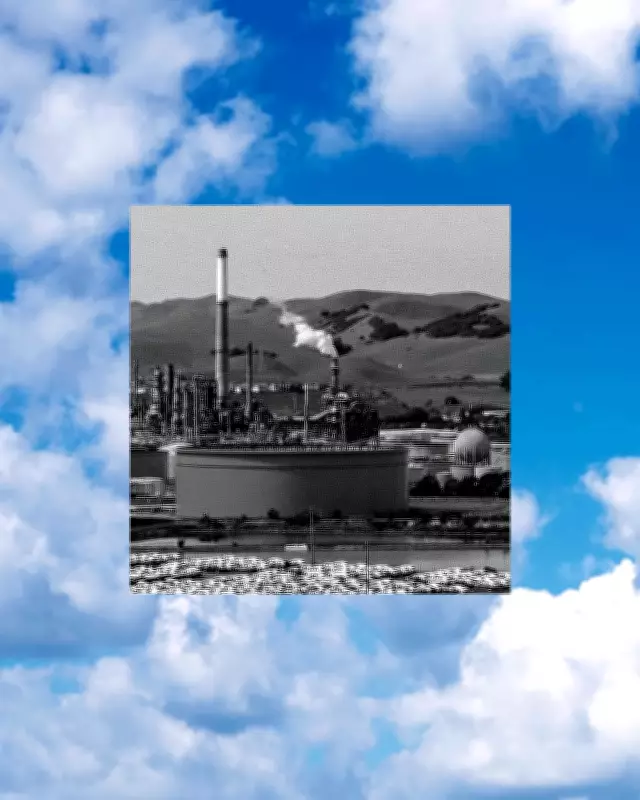
Benicia's Identity Crisis: Life After the Refinery
For nearly sixty years, the sprawling Valero oil refinery has been the defining feature of Benicia, California, shaping its economy, politics, and the very health of its residents. Now, as the massive facility prepares to permanently idle most operations by April, this quaint city of approximately 28,000 people finds itself at a crossroads, becoming an unwilling test case for whether a community built around fossil fuels can successfully reinvent itself.
The Economic Backbone Crumbles
Less than forty miles north of San Francisco, Benicia presents the picturesque image of a classic American small town, complete with a white gazebo, community crab bake signs, and a vibrant downtown lined with antique shops and cafes. Yet this charming facade has long been supported by an industrial giant: the 900-acre Valero refinery, purchased from Exxon in 2000, which has served as the city's largest employer and source of nearly twenty percent of its tax revenue.
The refinery's impending closure, announced last April citing California's "regulatory and enforcement environment," will eliminate about 240 jobs—nearly seventy percent of its workforce. This decision sends shockwaves through a community where Valero has not only provided well-paying jobs but also funded sports teams, community programs, and numerous non-profits. The financial stability of the entire city now hangs in the balance.
Mixed Reactions in a Divided Community
Local reactions to the refinery's departure reveal deep divisions within Benicia. Some leaders, like City Council member Kari Birdseye, see this as a historic opportunity for transformation. "I would like Benicia to be the poster child for a just transition for other refinery cities," Birdseye stated, envisioning possibilities for increased housing and cleaner commercial enterprises.
Meanwhile, business owners like Chantel Sprankle of Sprankle's Deli express profound anxiety. "I've lost a lot of customers," she lamented, noting that seventy-five percent of her regulars are refinery workers. "Valero leaving is the worst possible thing that could happen to our little community." Her emotional response reflects the immediate economic pain already being felt as workers begin leaving town ahead of the shutdown.
California's Clean Energy Dilemma
Benicia's predicament exposes broader challenges in California's ambitious transition to a carbon-neutral economy by 2045. While gasoline consumption has decreased by more than fifteen percent over two decades, refining capacity has declined even more sharply. The Benicia plant, one of only nine remaining gasoline-producing facilities in the state, processes about 145,000 barrels of crude oil daily, accounting for nearly nine percent of California's total production.
This supply-demand imbalance has forced even Governor Gavin Newsom, who once aggressively criticized the oil industry, to soften his stance. As closure loomed, state leaders scrambled to save the refinery, even considering paying Valero up to $200 million for routine maintenance. When that failed, they negotiated a deal for the site to become a fuel import and storage terminal—a solution that satisfies neither environmental nor local economic concerns.
A Mayor's Grave Concerns
Benicia Mayor Steve Young views the storage terminal proposal with deep skepticism. "That's a lose-lose situation for us," he explained during a lunch break at a local sports bar. "No taxes, no jobs of note, and you're still gonna have emissions coming off the tanks." The arrangement could delay environmental remediation and block redevelopment of prime waterfront property with views of the Carquinez Strait.
Young, who describes Benicia as "a hidden gem—a poor-man's Sausalito," now faces the unenviable task of identifying potential cuts to community amenities—from public pools to Christmas tree lighting ceremonies—that have been partially funded by Valero's property taxes. "It's an existential moment for our community," he acknowledged.
Health Legacy and Future Opportunities
For all its economic benefits, the refinery has exacted a heavy health toll. Benicia has the highest cancer and asthma rates in Solano County, with residents consistently exposed to toxic emissions. In 2024, Valero received a record $82 million fine for secretly exceeding emissions standards for over fifteen years—a sanction that likely influenced the closure decision.
In a small but significant victory, regional air regulators recently made $40 million in grants available for Benicia's public health and economic resilience projects, with another $20 million for local non-profits. Meanwhile, the site's proximity to deep water ports, rail lines, and interstates presents opportunities for cleaner industries, including large-scale solar or wind development.
A Cautionary Tale for Industrial Towns
The human impact extends beyond city limits. At the Plumbers and Steamfitters Local 343 union hall in nearby Vacaville, Business Manager Steve McCall reports widespread anxiety. "It's doom and gloom from the rank-and-file members," he said, noting that ten percent have already left the union since Valero's announcement. For skilled tradespeople, refinery work offered a direct path to middle-class stability, with wages ranging from $30 to over $70 per hour.
Resident Terry Mollica, a retired attorney who helped push for refinery safety rules just before the closure announcement, captures the community's complex emotions. "I don't think that locating a refinery immediately adjacent to a small city is a very good land-use plan," he observed from his backyard a mile from the facility. While acknowledging the "short-term transitional pain," he believes Benicia now has a unique opportunity to correct historical planning mistakes.
Ultimately, Benicia's story serves as a powerful cautionary tale about over-reliance on a single industry. As Mollica reflected: "This town to me has huge potential. It's a place where people want to live. And that's what should drive a community, not the fact that there's a big industry in the middle of it." The coming years will determine whether this reluctant test case becomes a model for successful transition or a warning about the costs of economic change.



