
Argentina Approves Controversial Glacier Mining Legislation
Argentina's congress has approved a contentious bill promoted by libertarian President Javier Milei, authorizing mining operations in ecologically sensitive glacier and permafrost regions. This legislative change, which has ignited widespread environmental protests, makes it significantly easier to extract valuable metals such as copper, lithium, and silver from frozen parts of the Andes mountains.
Legislative Approval and Environmental Backlash
The chamber of deputies, Argentina's lower house of congress, passed the amendment with 137 votes in favor, 111 against, and three abstentions following nearly 12 hours of intense debate. This amendment to the existing "glacier law," previously approved by the senate in February, is seen by environmentalists as a severe weakening of protections for crucial water sources that sustain millions of Argentinians.
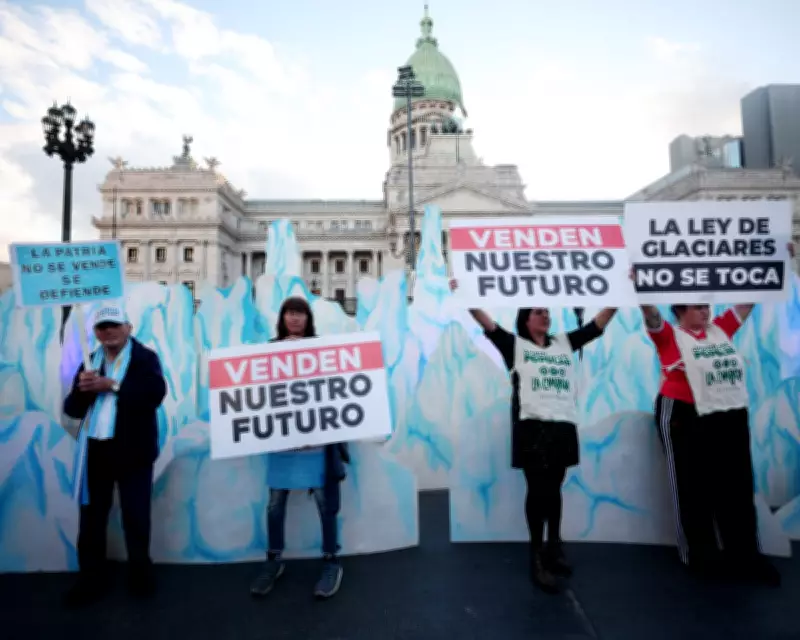
Thousands of protesters gathered outside parliament in Buenos Aires on Wednesday, displaying banners with slogans like "Water is more precious than gold!" and "A glacier destroyed cannot be restored!" The demonstration was marked by isolated skirmishes with police, highlighting the deep divisions over the issue. Earlier in the day, seven Greenpeace activists were arrested after scaling a statue and unfurling a banner urging lawmakers "not to betray the Argentine people."
Scientific Concerns and Political Justifications
Environmental activists have raised alarm over the scientific implications of the bill. Flavia Broffoni, an environmental activist, stated after the protest, "The science is clear ... there is absolutely no possibility of creating what they call a 'sustainable mine' in a periglacial environment." Argentina is home to nearly 17,000 glaciers or rock glaciers, with glacial reserves in the mining-concentrated north-west shrinking by 17% over the last decade due primarily to climate change, according to the Argentine Institute of Snow Research, Glaciology and Environmental Sciences.
President Milei, a free-market radical who does not believe in human-made climate change, argues that the bill is essential to attract large-scale mining projects and boost economic growth. He has claimed, "Environmentalists would rather see us starve than have anything touched." The Central Bank of Argentina estimates, based on industry forecasts, that the country could triple its mining exports by 2030, with lithium being a critical component for the global tech and green energy sectors.
Legal Changes and Provincial Powers
The new legislation aims to clarify ambiguities in the 2010 glacier law regarding which periglacial areas—regions on the edges of glaciers—can be developed economically. Supporters, including Michael Meding, managing director of the Los Azules copper mining project in San Juan province, argue for "legal certainty" and "clear definitions." However, critics like Enrique Viale, president of the Argentine Association of Environmental Lawyers, warn that the changes threaten the water supply for 70% of Argentinians.
Under the revised law, individual provinces will gain more authority to decide which areas require protection and which can be exploited for economic purposes. This shift has garnered support from governors of northern Andean provinces with strong mining sectors, such as Mendoza, San Juan, Catamarca, and Salta. The passage of this amendment marks another political victory for Milei, following his success in pushing through looser labor laws in February despite repeated street protests.



