
Brazil's Amazon Oil Rush Divides Remote Town of Oiapoque
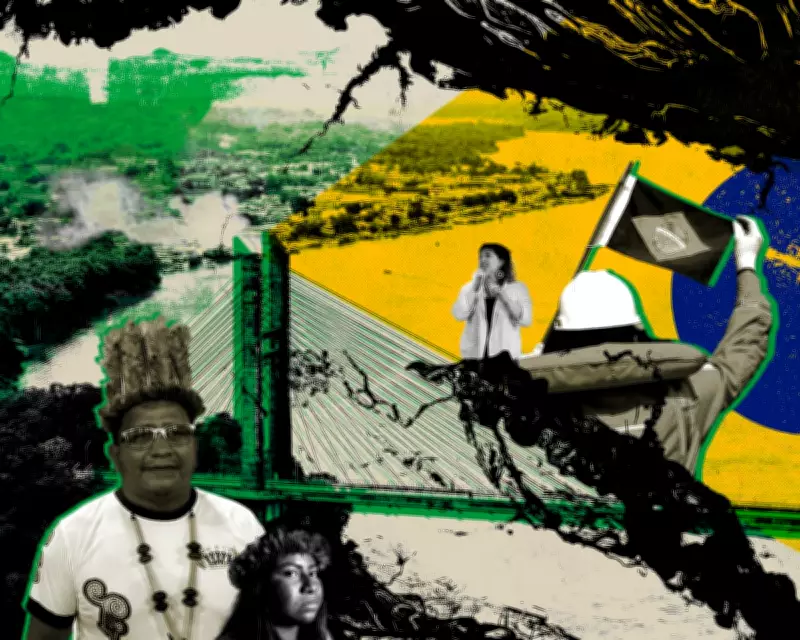
In the isolated municipality of Oiapoque, located at Brazil's northernmost edge in Amapá state, a profound conflict is unfolding. The area, famously referenced in the national saying "From Oiapoque to Chuí" to denote the country's vast expanse, is now ground zero for a contentious oil exploration project by state-controlled company Petrobras. Covering a densely forested region larger than Wales, Oiapoque is home to about 30,000 residents, including Indigenous peoples from four ethnic groups across 68 hamlets.
Less than 2% of houses have proper sewage treatment, and 66 of the Indigenous settlements have electricity for fewer than 12 hours daily. Yet, the discovery of oil potential in the fragile Equatorial Margin has transformed Oiapoque into an operational base for ultra-deepwater drilling, offering hope for significant development but also stirring great fear among its inhabitants.
Indigenous Concerns and Environmental Risks
Indigenous leaders, including Edmilson dos Santos Oliveira, Mariazinha Baré, and Luene Karipuna, emphasize they are not opposed to development but demand their voices be heard. "If they pollute our rivers, what will become of us?" asks Oliveira, general coordinator of the Council of Chiefs of the Indigenous Peoples of Oiapoque. Their concerns are rooted in the region's ecological sensitivity: the Equatorial Margin spans 2,200km along Brazil's coast, hosting one of the planet's most biodiverse marine ecosystems, with rare mangroves and coral reefs that regulate global temperatures.
Petrobras began exploratory drilling on October 20, 2025, in block FZA-M-59, part of the Foz do Amazonas basin. Just 76 days later, on January 4, a leak of 113 barrels of drilling fluid occurred, leading Ibama, the federal environmental regulator, to fine the company 2.5 million Brazilian reais (£360,000). A technical report indicated the fluid contained toxic substances that could harm marine life and disrupt food chains. Petrobras halted operations for over 30 days before resuming after safety upgrades.
Economic Promises Versus Reality
The potential for oil production, projected to start between 2032 and 2035, has drawn new residents to Oiapoque, anticipating 54,000 direct and indirect jobs and a 60% boost to Amapá's GDP. Petrobras pledges to prioritize local labor, as seen in the Urucu field, where the workforce is largely Amazonian. A recent rescue exercise in August generated 50 million Brazilian reais in economic activity, equivalent to 10% of Oiapoque's GDP.
However, development is threatened by political instability, with the mayor and deputy mayor recently ousted for vote-buying, and extraordinary elections set for April 12. Environmental impacts are already evident, with low-flying aircraft disturbing wildlife and deforestation expanding for new neighborhoods. Food and rent prices have surged, and 800 students await school vacancies.
Broader Implications and Historical Context
Brazil faces a paradox: positioning itself as a global leader in energy transition while aiming to become the world's fifth-largest oil producer by 2030. Oil has been Brazil's top export for two consecutive years, surpassing soybeans. Miriam Garcia of World Resources Institute Brasil notes, "This paradox is present in any country that takes seriously the transition away from fossil fuels."
Critics argue that Brazil lacks mandatory safeguards for large-scale projects, and existing environmental laws have weakened. Caroline Rocha of Laclima points out that public consultations often occur too late, after significant investment. Felício Pontes Jr, a federal prosecutor, highlights a pattern of rendering affected communities invisible, a practice dating to the military dictatorship.
Historical examples like the Belo Monte dam show promises of improved living standards often go unfulfilled, with communities lacking electricity and fair compensation. In the Urucu field, Brazil's largest onshore oil project, cities like Carauari and Manaus face basic shortages despite receiving royalties. Mariazinha Baré states, "Those who benefit are the state and the mega-corporations."
Financial and Climate Challenges
Brazil's oil revenue distribution, based on a 1980s model, is criticized as "obsolete and disconnected," leading to excessive resource concentration. Promises from pre-salt reserves remain unfulfilled due to governance issues. President Luiz Inácio Lula da Silva has proposed an energy transition fund financed by oil and gas revenues, but details are pending.
In 2024, 20 billion Brazilian reais were allocated to address climate crisis damages from floods in southern Brazil. However, research by the Institute for Socioeconomic Studies indicates at least 45 billion Brazilian reais is tied up in disputes or stranded, with fiscal rules limiting social spending. Alessandra Cardoso of Inesc concludes, "Social redemption through oil revenues is a mirage."
As Oiapoque grapples with this divide, the stakes for its Indigenous communities and pristine environment remain critically high, underscoring the global tension between economic development and ecological preservation.



