
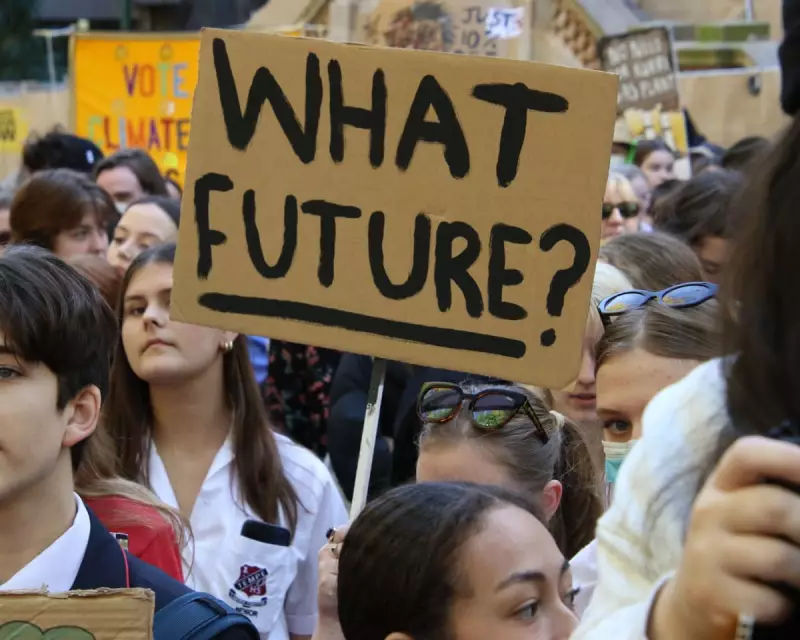
Deep Generational Split on Climate Optimism Revealed in Latest Polling
A significant generational divide has emerged in Australian attitudes toward climate change, with young adults showing markedly more optimism than their elders about preventing the worst effects of global warming. According to the latest Guardian Essential poll, half of respondents aged 18-34 believe climate effects can be prevented, while only slightly more than a quarter of those aged 55 and over share this optimism.
The survey of 1,020 Australians conducted last week reveals that younger Australians are almost twice as likely as older generations to believe in humanity's ability to address the climate crisis. Among those aged 55 and above, just 26% expressed confidence that climate change could be prevented, with 56% outright disagreeing with this possibility.
Declining Belief in Human-Caused Climate Change
The polling data indicates a concerning trend in public understanding of climate science. Only 53% of Australians now believe climate change is happening and caused by human activity, representing a one-point decline from March 2025 when 54% held this view.
This current figure stands in stark contrast to historical data, which shows belief in human-caused climate change reached as high as 64% in 2017. When the question was last asked before this year in October 2021, 59% of Australians accepted the scientific consensus on human responsibility for climate disruption.
Peter Lewis, executive director of Essential Media, described the climate polling results as showing a "general sense of doom around whether action will create meaningful change."
The current skepticism exists despite overwhelming scientific evidence. A 2021 study found the scientific consensus that humans are altering the climate has passed 99.9%, with agreement levels comparable to scientific certainty about evolution and plate tectonics.
Broader Concerns and Political Implications
Despite the generational divide in optimism, climate change remains a significant concern for most Australians. The poll found that 59% of respondents worry about catastrophic climate impacts, placing environmental concerns among the top public anxieties.
Other major concerns included the development of self-aware AI, which worried 67% of respondents, and rising inequality leading to social upheaval, which concerned 62%.
The political dimensions of climate policy were also evident in the polling. Conducted before Australia withdrew from seeking to host the Cop31 climate summit, the survey found just 38% supported the hosting push, with 22% opposed and 40% undecided.
"While Chris Bowen has a big job in the next Cop, the fact that it won't be held here is probably a net positive for the government," Lewis commented, suggesting the decision might have political benefits for the administration.
The poll also tracked political approval ratings, showing a small uptick for Prime Minister Anthony Albanese and a minor decline for opposition figure Sussan Ley. Albanese's approval rose from 45% to 47%, while Ley's dropped from 32% to 31%.
Strong Public Support for Gambling Ad Restrictions
In a separate but significant finding, the poll revealed overwhelming public support for government action on gambling advertisements. Nearly two-thirds of voters backed either a total ban or dramatic restrictions on when gambling ads can be shown.
40% of Australians want to ban all gambling advertisements, with another 23% calling for heavy restrictions. An additional 28% supported moderate limitations on advertising timing and placement.
Only 9% of respondents believed no action on gambling ads was necessary, indicating broad public appetite for reform in this area.
Lewis noted that "the public appeared to have a stronger appetite for action on gambling advertisements than the government" and suggested there was "a strong base for greater ambition" in regulating the industry.
The comprehensive polling data paints a picture of a nation grappling with complex environmental challenges while maintaining strong views on social policy issues, with clear generational differences shaping attitudes toward humanity's ability to address the climate crisis.



