
President Trump's sweeping cuts to federally funded ocean sciences are jeopardizing critical research into marine carbon dioxide removal (mCDR) in the United States, including the LOC-NESS (Locking Ocean Carbon in the North-east Shelf and Slope) initiative led by the Woods Hole Oceanographic Institution. The program, which tests ocean alkalinity enhancement (OAE) to boost the ocean's ability to absorb atmospheric carbon, is now the last major US-funded effort in this field, according to scientist Adam Subhas.
LOC-NESS Trials in the Gulf of Maine
Last summer, Subhas's team conducted field trials 40 miles offshore from Boston in the Gulf of Maine's Wilkinson basin, releasing about 65,000 liters of sodium hydroxide mixed with red dye into the sea. The highly alkaline material was tracked via sensors and satellites to measure carbon uptake over four days using autonomous underwater vehicles. Subhas presented his findings at this year's Ocean Sciences Meeting, noting that the team provided a roadmap for measuring and modeling alkalinity enhancement in the future.
“The ocean is 70% of the Earth’s surface and, if this is really going to scale [up], we have to understand how this might work in the open ocean, too,” Subhas said. He emphasized the need for large-scale emissions reductions alongside novel approaches like OAE.
Impact on Lobster Research and Funding
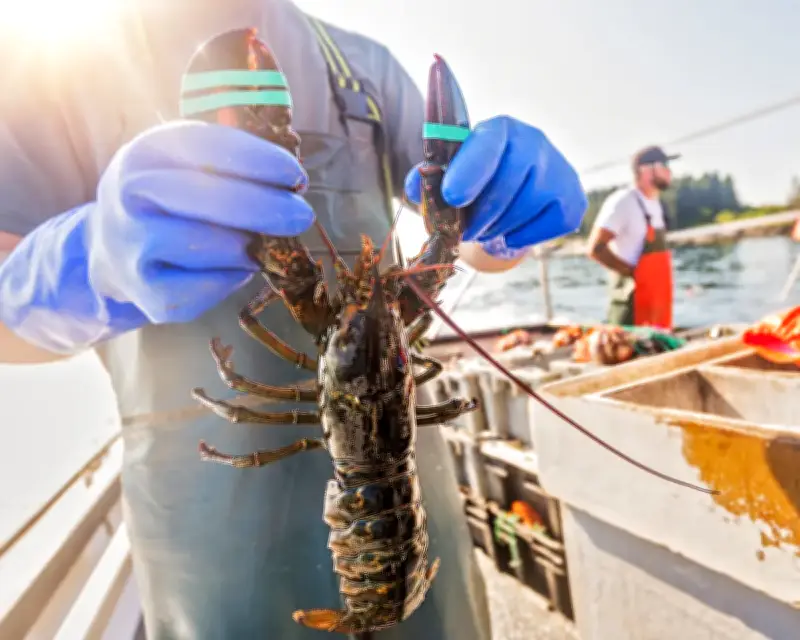
The LOC-NESS team is now examining how marine creatures, particularly lobsters, respond to different levels of alkalinity. Lobsters generate the second-highest value of any seafood landed in the US, accounting for just under $700 million (about £550 million) in 2023. Chris Murray, a marine biologist, designed special floating mesh cups to prevent cannibalism among lobsters during experiments. Preliminary lab results showed no increased mortality or behavioral changes after exposure to elevated pH and alkalinity, but further analysis of lobster RNA is planned to understand physiological responses.
“We need to do this research,” Murray said. “It’s really important to weigh these impacts against what is predicted to occur in the ocean. We know that ocean warming is going to be a major disruptive force to marine food webs.”
European Funding Offers a Glimmer of Hope
As US federal funding dried up, Europe began scaling up academic grants for marine carbon dioxide removal research. According to analysis of the Ocean Carbon Removal Watch database, the European Union disbursed more than £8.5 million in grants over the past two years, funding over 20 universities across Britain and Europe. At the University of Gothenburg, Sam Dupont, a senior lecturer, is studying alkalinity thresholds of sea urchins, mussels, and fish eggs in Sweden and Iceland.
“We want to cover a bunch of different creatures,” Dupont said. “We see that if you go too high in alkalinity, there’s something going wrong in their physiology and they develop abnormally and die.” He warned that private industry is moving ahead with large-scale experiments by issuing ocean carbon removal credits, despite limited understanding of biological impacts. “The equivalent would be: you smoke a cigarette and you go to the doctor the next day and say, ‘There is no effect on cancer’,” Dupont added, estimating it will take about a decade to establish safe alkalinity thresholds for marine life.
Broader Implications for US Ocean Science
Ken Buesseler, a professor emeritus of marine radiochemistry at Woods Hole, experienced the funding cuts firsthand. His US Department of Energy grant for iron fertilization research was stopped halfway through last year, with only about half of the $5 million promised being paid out. He noted that “there is no pipeline in DoE for carbon management any more.” Buesseler's ambitious Ex-OIS project, which would study iron fertilization offshore Alaska, requires $30 million to launch in 2028, but funding prospects are bleak.
“I feel like we are just kicking the can,” Buesseler said. “The climate crisis isn’t going away because we stop funding research into ocean solutions, so the problem will be with us. It is getting harder and harder to address.”



