
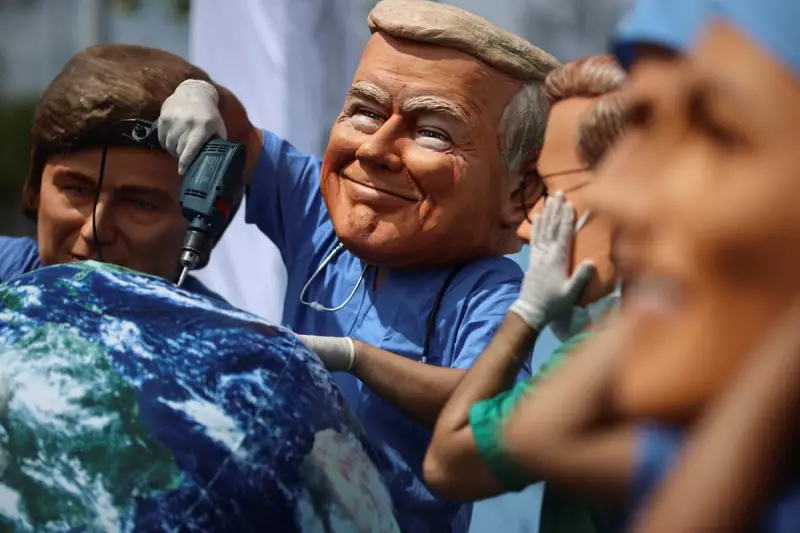
The United States has found itself in controversial company after international climate negotiations concluded with minimal progress, forming what experts describe as an "axis of obstruction" alongside Russia and Saudi Arabia.
Unprecedented US Absence at Climate Talks
In a historic first for three decades of United Nations climate summits, the Trump administration chose not to send any representatives to the COP30 conference in Belem, Brazil. This decision marks a significant departure from previous US engagement with global climate discussions and reflects President Donald Trump's publicly stated scepticism about climate change, which he has repeatedly dismissed as a "hoax" and "con job."
The absence of American delegates occurred despite the summit's critical location near the mouth of the Amazon River, highlighting global environmental concerns. Even without direct US participation advocating for fossil fuel expansion, the 194 other attending nations failed to reach consensus on ending the coal, oil, and gas era that drives climate change.
Fossil Fuel Language Removed From Agreement
In a major setback for climate advocates, the final agreement text contained no mention of "fossil fuels" following determined opposition led by Saudi Arabia. This represents a significant regression from previous climate negotiations where the United States had typically encouraged Saudi Arabia toward more moderate positions.
Michael Jacobs of ODI Global and the University of Sheffield analysed that COP30 exposed "an increasingly bitter conflict at the heart of global climate politics" between nations accepting the scientific necessity of transitioning from fossil fuels and those prioritising short-term energy interests.
Jacobs identified the United States as now firmly in the second category alongside Saudi Arabia, the UAE, and Russia. "Geopolitically, this is the creation of a new axis of obstruction – actively promoting fossil fuels and opposed to climate action," he stated, referencing Trump's separate dealings with Saudi Arabia and Russia during the summit week.
Counter-Programming and Global Response
While climate negotiations unfolded in Brazil, the Trump administration pursued domestic policies directly contradicting climate goals. These included removing protections from streams and wetlands, weakening endangered species safeguards, and opening over one billion acres of US waters to oil and gas drilling.
This expansion included pristine Arctic areas and potential coastal drilling off California – the latter announcement timed conspicuously during California Governor Gavin Newsom's COP30 attendance. Newsom has vehemently opposed such development, stating it would happen "over my dead body."
White House spokeswoman Taylor Rogers defended the administration's position: "President Trump has been clear: he will not jeopardize our country's economic and national security to pursue vague climate goals that are killing other countries."
Meanwhile, approximately 90 countries, including most European nations, demanded a fossil fuel phase-out roadmap. Frustrated with the UN's consensus-driven process that nearly collapsed at COP30, this coalition plans an alternative summit in Colombia this April.
Beyond the Setbacks: Signs of Progress
Despite the diplomatic stalemate, observers noted continuing global momentum away from fossil fuels. Last year saw double the investment in renewable energy sources like wind and solar compared to traditional energy.
China emerges as a clean energy leader, now generating more revenue from green technology exports than America earns from fossil fuel exports. Even within the United States, public opinion contradicts administration policies, with two-thirds of American voters opposing withdrawal from the Paris Agreement and clear majorities supporting emissions reduction.
Former US Vice President Al Gore characterised the situation as the world growing "fed up with delay and denial," suggesting that while obstruction might slow the energy transition, it cannot stop it entirely. "They may be able to veto diplomatic language, but they can't veto real-world action," he concluded.



