
UN Report Declares Era of Global Water Bankruptcy
The world has officially entered an era of global water bankruptcy, according to a stark new United Nations report that warns of severe consequences for billions of people. The comprehensive study highlights how chronic overuse and widespread pollution have pushed many critical water systems past the point of recovery, creating a precarious situation with profound implications for peace, social cohesion, and global food security.
The Visible Signs of a Broken System
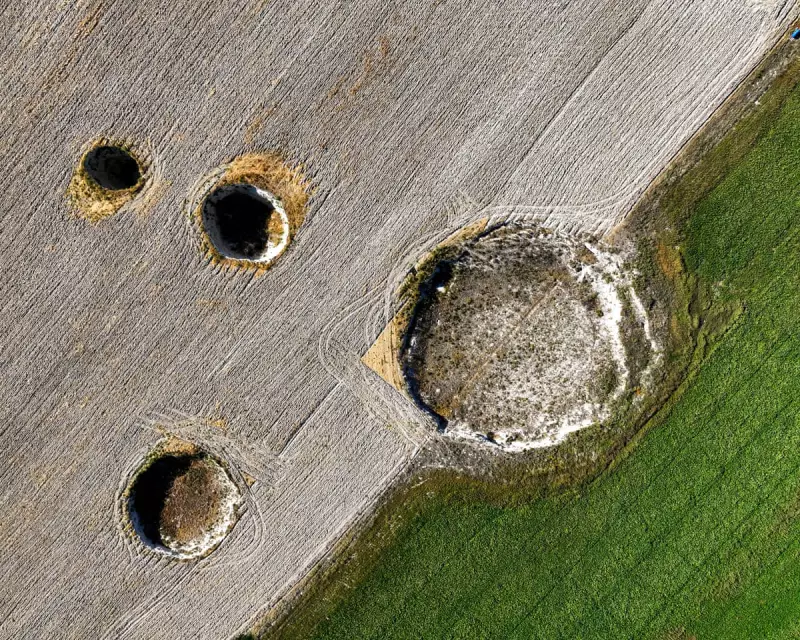
Among the most dramatic and visible indicators of this crisis are the 700 sinkholes now dotting the heavily farmed Konya plain in Turkey. These geological scars serve as a potent symbol of collapsing groundwater aquifers. The report, led by Professor Kaveh Madani of the UN University’s Institute for Water, Environment and Health, states that many human water systems are now operating in a state of bankruptcy, unable to be restored to their former levels.
"This report tells an uncomfortable truth: many critical water systems are already bankrupt," said Madani. "It’s extremely urgent because no one knows exactly when the whole system would collapse." The climate crisis is exacerbating the problem, melting vital glacial water stores and creating violent swings between extreme drought and flooding.
Billions Living on Sinking Ground
The consequences are already being felt on a massive scale. The report reveals that 75% of the global population lives in countries classified as water-insecure or critically water-insecure. Furthermore, a staggering 2 billion people reside on land that is literally sinking due to the collapse of groundwater aquifers beneath them.
This subsidence is affecting major cities worldwide, including:
- Rafsanjan, Iran: sinking by 30cm per year
- Tulare, USA: sinking by about 28cm per year
- Mexico City: sinking by about 21cm per year
- Other affected metropolises include Jakarta, Manila, Lagos, and Kabul
Escalating Conflicts and Vanishing Rivers
Water scarcity is increasingly a flashpoint for conflict. The number of water-related disputes around the world has skyrocketed from just 20 in 2010 to over 400 in 2024. Iconic river systems are failing; the Colorado River in the United States and Australia's Murray-Darling system frequently fail to reach the sea. The report notes that in densely populated basins like the Indus, Yellow, and Tigris-Euphrates, rivers periodically dry up before reaching the ocean.
"In many basins, the 'normal' to which crisis managers once hoped to return has effectively vanished," the report states. The phenomenon of "day zero" emergencies, where cities completely run out of water as seen in Chennai, India, is becoming more frequent and severe.
Agriculture and Global Food Security at Risk
The crisis strikes at the heart of global food production. Approximately 70% of freshwater withdrawals are used for agriculture, yet millions of farmers are trying to grow food from shrinking, polluted, or disappearing water sources. More than half of the world's food is grown in areas where water storage is declining or unstable.
"Water bankruptcy in India or Pakistan, for example, also means an impact on rice exports to a lot of places around the world," Madani warned, highlighting the interconnected nature of global trade and water risk. Even nations with relatively damp climates, like the United Kingdom, are not immune due to their heavy reliance on imports of water-intensive food and products.
A Call for a Fundamental Reset
The UN report calls for nothing less than a fundamental reset in how humanity protects and uses water. Key recommendations include:
- Cutting water withdrawal rights to match today's degraded supply levels.
- Transforming water-intensive sectors like agriculture and industry through crop changes, efficient irrigation, and less wasteful urban systems.
- Providing support for communities whose livelihoods must adapt to new hydrological realities.
"Water bankruptcy management requires honesty, courage and political will," Madani asserted. "We cannot rebuild vanished glaciers or reinflate acutely compacted aquifers. But we can prevent further losses, and redesign institutions to live within new hydrological limits."
Expert Perspectives on the Crisis
Other experts echoed the report's grave concerns while offering additional context. Professor Albert Van Dijk of the Australian National University noted the challenge of increasingly erratic climate patterns. "Increased variability is as much a problem as scarcity," he said. "Sometimes there’s more water available overall, but it increasingly arrives in bursts, at the wrong place and at the wrong time."
Dr. Jonathan Paul from Royal Holloway, University of London, pointed to a critical underlying driver. "The elephant in the room... is the role of massive and unequal population growth in driving so many of the manifestations of water bankruptcy," he stated, suggesting that addressing demographic pressures is essential.
Tshilidzi Marwala, a UN undersecretary general, framed the issue in terms of global stability. "Water bankruptcy is becoming a driver of fragility, displacement and conflict. Managing it fairly is now central to maintaining peace, stability and social cohesion."
The report, based on a forthcoming paper in the peer-reviewed journal Water Resources Management, serves as a dire warning and a urgent call to action. It concludes that water presents a strategic, untapped opportunity to foster unity in an increasingly fragmented world, being one of the rare issues that commands universal recognition of its importance.



