
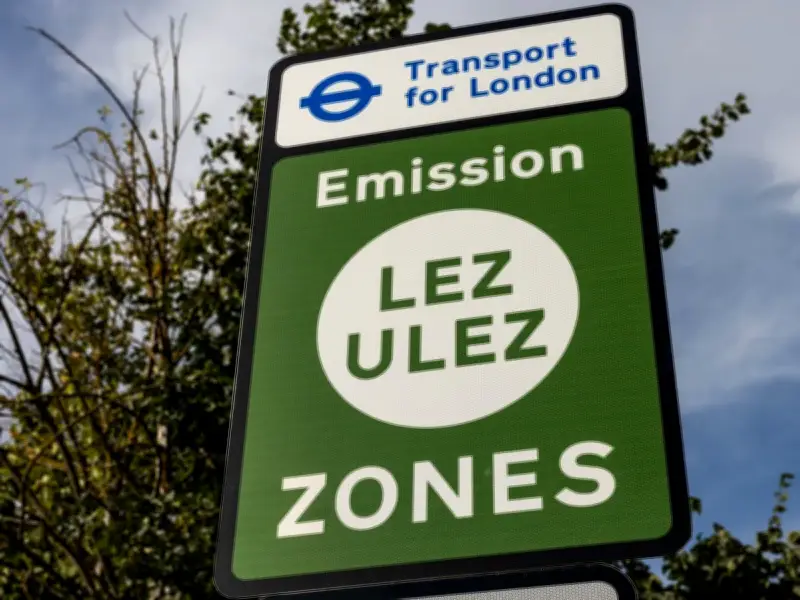
A five-year study led by Queen Mary University of London has found that air quality improvements following the introduction of London's ultra low emission zone (ULEZ) are linked to improved lung growth in children. The research, published in the Lancet Public Health journal, monitored the lung health of more than 3,400 children aged six to nine from 84 primary schools in London and Luton between 2018 and 2022. Luton served as a comparison site due to its similar traffic pollutants but lack of a clean air zone.
Study findings: London children's lung function catches up
Initially, before ULEZ was introduced in 2019, London children had significantly smaller lungs compared to those in Luton. However, over the five years, the data showed that London children's lung size and health accelerated, becoming comparable to Luton's children as the zone was implemented. The scientists stated that these improved lung growth trajectories were strongly related to air quality improvements.
The study assessed forced expiratory volume in one second (FEV1), a measure of how much air can be forcefully exhaled in one second. They found that London children's exposure to nitrogen dioxide (NO2), the pollutant most reflective of exhaust pollution, fell twice as fast and more than twice as much compared to Luton children. As NO2 exposure decreased, London children's FEV1 increased by 10ml per year more than Luton's. By the end of the study, FEV1 was the same across both groups, indicating London children's lung growth had accelerated to catch up.
Health impact and expert commentary
The proportion of children with clinically impaired lung function fell from 14% to 9% in London, compared to a fall from 9% to 7% in Luton. Experts noted that children who do not have fully developed lungs by early adulthood face increased risks of respiratory conditions, cardiovascular and metabolic disease, and premature death.
Chris Griffiths, professor of primary care at the University of Oxford and Queen Mary University of London and joint senior author, said: "Traffic pollution in cities damages children's health and development. We provide the strongest evidence yet on how these harms can be prevented. Ambitious clean air zones should be considered a priority for cities globally with traffic-related air pollution."
Mayor of London Sir Sadiq Khan, who oversaw ULEZ's introduction, said: "Introducing and expanding ULEZ involved incredibly difficult decisions. It was very tough, and a vocal minority backed by vested interests made it extremely difficult, but I refused to stand by while air pollution continued to damage Londoners' health. This research proves we were right to act and reinforces my decision to extend the benefits of cleaner air to every child in London."
Caveats and broader implications
Ian Mudway, associate professor at Imperial College London and joint senior author, said: "Air pollution is a global issue. If we want to improve the lives of children living in high-traffic urban environments, we need bold and ambitious measures. Our data demonstrates that clean air zones can be an effective public health intervention to prevent damage to developing lungs."
Prof Stephen Burgess, Professor of Biostatistics at the University of Cambridge, offered a cautious perspective: "I must admit that I approached this study with a high level of scepticism. My expectation was that the ULEZ regulations would have little measurable impact on child health. However, the findings are striking – children in Central London had poorer lung function than children in Luton at the beginning of the study in 2018, but this difference narrowed to the point of disappearance by 2023." He noted caveats, including the potential influence of increased active travel to school, the COVID-19 pandemic's effects, and the generalizability of results to other cities.
Despite these caveats, Burgess concluded: "This study shows a striking change in lung function over time – the lung function of children in Central London has improved substantially relative to those in Luton. Whether this improvement can be attributed to the introduction of ULEZ regulations is more questionable. Nevertheless, the finding is important because lung function in childhood is an important measure of health, and the study provides encouraging evidence that changes in the urban environment may benefit children's lung development."
Opponents of ULEZ argue the daily fee impacts those reliant on vehicles in outer London, low-income households, commuters, and small businesses with older vans. The study, funded by the National Institute for Health and Care Research (NIHR), involved collaboration with Imperial College London and the universities of Bedfordshire, Oxford, Cambridge, Edinburgh, and Southern California.



