
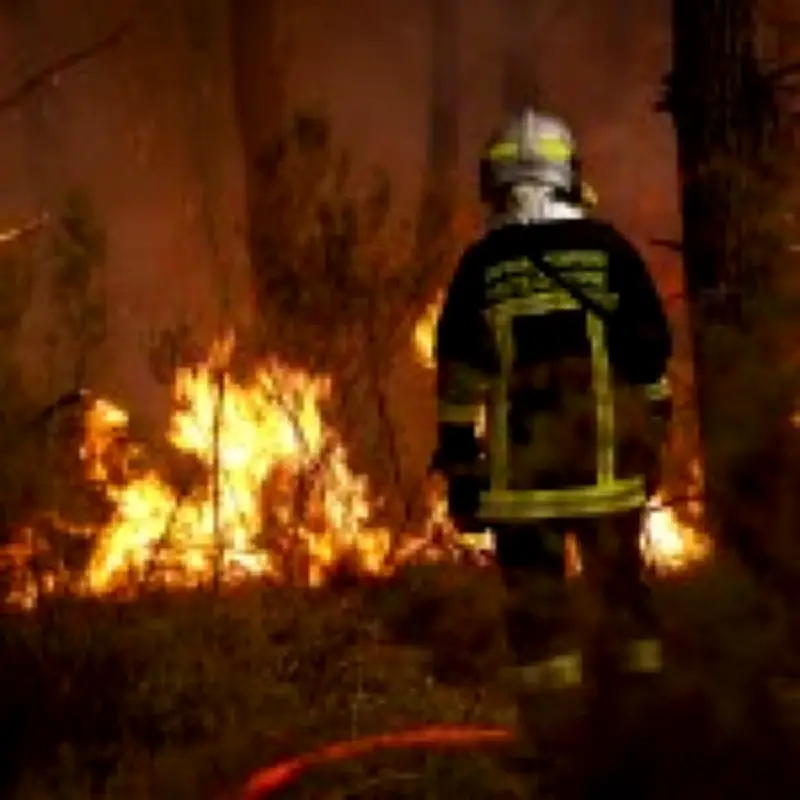
The UK is bracing for its fourth heatwave of the year as extreme weather in France and Spain has ignited 'apocalyptic' wildfires. Huge blazes are just nine miles from Bordeaux, with officials warning the next 24 hours will be critical to save the city. The fires on the continent are fueled by scorching temperatures, dry conditions, and strong winds.
UK heatwave warnings and fire alerts
Parts of England are expected to meet heatwave criteria on Wednesday, with highs of 32-33°C. More areas will experience the heatwave on Thursday. A yellow heat alert has been issued from 9am Tuesday to 9am Friday for the East and West Midlands, southeast, southwest, east of England, and Yorkshire and the Humber. Scotland, meanwhile, will face clouds and rain, but the country has spent 12 days battling a large blaze in the Cairngorms National Park, which was declared a major incident and led to hundreds of evacuations.
The hot spell has prompted wildfire warnings from emergency services. 'Fire and rescue services remain on alert and are continuing to prepare for renewed wildfire risk,' a National Fire Chiefs Council spokesperson said.
Vegetation drying and resource strain
Fire science lecturer Dr. Zak Campbell-Lochrie explained that another heatwave with low humidity can 'continue to dry out that vegetation.' He added: 'This makes the vegetation more susceptible to an ignition source. If ignition does occur, it leads to a more rapid spread. These smaller fires can cause a significant impact and be a risk to communities, as well as a wider smoke risk. It can definitely intensify as we see further drying of vegetation.'
According to the National Drought Group, parts of southern, central, and eastern England are so dry they are close to drought. The Cairngorms blaze, combined with previous heatwaves, means emergency services have fewer resources to tackle new wildfires. 'These large fire incidents are resource intensive and hard to put out,' Dr. Campbell-Lochrie said. 'We have already seen some challenges around air resources. Even if other fires occur which are not worrying, it is really difficult when you have that drain on resources and you’re dealing with multiple incidents at once.'
Why UK wildfires are less severe
Despite the challenges, experts do not believe the UK will face fires as large as those in France and Spain. This is because the type of vegetation plays a key role. Dr. Campbell-Lochrie noted: 'Weather is one aspect of the fire risk, but it is also about vegetation. There is a big difference in the classic Mediterranean ecosystems and the sort of ecosystems we have here and the flammability.'
Climate expert Bob Ward, policy and communications director at the Grantham Research Institute on Climate Change and the Environment, agreed that the UK is less at risk because Britain has 'significantly more farmland instead of natural areas.' He added that UK cities are less likely to face the panic gripping Bordeaux: 'We do not have quite the same areas of natural vegetated areas next to a city. Once wildfires get to the ends of cities you cannot stop them.'
However, Ward recalled that London came 'very close to disaster' in July 2022 during the Wennington wildfire, which destroyed nearly 20 homes. He warned that wildfires are 'only going to get worse for the next two to three decades.'
Human causes and future precautions
Wildfires in the UK are largely caused by humans, whether accidental—such as cigarettes, barbecues, and litter—or deliberate. Ward said that as the risk of forest blazes rises, the country 'will have to be even more strict about banning people from having fires in any kind of vegetated land in these conditions.' He added: 'Once a fire starts, particularly if it is windy, it can move so quickly and engulf large areas. Wildfires can move so incredibly fast that even people in cars cannot outpace them.' To protect cities like London, he said more needs to be done to separate buildings from large areas of vegetation.



