
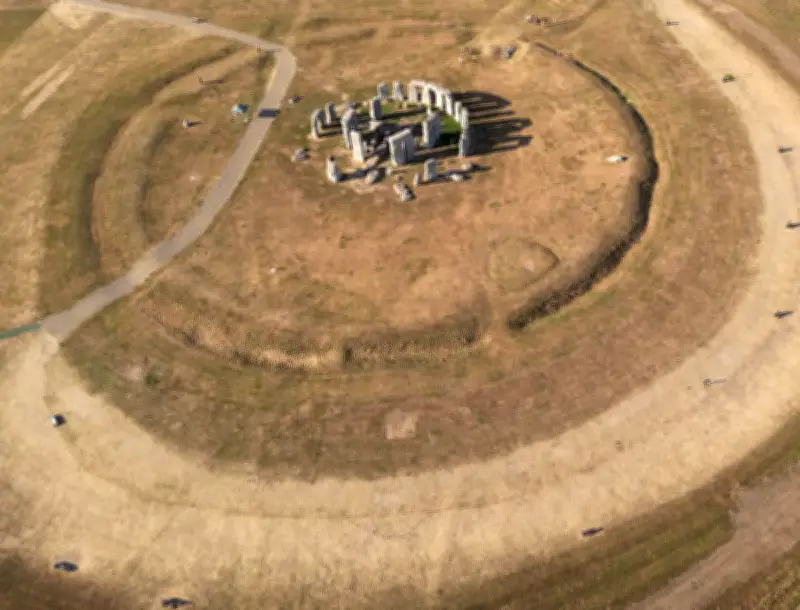
The UK is in the grip of a severe drought, with the Environment Agency and Natural Resources Wales officially declaring drought status for half of England and all of Wales. This marks the third such event in five years, following four record-breaking heatwaves since May that have fueled wildfires and left farms, wildlife, and protected habitats without sufficient water. July is on track to be the driest month ever recorded, with England receiving just 7% of its long-term average rainfall, and southern England a mere 1%.
Visible impacts: from green to brown
The once "green and pleasant land" is now parched and brown across vast areas, a stark visual testament to the changing climate. The Met Office warns that by 2070, UK summers could be 1C-6C hotter and up to 60% drier compared to 1990 levels, making such extreme conditions more frequent. Rivers and lakes are shrinking, with the Thames at Reading recording its lowest level ever, and reservoirs in some regions, such as the Llwyn-onn in Wales, exposing ancient structures like an 1800s stone bridge.
Despite record winter rainfall keeping many reservoirs near normal levels, approximately 23 million people in England and Wales are now under hosepipe bans as water companies strive to manage supply. The dry spell has also devastated parks, sports fields, and protected green spaces, with visible scorching on areas like Blackheath in London.
Wildfires: a record-breaking threat
Firefighters have responded to 393 wildfires across England and Wales in July alone, making it the busiest month on record. This has put immense pressure on fire crews, with hundreds of people evacuated due to fire threats, compared to around 50 in all of 2025, previously the worst year for wildfires. In Scotland, the Cairngorms national park has suffered its worst fires in living memory, while smoke from fires in north Wales was visible from space. North Wales Fire and Rescue Service reported 48 wild, grassland, woodland, and crop fires in June, a 47% increase from the same month last year.
Dr Chloe Brimicombe, a climate scientist at the University of Oxford, highlighted the compounding effects of dry weather, leading to droughts, heatwaves, and wildfires. "It is a strong indication that we need better long-term planning. Climate change is not a future problem; it’s a challenge for right now," she said.
Farming under stress
Farmers across the country are facing early harvests and crop losses due to water shortages. Riverford Organic Farmers in Devon, known for its long-term water management and soil health planning, has seen all but one of its four reservoirs run dry. Luke King, the farm's supply chain and technical director, explained: "Scarcity of water has become a big challenge for us, but what has compounded this has been the heat stress on plants. All but one of our reservoirs have now run dry, which is something we’d never normally expect so early in the season." The team is prioritizing irrigation and harvesting earlier in the day to protect crops, but King noted, "Even with irrigation, you can’t water everything at once, so difficult decisions have to be made about prioritising crops."
Rediscovering history and adapting
Amid the drought, dried-out landscapes have revealed lost archaeological sites, including neolithic, bronze, and iron age structures, and even first world war practice trenches. Roman-era buildings have been uncovered at Caerhun Roman fort in Conwy, and the outline of a 17th-century garden at Chatsworth House in Derbyshire is visible again, as it was in 2018 and 2022. In London, parks remain vital green spaces, and the Royal Borough of Greenwich is relying on volunteers to water trees and plants. Councillor Adel Khaireh said: "We’re particularly grateful to local people such as the network of Friends of Parks groups who help us water trees and plants across the borough, and support our iconic parks on a voluntary basis." The situation underscores the urgent need for both adaptation and mitigation to address the realities of a warming planet.



