
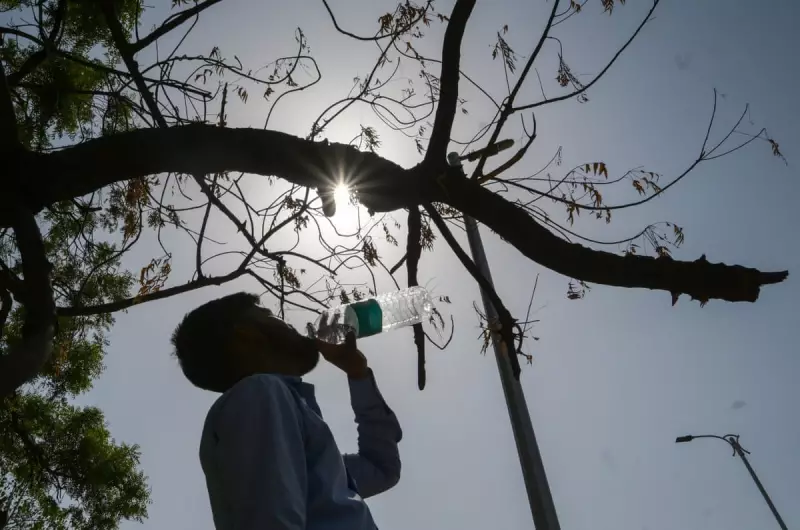
Sophisticated new analysis has revealed the devastating human cost of Donald Trump's climate policy reversals, with projections indicating his administration's approach could lead to 1.3 million additional temperature-related deaths globally.
The Human Toll of Policy Changes
The investigation, conducted jointly by ProPublica and The Guardian, draws on advanced modelling by independent researchers to quantify the impact of Trump's "America First" agenda. The analysis found that expanding fossil fuel use and dismantling emissions reduction efforts will substantially increase the death toll from rising temperatures, with the vast majority of fatalities occurring outside United States borders.
Recent research indicates most people expected to die from soaring temperatures in coming decades live in poor, hot countries across Africa and South Asia. Many of these nations have contributed relatively little to the climate crisis through emissions yet face the greatest vulnerability to increasing heat.
The analysis shows that extra greenhouse gases released in the next decade as a result of presidential policies are expected to cause up to 1.3 million more temperature-related deaths worldwide as Earth heats over the 80 years following 2035. While the actual number of heat deaths will be higher, a warming planet will also reduce cold-related fatalities.
International Isolation and Scientific Backing
The findings emerge as leaders from most world nations gather at an international climate conference in Belém, Brazil, to address escalating climate effects. Participants have notably marked the absence of the United States, which despite having just 4% of global population has produced 20% of greenhouse gases. Only Afghanistan, Myanmar and San Marino joined the US in not sending delegations, according to provisional participant lists.
The calculations employ modelled estimates of additional emissions from Trump's policies alongside a peer-reviewed metric known as the mortality cost of carbon. This measurement, building on Nobel prize-winning science that has informed federal policy for over a decade, predicts temperature-related deaths from extra emissions.
The estimate reflects deaths from heat-related causes like heat stroke and exacerbated existing illnesses, minus lives saved by reduced cold exposure. It excludes massive anticipated fatalities from broader climate crisis effects including droughts, floods, conflicts, vector-borne diseases, hurricanes, wildfires and reduced crop yields.
"The sheer numbers are horrifying," said Ife Kilimanjaro, executive director of non-profit USClimate Action Network. "But for us they're more than numbers. These are people with lives, with families, with hopes and dreams."
Reversing Environmental Progress
The Trump administration, sometimes with congressional Republican support, has dramatically set back climate crisis efforts through multiple policy reversals:
- Cutting tax credits for clean electricity, fuels, vehicles and manufacturing
- Easing pollution restrictions on coal-fired power plants
- Facilitating drilling on federal lands
- Withdrawing from the Paris Agreement
- Reversing emissions regulations for vehicles and power plants
Marshall Burke, an economist at Stanford University's Doerr School of Sustainability, noted: "Prior to Trump, we had the most ambitious climate policy that the US has ever come up with. When we roll these things back, it is fundamentally affecting the damages we're going to see around the world."
Responding to questions about the projected consequences, White House spokesperson Taylor Rogers attacked what she called the "Green Energy Scam", writing that "America still doesn't buy the left's bogus climate claims" without specifically addressing the heat death forecasts.
Disproportionate Impact on Vulnerable Nations
While the US has emitted more climate-heating pollution than any country, it's expected to suffer only up to 1% of temperature-related deaths worldwide caused by the additional carbon emissions, according to a working paper by R Daniel Bressler, who developed the mortality cost of carbon concept.
Some of the world's poorest nations will struggle most to adapt. Niger and Somalia – with emissions dwarfed by America's – are projected to have the world's highest per capita death rates from increasing temperatures. India is expected to suffer more temperature-related deaths than any country, while Pakistan, with just 3% of global population, may experience between 6-7% of worldwide temperature-related fatalities.
"People in my community will die," said Ayisha Siddiqa, a climate activist with family in Pakistan, recalling how her father lost consciousness and required hospitalisation during 2022's deadly heatwave. "It's unexplainable. The entire air around you sticks to your body and you can't breathe."
The analysis used modelling from Rhodium Group, which calculated additional emissions from Trump's policy changes at 5.7 billion metric tons of carbon through 2035. Applying Bressler's peer-reviewed metric of 4,434 metric tons of carbon causing one death over 80 years produced the 1.3 million death projection.
Climate scientists acknowledge these estimates represent just one aspect of climate emergency fatalities, excluding deaths from droughts, floods and other broader effects. However, they emphasise the calculations provide valuable insight into the human cost of policy decisions affecting global emissions.



