
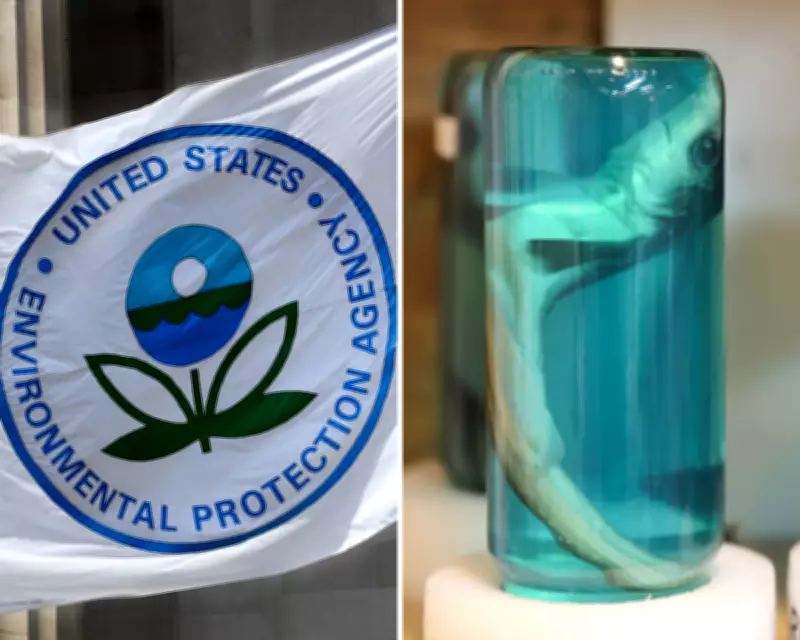
Chemical Industry Influence Shaped Trump EPA's Formaldehyde Policy Reversal
Recently disclosed documents obtained through a Freedom of Information Act request reveal a coordinated effort between chemical producers and the Trump administration's Environmental Protection Agency to dismantle protective formaldehyde regulations. The chemical lobby successfully pushed for weaker cancer risk assessments that contradict decades of scientific consensus about this common carcinogen.
Reversal of Biden-Era Protections
The Biden EPA concluded in late 2024 that any exposure to formaldehyde increases cancer risk and established zero-tolerance safety standards. However, the Trump administration reversed these findings in late 2025, implementing less protective regulations that allow higher exposure levels. The newly released documents demonstrate how this policy shift relied heavily on industry-funded research rather than independent scientific consensus.
Industry-funded scientist Rory Conolly's work became central to the Trump EPA's justification, despite previous EPA assessments finding his research outdated or unreliable. Chemical trade groups funded Conolly's studies, which argue that some formaldehyde exposure is safe, contradicting broader scientific understanding.
Cherry-Picking Data and Industry Meetings
Environmental advocates accuse the Trump EPA of selectively choosing data that supported industry positions while ignoring contradictory evidence. The documents reveal an unusual three-day meeting in 2023 between EPA officials and major formaldehyde producers, users, and trade groups, where Conolly presented his industry-funded research.
"The bottom line is money – and that they want limited regulations on the chemicals they are making," said Maria Doa, a former EPA scientist now with the Environmental Defense Fund. "The documents show the Trump EPA often cherrypicked data to support predetermined conclusions."
Conflicts of Interest and Agency Capture
The documents highlight significant conflicts of interest within the EPA's chemical safety office. Former American Chemistry Council officials Nancy Beck and Lynn Dekleva now hold leadership positions overseeing formaldehyde regulations. Dekleva previously spent 32 years at chemical giant DuPont before joining the EPA.
"The regulatory changes are happening at Beck and Dekleva's direction, with their direct oversight and supervision," said Kyla Bennett, a former EPA scientist. This revolving door between industry and regulatory agencies raises serious questions about impartial scientific assessment.
Undermining Established Scientific Processes
The Trump EPA's actions represent a fundamental challenge to established scientific review processes. The EPA's Integrated Risk Information System, which determined that no formaldehyde exposure is safe, had its conclusions validated by the National Academy of Science Engineering and Medicine in 2024. Yet the Trump administration disregarded these independent assessments.
Erik Olson of the Natural Resources Defense Council Action Fund warns this creates a dangerous precedent: "The EPA has established a pathway that could be used to re-evaluate and weaken regulations around every carcinogen. We hear about making America healthy again, but here we have an example of the EPA undermining decades of understanding around a cancer-causing chemical."
Scientific Disagreement and Public Health Consequences
The Trump EPA established a formaldehyde exposure threshold of 0.3 parts per million, claiming this level protects against both sensory irritation and cancer risk. This contradicts extensive research showing cancer risks at lower exposure levels. Chemical manufacturers produce approximately 5 billion pounds of formaldehyde annually for use in products ranging from cosmetics and furniture to craft supplies and building materials.
Conolly defended his industry-funded research, stating: "In evaluating science, what matters is the quality of the science. Saying that science is no good because it was industry-funded is a cop-out." However, environmental advocates argue that funding sources create inherent biases in research design and interpretation.
The implications extend beyond formaldehyde regulation. Olson emphasizes: "Watch out. There are a lot of other carcinogens that industry wants to pick off. We're going to pay for this through the nose for our taxes and insurance bills." The documents reveal how industry influence can reshape public health policy with potentially serious consequences for cancer prevention efforts nationwide.



