
US Supreme Court Takes Up Fossil Fuel Firms' Climate Accountability Case
The United States Supreme Court has made a groundbreaking decision to hear arguments in a pivotal climate accountability lawsuit, marking the first occasion the nation's highest judicial body has intervened in such environmental litigation. This unprecedented move could significantly influence the extensive wave of climate-related legal actions that have emerged across the United States in recent years, potentially reshaping the legal landscape for corporate environmental responsibility.
Boulder's Lawsuit Against Oil Titans
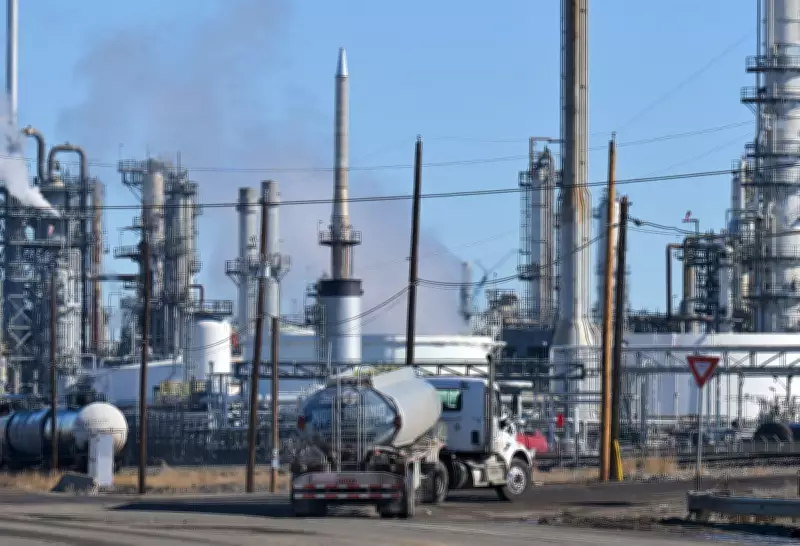
The specific case under review originates from the city of Boulder, Colorado, which has filed substantial legal claims against two major petroleum corporations: Suncor Energy USA and ExxonMobil Corporation. Following the Colorado Supreme Court's refusal to dismiss the lawsuit, the defendants escalated the matter by petitioning the US Supreme Court to terminate the proceedings. Their central argument asserts that federal legislation should pre-empt and override the city's claims, creating a complex jurisdictional conflict that now demands resolution at the highest judicial level.
Legal experts express concern about the implications of this development. "It's not a good sign," remarked Pat Parenteau, a distinguished professor of environmental law at Vermont Law and Graduate School, highlighting the potential obstacles this creates for climate accountability efforts. The Supreme Court's involvement introduces significant uncertainty into what was already a contentious legal battle with far-reaching consequences.
Potential Outcomes and Wider Implications
The Supreme Court's eventual ruling could produce dramatically different outcomes for climate litigation nationwide. Should the justices rule against the oil companies, this decision would represent a substantial victory for climate accountability advocates, allowing Boulder and numerous other jurisdictions pursuing similar cases to proceed with renewed confidence. Such an outcome could potentially inspire additional governments to initiate their own legal actions against fossil fuel corporations.
Conversely, if the Supreme Court sides with the defendants, the Boulder case could be completely invalidated, along with more than a dozen similar lawsuits making comparable claims against oil and gas companies. "The expectation is that [the justices] are probably going to give the oil companies some kind of win," Parenteau cautioned, suggesting the legal momentum might shift in favor of corporate defendants.
Complicating Factors and Procedural Questions
The legal landscape has been further complicated by recent regulatory developments, including the Trump administration's Environmental Protection Agency repealing a foundational legal determination that previously empowered federal authorities to regulate climate-warming pollution. This regulatory reversal introduces additional complexity to the Supreme Court's deliberations, as justices must consider whether this policy change affects the federal pre-emption argument central to the oil companies' defense.
Beyond the substantive arguments, the Supreme Court justices have indicated they will examine whether they possess proper jurisdiction to hear the case at this procedural stage. "Today's announcement makes clear the justices do not agree whether the court even has the authority to hear Boulder's case at this time," observed Alyssa Johl, vice-president of legal and general counsel at the Center for Climate Integrity, a nonprofit organization that monitors and supports climate accountability litigation.
Immediate Consequences and Broader Context
The Supreme Court's decision to accept the petition will likely create a chilling effect on climate litigation nationwide, as lower courts postpone proceedings while awaiting guidance from the highest judicial authority. "At a minimum, it's going to freeze all these cases, because the state courts are going to say, 'why should we go to the trouble of having trials in these cases if, in fact, the Supreme Court might throw them all out,'" Parenteau explained, highlighting the practical consequences of this judicial intervention.
This development occurs against a backdrop of increasing climate litigation across the United States, with numerous states, cities, and local governments filing lawsuits against major oil corporations for allegedly misleading the public about the climate impacts of their products. Most recently, the state of Michigan initiated federal antitrust proceedings against BP, Chevron, Exxon Mobil, Shell, and the influential American Petroleum Institute, demonstrating the expanding scope of these legal challenges.
The Supreme Court's previous actions regarding climate litigation have been mixed, including last year's denial of an attempt to dismiss a Honolulu lawsuit and rejection of efforts by conservative states to block similar cases. This new case represents the most significant judicial consideration of climate accountability to date, with outcomes that could redefine corporate responsibility for environmental impacts for decades to come.



