
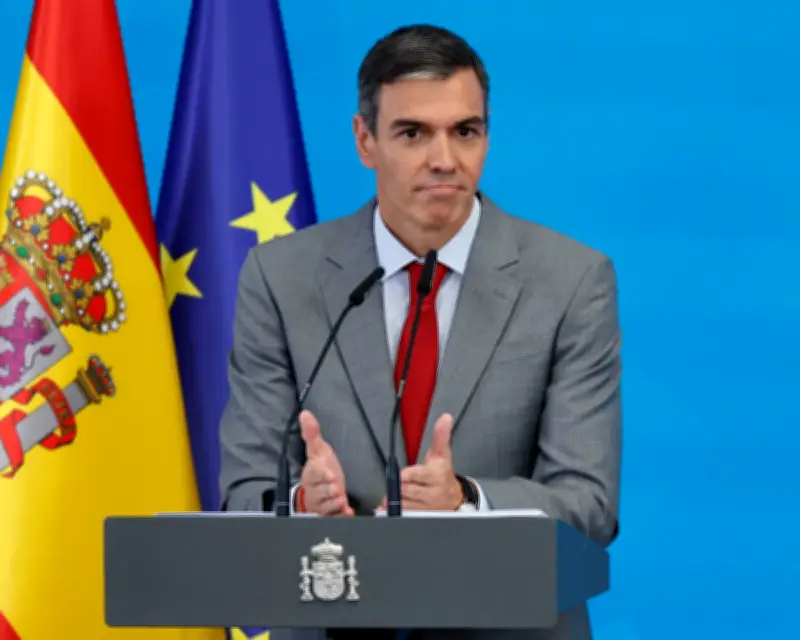
Spain's Prime Minister Pedro Sánchez has reiterated his stark warning that the climate emergency kills, insisting that addressing only the consequences is insufficient. Speaking on Monday amid wildfires that have devastated over 180,000 hectares (428,915 acres) of land in the first seven months of 2026, Sánchez called for proactive measures to reduce the causes and better protect lives. This message echoes his 2022 remarks in fire-affected Extremadura, where he declared that climate change kills people, ecosystems, and livelihoods.
Sánchez's blunt climate message
Just over four years ago, Sánchez visited a town in Extremadura devastated by wildfires that scorched tens of thousands of hectares nationwide. Those fires claimed lives in Castilla y León, including a man whose excavator was engulfed by flames, and a Madrid street-sweeper who died from heatstroke with a body temperature of 41.6C (107F). "Climate change kills: it kills people, as we've seen; it also kills our ecosystem, our biodiversity, and it also destroys the things we as a society hold dear – our houses, our businesses, our livestock," Sánchez told reporters then.
This week, he reinforced the same message: "The climate emergency kills. And that's why it's not enough to address the consequences, which we do; what we have to do is reduce its causes, anticipate its effects, and, consequently, better prepare our country to protect people's lives." Sánchez has consistently used unvarnished language on climate issues, similar to his outspoken criticism of Israel's actions in Gaza and Donald Trump's war in Iran, as well as his defense of immigration.
Spain's vulnerability to climate change
Spain, situated on the southern frontier of the world's fastest-heating continent, is increasingly exposed to droughts, desertification, erratic weather, heavy rains, and wildfires. Public awareness is high: a December 2024 survey by Spain's Centre for Research Studies found that 84% of Spaniards view the climate emergency as "a real threat to human wellbeing and to the health of the planet." Despite this, political consensus remains elusive, with opposition parties rejecting Sánchez's proposal for a "state pact" to prepare the nation.
Political opposition and denial
On Monday, Spain's conservative People's Party (PP) accused the government of using the "mantra" of climate crisis to mask its "poor management" of natural disasters. PP spokesperson Ester Muñoz questioned human-driven climate change, stating, "That the climate changes is something that has occurred throughout the history of humanity and the Earth – that's obvious. Now how do we humans act in the face of things that change?" The PP's record on climate and emergency response is mixed; its Valencia regional president resigned after being absent during the October 2024 floods, which killed many in their homes and cars.
Madrid's PP president, Isabel Díaz Ayuso, has asked the central government to take control of wildfire response but has also questioned the scientific basis of climate change, calling it an "agenda" pushed by "lobbies" and "communists." The far-right Vox party attributes the wildfires to rural abandonment and insufficient firefighting investment, not climate change. The PP has formed regional alliances with Vox, potentially leading to a national coalition if it wins next year's election.
Experts and disinformation
Climate scientists attribute the blazes to a combination of factors: rural abandonment, abundant dry vegetation, and more frequent heatwaves driven by climate breakdown. On Wednesday, Vox MEP Jorge Buxadé posted a purported official document showing high temperatures in the 1950s, but Spain's state meteorological office, Aemet, debunked it on social media: "We've reviewed the data, and all but one station's data are false. If they were true, they wouldn't deny climate change: there were heatwaves before, but now they're more frequent and intense."



