
Leading climate scientists have issued a stark warning that the world will overshoot the critical 1.5C global heating target set by the Paris Agreement, making the large-scale removal of carbon dioxide from the atmosphere an absolute necessity to avoid catastrophic environmental tipping points.
The Inevitable Overshoot and the Carbon Removal Imperative
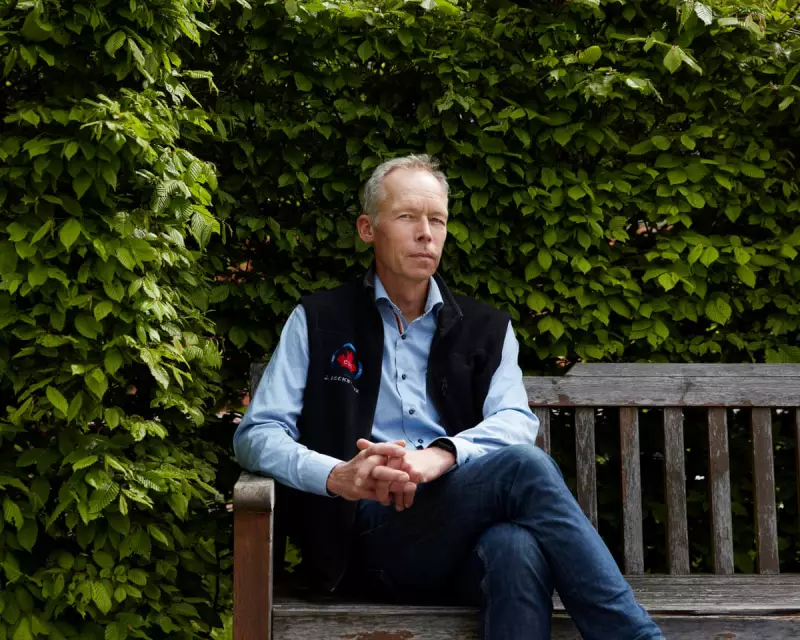
Johan Rockström from the Potsdam Institute for Climate Impact Research, a chief scientific adviser to both the UN and the Cop30 presidency, delivered the sobering assessment at a public event for the newly established Science Council in Belém. He revealed that even in the most optimistic scenario, the planet is now on track to heat by approximately 1.7C above pre-industrial levels.
To merely contain global heating at this level, 10 billion tonnes of carbon dioxide must be extracted from the atmosphere every single year. Rockström's modelling indicates that even with ambitious carbon removal and aggressive government action on emissions, the most achievable outcome is limiting the temperature rise to between 1.6C and 1.8C.
A Daunting Economic and Logistical Challenge
The scale of the technological effort required is almost unimaginable. Scientists at the event stated that achieving this through methods like direct air capture would necessitate creating the world's second-largest industry, surpassed only by oil and gas. This colossal undertaking would demand annual expenditures in the region of a trillion dollars.
Chris Field of Stanford University provided further context, explaining that 200 billion tonnes of CO2 removal would be needed to counter every tenth of a degree of temperature rise. However, he cautioned that even this would be a slow, expensive process fraught with potential unintended consequences, with a practical limit of countering only about two-tenths of a degree.
The Looming Threat of Tipping Points
The primary driver for this drastic action is the imminent risk of triggering irreversible climate tipping points. Tim Lenton, a tipping point expert from the University of Exeter, outlined the severe dangers that are already alarmingly close.
He warned that a collapse of the Atlantic meridional overturning circulation (AMOC) – the system of ocean currents – would be particularly devastating, as it could trigger a cascade of other tipping points. Many of the world's coral reef systems are already believed to have passed their point of no return at 1.5C of heating. Further risks lie in the ice sheets of Antarctica and Greenland, and the fragile ecosystem of the Amazon rainforest.
Despite the 1.5C target being temporarily breached in 2024, Thelma Krug, coordinator of the Science Council, clarified that UN scientists do not consider the goal officially failed until the trend is confirmed over a multi-year average. Nevertheless, Field stressed that the world must retain the 1.5C target, as the longer and higher temperatures remain above it, the greater the risk of activating these dangerous planetary switches.
Carbon Capture Methods and Political Context
A range of carbon capture options exist, each with its own trade-offs. The most cost-effective method is forest growth, priced at around $50 per tonne of CO2, but it requires vast tracts of land. The most expensive is direct air capture, an unproven-at-scale industrial process costing at least $200 per tonne. Intermediate strategies like ocean fertilisation carry significant risks of disrupting marine ecosystems.
Rockström expressed his desire for the Cop30 presidency to formally include carbon removal in its declarations, focusing global attention on the immense costs and risks ahead. He lamented that current government policies on fossil fuel emissions would lead to a catastrophic 2.7C of heating.
The political landscape remains challenging. The United States, under President Donald Trump, has once again withdrawn from the Paris Agreement and was notably absent from the summit. Christiana Figueres, a key architect of the Paris accord, addressed Trump with a dismissive 'Ciao bambino!', asserting that the decarbonisation of the global economy is now irreversible, with or without the US.
Looking forward, Lenton expressed hope that Cop30 could become a positive tipping point itself, fostering new alliances that acknowledge both the risks of climate tipping points and the potential for rapid, positive change.



