
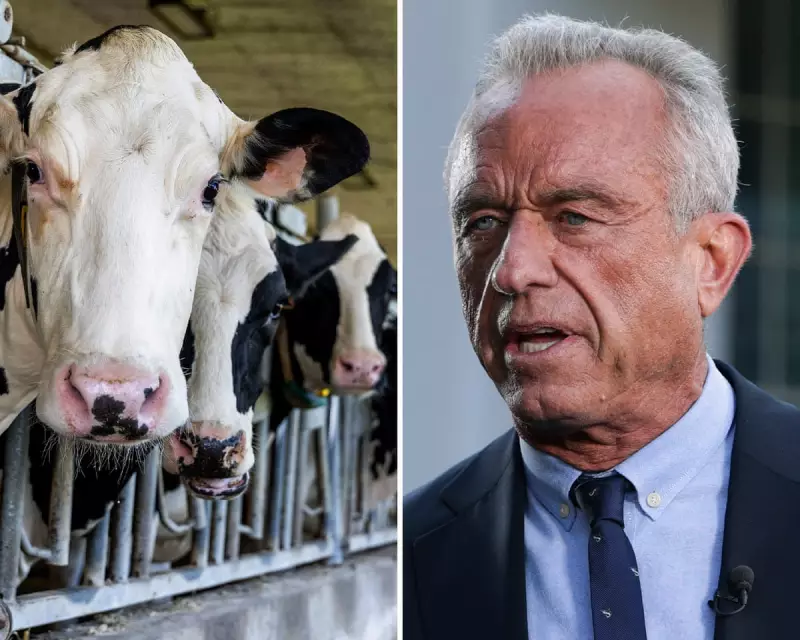
Environmental Alarm Over New US Dietary Guidelines Promoting Meat Consumption
The Trump administration's newly released dietary guidelines, championed by Health Secretary Robert F Kennedy Jr, have sparked significant environmental concerns among climate experts and researchers. The guidelines, which encourage Americans to substantially increase their consumption of meat and dairy products, could have profound consequences for global ecosystems and greenhouse gas emissions if widely adopted.
Massive Land Requirements for Proposed Dietary Shift
According to analysis by the World Resources Institute, even a modest 25% increase in protein consumption through meat and dairy in the United States would require approximately 100 million additional acres of agricultural land annually. This staggering area is roughly equivalent to the size of California and would place immense pressure on remaining natural habitats worldwide.
"We are seeing millions of acres of forest cut down and agricultural expansion is the lead driver of that," explained Richard Waite, director of agriculture initiatives at WRI. "Adding 100 million acres to feed the US means additional pressure on the world's remaining ecosystems. It's already hard to feed the global population while reducing emissions and stopping deforestation."
Environmental Impact of Increased Meat Production
The environmental consequences of shifting toward meat-heavy diets are particularly severe. Beef production requires twenty times more land and generates twenty times more greenhouse gas emissions per gram of protein compared to common plant-based alternatives like beans and lentils. The livestock industry already accounts for approximately one-fifth of global emissions, with little progress made in recent years to mitigate its environmental footprint.
Diego Rose, a nutrition director at Tulane University, emphasized the environmental trade-offs: "To the extent that people follow these guidelines and eat more animal protein foods, particularly beef and dairy, they will negatively impact our environment, since the production of these foods emits way more greenhouse gases than vegetable protein foods."
Contrast with Previous Environmental Advocacy
The promotion of increased meat consumption represents a notable departure from Kennedy's previous environmental advocacy. Before joining the Trump administration, Kennedy had been a vocal critic of industrial meat production, once describing the pork industry as a greater threat to the United States than terrorist mastermind Osama bin Laden.
In 2004, Kennedy wrote extensively about the environmental and social impacts of factory farming, stating: "The factory meat industry has polluted thousands of miles of America's rivers, killed billions of fish, pushed tens of thousands of family farmers off their land, sickened and killed thousands of US citizens, and treated millions of farm animals with unspeakable and unnecessary cruelty."
Current Dietary Context and Future Implications
Americans already rank among the world's highest meat consumers, with the average person consuming approximately 144 kilograms of meat and seafood annually. This places the United States second globally, behind only Portugal. Despite this high baseline consumption, the new guidelines aim to nearly double current protein intake levels.
Benjamin Goldstein, a researcher at the University of Michigan who has studied emissions associated with urban meat consumption, expressed concern about the timing of these recommendations: "We needed to be addressing climate change two decades ago and we are still not doing enough now. If we are adding more greenhouse gases to impose unnecessary ideas of protein intake, that's going to destabilize the climate further."
Institutional Influence and Global Context
While individual Americans may choose to ignore the guidelines, experts anticipate they will influence institutional food policies in schools, federal workplaces, and other public settings. This comes at a time when global meat consumption continues to rise, with projections suggesting worldwide demand for pork, beef, poultry, and other meats will reach over 500 million tonnes by 2050 - double the consumption levels recorded in 2000.
The Department of Health and Human Services defended the new approach, stating: "The Trump administration will no longer weaponize federal food policy to destroy the livelihoods of hard-working American ranchers and protein producers under the radical dogma of the Green New Scam."
As climate scientists emphasize the urgent need to reduce emissions from all sectors, including agriculture, these dietary guidelines present a significant challenge to environmental goals. The tension between dietary recommendations, agricultural interests, and climate objectives highlights the complex interplay between food policy, public health, and environmental sustainability in an era of increasing ecological awareness.



