
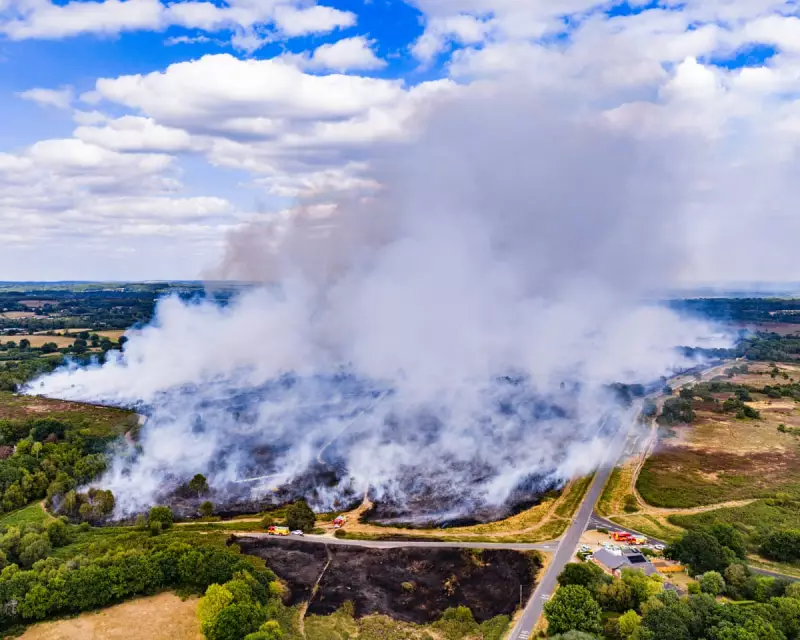
Record-breaking wildfires sweep across UK as climate crisis intensifies
Britain has experienced its most devastating wildfire season on record this year, with figures revealing unprecedented destruction of moorland, forests and fields across the country. According to the Global Wildfire Information System, wildfires consumed 47,026 hectares (116,204 acres) by November 2025 - the largest area burned since monitoring began in 2012.
Fire services stretched to breaking point
The scale of destruction has placed enormous pressure on fire and rescue services, with the Fire Brigades Union warning that the UK remains dangerously unprepared for escalating climate emergencies. In a stark letter to the government, the union highlighted that fire services have lost nearly 12,000 firefighters since 2010, representing one in five positions.
Central government funding has been slashed by 30% in cash terms, leading to critical equipment shortages, under-staffed control rooms and insufficient protective gear for frontline crews. The letter states unequivocally: "This under-investment is impacting response to climate change incidents."
Major incidents highlight systemic failures
The crisis became particularly visible during several major incidents throughout the year. In August, the situation reached critical levels when 17 fire and rescue services had to be drafted from across the country, including units from as far as Greater Manchester, to combat a relentless wildfire on Holt Heath in Dorset.
Disturbingly, many firefighters responding to the Dorset blaze lacked specialist wildfire personal protective equipment, increasing their risk of heatstroke, exhaustion and burns. Local resources were described as "shockingly thin on the ground" during the emergency.
The challenges continued into September when North Yorkshire fire crews required assistance from farmers, gamekeepers and landowners to tackle a massive blaze that burned for weeks on Langdale Moor.
Flooding emergencies compound the crisis
Fire services are simultaneously dealing with increased flooding risks across the UK. Sam Harding, a Monmouth firefighter who rescued survivors during Storm Claudia this month, described the service's struggle to cope with this new reality.
"The flooding was some of the worst we've had in recent years, and required all of our water rescue resources," Harding explained. "If there had been another flooding incident elsewhere in south Wales requiring water rescue, I don't know how we would have been able to respond."
He emphasised that government funding cuts have eliminated the resilience needed to handle multiple severe incidents simultaneously, despite their increasing frequency.
Call for urgent government action
The Fire Brigades Union, supported by climate groups including Greenpeace, Tax Justice UK and Friends of the Earth, has demanded substantial long-term investment in fire and rescue services. Their letter to the chancellor calls for funding to ensure "sufficient firefighters, emergency fire control staff and specialist resources to meet wildfire and flooding risks."
The burned area in 2025 represents more than double the land destroyed during the record-breaking summer of 2022, underscoring the accelerating nature of the climate crisis. The organisations warn that without decisive action, the UK will remain dangerously exposed to climate-related disasters that threaten both public safety and property.
As climate breakdown continues to intensify, with millions more homes facing devastating flood risks and some towns potentially becoming uninsurable, the need for properly funded emergency services has never been more urgent.



