
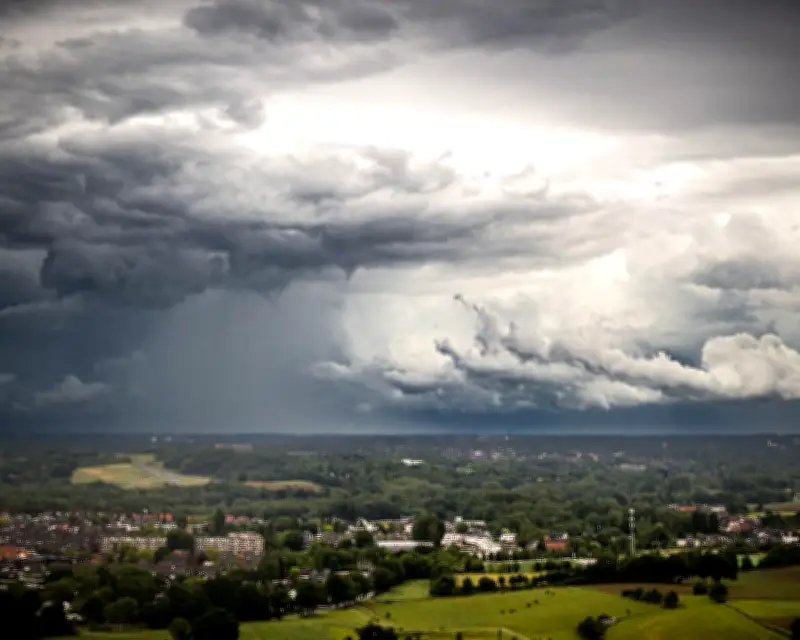
Warmer air holds more water vapour, causing raindrops to travel farther before falling as rain, according to new research. The study, led by Travis Aerenson of the University of Wyoming, modelled atmospheric moisture movements in the US over more than three decades and found that moisture in the southwestern and southern plains now travels 30 to 50 miles (50 to 80km) farther than it did 35 years ago. It stays aloft for an extra two to four hours before precipitating.
Changing moisture pathways
The findings, published in Geophysical Research Letters, also reveal that more evaporation is occurring from ocean surfaces and less from land surfaces. This shift in atmospheric moisture pathways affects where and when precipitation occurs, with significant implications for land use and water security. The researchers note that as moisture travels farther, the water security of more countries and states will increasingly depend on sources outside their borders, requiring greater collaboration between neighbours.
Implications for land use and water management
According to the study, the climate crisis is altering not only the amount of rain that falls but also its distribution. The trend for moisture to travel longer distances means that regions may receive rain from sources farther away, complicating water management and land use planning. The research underscores the need for international cooperation to address water security challenges in a warming world.



