
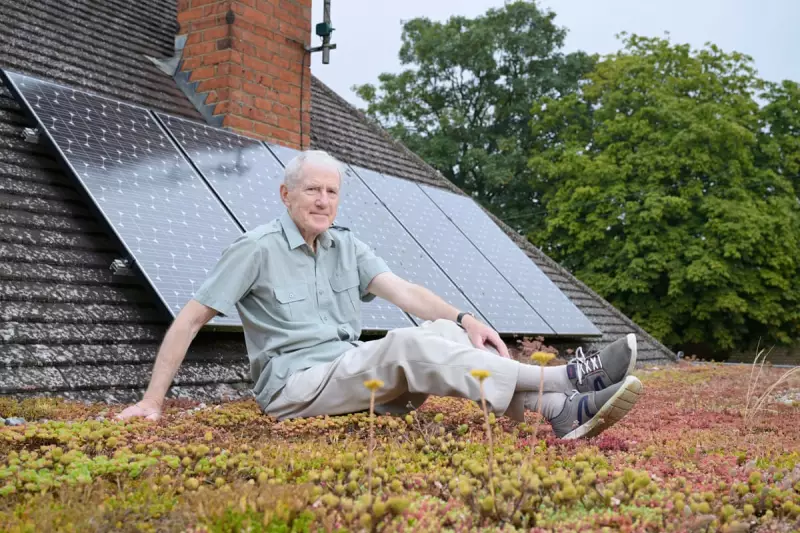
In a poignant and powerful reflection from his hospital bed, Paul Brown, the Guardian's esteemed former environment correspondent, has issued what many are calling his final warning on the climate crisis and the fate of civilisation. His words, published on 28 November, transcend a mere career retrospective, serving instead as a stark indictment of political failure and a clarion call for urgent action.
A Legacy of Exposing the Reality Gap
Brown, whose foundational work alongside John Vidal has been carried forward by journalists like Fiona Harvey and Damian Carrington at the Guardian, has spent decades highlighting what he describes as the "reality gap between the best of science and the worst of political leadership." He observes that politicians have routinely failed on even the most profound issues, with the US government reaching "appalling levels" and much of the UK opposition attempting to follow suit.
Yet, his message is not one of pure despair. Professor Phoebe Barnard of the University of Washington, responding to Brown's article, notes a potential turning tide. She points to the example of the Nordic council at Cop30 and young leaders like Iceland's climate minister, Jóhann Páll Jóhannsson, who are stepping up with honest appraisals of global responsibility and security risks.
The Nuclear Question and Systemic Risks
Beyond broad climate policy, Brown's final reflections include a critical interrogation of nuclear power, a stance strongly supported by attorneys Michel Lee and Susan Shapiro from New York. They warn that the recent Advance Act of 2024 in the US has dangerously altered the mission of the Nuclear Regulatory Commission, adding the promotion of nuclear power to its safety mandate.
They argue that nuclear energy remains a consequential contributor to climate change and that subsidies for a nuclear "renaissance" sabotage the transition to cheaper, safer renewables like solar-plus-batteries. The push to use small reactors to cool energy-hungry AI data centres is highlighted as particularly unsound. "No industry and no government is immune from corruption and human folly," they state, emphasising the grave risks within the international military-industrial-nuclear complex.
A Call to Heed the Warnings
The collective response to Brown's article forms a unified plea for those in power to finally listen. Following a national emergency briefing on 27 November, where scientists warned of severe climate-related risks to the UK economy and security, figures like Chris Packham and Professor Kevin Anderson have reinforced the message. Billions of lives, millions of species, and societal stability are at immediate risk.
Joan Walley, former chair of the environmental audit select committee, thanked Brown for his objective approach and urged that after the disappointments of Cop30, his "words of wisdom ring out as a call for action." Professor Barnard's closing sentiment encapsulates the gravity of the moment: "Thank you for keeping the torch high on our environment and civilisation. Literally everything we know and love is at stake." Paul Brown's final warning is not an epitaph but a challenge, demanding that his lifetime of work translates into decisive, immediate change.



