
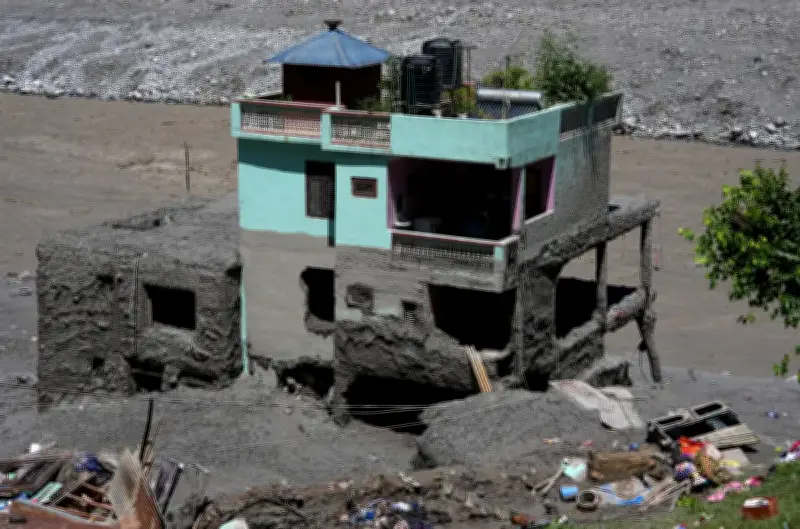
Rescue teams and military helicopters are searching for hundreds of missing people along the mountainous Nepal-Tibet border after a glacier collapse on Wednesday sent a massive torrent of water, rocks and mud through communities. Authorities in Nepal and China report more than 390 people killed and over 1,400 missing, including hundreds of foreign citizens and pilgrims.
Rescue efforts and mounting casualties
Nepalese officials say dozens of bridges were destroyed and nearly 40 kilometers of roads damaged, complicating search efforts. The Nepalese army has rescued more than 100 people by helicopter, according to an army spokesperson, and evacuated people trapped inside facilities linked to the Trishuli hydropower project. Dozens of injured people were transported to Kathmandu for medical care.
Rescuers found bodies in Nepal's Chitwan district, hundreds of kilometers downstream from the hardest-hit areas. The Nepal Red Cross Society said the agency has shifted its focus from rescue to large-scale relief operations in the flood-hit districts.
Missing persons and international impact
More than 500 foreign citizens were among 826 people missing in Nepal, according to police and tourism officials. Among those unaccounted for were 177 from India, 90 from the US, 34 from Australia, 33 from Britain and 25 from Canada. Chinese state media said at least 558 were missing on the Tibet side of the border, of whom at least 260 were foreign nationals.
The Red Cross said about 93,000 people might have been affected, while assessments continued in hard-to-reach areas. The organization launched an emergency appeal for $31 million to respond to the disaster.
Warnings of further flooding
Nepal and China both warned of new flooding risks in the Himalayas because of two lakes that have developed along debris-choked rivers on either side of their border. Nepal's disaster authority said water levels were rising in a lake formed by debris clogging a flooded site and that it was at risk of bursting its banks, though it did not name the specific site. Chinese authorities warned that a newly formed lake at the confluence of the Tsogyal and the Purupqiangzangbu rivers was overflowing and might burst.
UN humanitarian chief Tom Fletcher said he ordered the release of $2 million from the UN's central emergency response fund to help with medical care, shelter and water. US President Donald Trump said the flooding was terrible to see, describing how "strong, well-built buildings were wiped out like they were toothpicks."
China's premier, Li Qiang, arrived on Thursday in Gyirong to direct rescue efforts, alongside 500 military and paramilitary personnel.



