
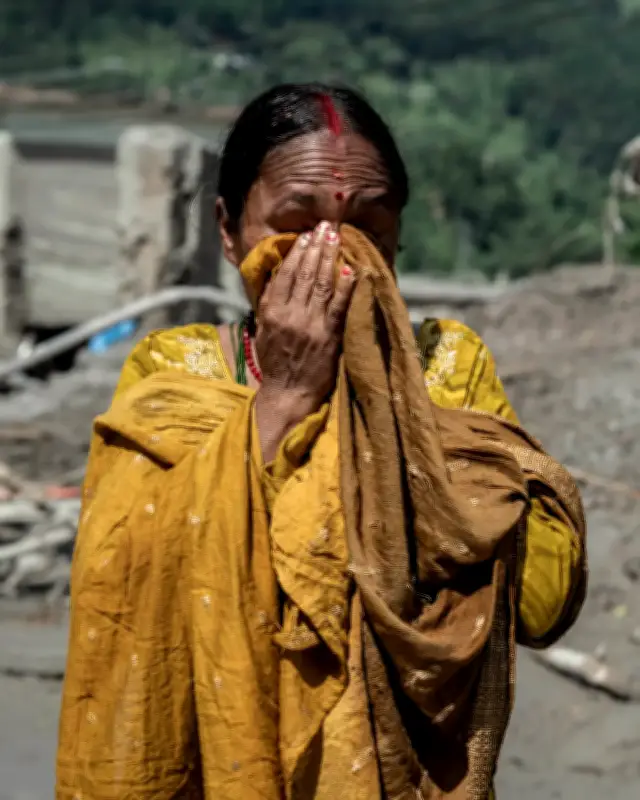
At least 579 people have been confirmed dead and more than 1,900 are still missing in Nepal after a glacier collapse triggered catastrophic flash floods in the Himalayas. The disaster struck on Wednesday morning when a melting glacier between Tibet and Nepal splintered, sending a cascade of water, mud, and debris down the Bhote Koshi River.
Survivors recount harrowing escapes
In the army barracks in Bidur, three women sat together in a tent and wept, crying out for their sons, husbands, and homes. Sangke Dolma Tamang, 61, from the village of Mailung in Rasuwa district, was cooking snacks when the floods came without warning. As her family ran uphill, she grabbed for her husband, but he slipped from her grip and was washed away.
“Others tried to pull him to safety, but the flood swept him away,” she said, tears rolling down her cheeks. Her son has also been missing since the disaster. “Now I have nothing left to live for,” Tamang said. “The whole house is gone. We couldn’t salvage anything.”
Rescue operations continue amid rising waters
Rescue efforts are being coordinated from the army barracks in Bidur, where helicopters arrive every few minutes carrying survivors from inaccessible areas. On Friday morning, ground rescue efforts were halted over fears that river levels were rising again. Nepali army spokesperson Brig Gen Raja Ram Basnet said helicopter rescues would continue as long as people were missing.
“Right now, our focus is mostly on finding the living,” Basnet said. Among those rescued was 60-year-old Murali Maiya Tamang, found hanging in a tree after her house was washed away. She waited for news of her son, who has been missing since the floods.
Hydroelectric projects and towns destroyed
Many at the barracks are waiting for news of relatives who worked on hydroelectric projects along the Bhote Koshi River, many of which were washed away or filled with mud. Footage showed rescuers pulling workers to safety from tunnels. The town of Bidur, on the banks of the Trishuli River, was reduced to mangled debris in minutes, with a bank, government office, and ATM booth half submerged in mud.
Nepal’s newly elected home minister, Sudan Gurung, surveyed the damage on Friday. “It is so sad to see such a heavy loss of human lives,” he told the Guardian. “Our priority right now is rescuing people. We are searching for everyone who is still missing, assuming that they are all alive.”
Survivors pick through the wreckage
Ashok Chaurasia, a shopkeeper in Bidur, said he heard the roar of the approaching flood moments before it appeared. He survived by just 20 seconds, clinging to the wall of a monastery, but his nephew and sister-in-law were not so lucky. “We had a three-storey house here, and now there isn’t even a single brick left,” he said. “The flood took everything I have.”



