
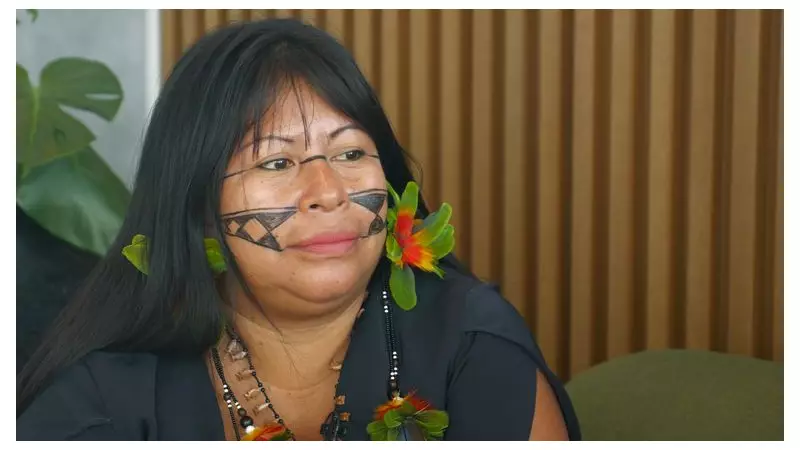
Indigenous women from Brazil's Munduruku community are living in fear of becoming pregnant due to devastating mercury contamination linked to illegal gold mining operations on their ancestral lands.
The Toxic Threat in the Tapajós
Alessandra Korap, a Munduruku community leader, has revealed the heartbreaking reality facing her people. "Many women end up losing their children," she told Sky News. "Either they can't get pregnant, or they lose their [foetus] over time. So, women are afraid of getting pregnant."
For generations, the Munduruku have inhabited territory spanning Brazil's Amazonas and Pará states, with life revolving around the Tapajós River. In recent decades, however, villagers experienced mysterious symptoms they couldn't explain: children unable to lift their heads, adults losing mobility, muscle tremors, memory loss, fading hearing and vision, and repeated miscarriages.
Researchers have now identified the cause: the Tapajós River, their lifeblood, is contaminated with highly toxic mercury.
The Gold Mining Connection
Professor Gabriela Arrifano, an expert in mercury toxicology at the Federal University of Pará, explains the diagnostic challenges. Symptoms often resemble degenerative illnesses like Parkinson's or Alzheimer's, but "there is now enough evidence to relate the signs and symptoms found in people exposed to mercury."
The source leaves no room for doubt. "We have robust evidence that mercury emissions to the environment comes from illegal gold mining activity," Professor Arrifano confirms from her laboratory where she analyses hair and blood samples.
Although gold mining is prohibited in indigenous territories, vast areas show the distinctive pockmarks of illegal operations. This underground trade operates alongside organised crime, using the same transportation networks through the Amazon rainforest and utilising gold to launder drug money.
The extraction process involves churning up riverbeds and using mercury to bind with gold particles, releasing the toxic metal into air, water and soil. Over time, mercury accumulates in river fish that form the staple diet of indigenous communities.
One study found one in five fish in northern Brazilian markets contained dangerous mercury levels exceeding 0.5 micrograms per gram.
Devastating Health Impacts
Once consumed, mercury enters the bloodstream and travels to the brain, causing lesions. Even low-level exposure can disrupt multiple body systems, including reproductive, skin and nervous systems.
Professor Arrifano describes how people's visual field shrinks, eliminating peripheral vision. "And then you can imagine this is very hard for people who live in the forest that need their complete senses."
Alessandra experiences milder symptoms including tingling hands, brain fog and forgetfulness. Her niece, however, cannot walk or talk - a condition Alessandra links to her grandfather being a fisherman and the family's fish-heavy diet.
The toxic metal accumulates in placentas, breast milk and children, often reaching two or three times the safe threshold for pregnant women. Across Brazil, one study identified 668 mercury poisoning cases, though this is considered a significant underestimate due to limited healthcare access and poor data collection.
Global Markets and Local Consequences
The administration of President Luiz Inácio Lula da Silva has intensified crackdowns on illegal mining. Brazil's environmental protection agency, IBAMA, conducts helicopter raids, destroying equipment and burning makeshift structures.
In the Yanomami Indigenous Territory, federal figures show a 94% reduction in active illegal mining areas between 2023 and 2025. However, displaced miners often establish new camps elsewhere.
Adalberto Maluf, national secretary for water resources in Brazil's environment ministry, acknowledges the challenge posed by soaring gold prices. "We thought that the amount would be reduced, and initially it did," he told Sky News. "But I think it's not going as fast as we wanted, or we thought it could happen, mainly because the price of gold continues rising."
Julia Yansara from the Financial Accountability and Corporate Transparency Coalition explains that investors seeking security from market turbulence and geopolitical tensions are driving gold prices upward, increasing incentives for miners despite risks.
"It is driving illegal gold miners into new areas. And it's driving new criminal groups to get involved in this for the first time," she says.
A Community's Resilience
The Munduruku, historically known as formidable warriors before colonisation, continue their fight for land rights. During the UN climate talks (COP30) in Belém, they peacefully blocked the conference entrance, securing a meeting that won legal rights to two additional territory portions.
Alessandra explains that demarcated land makes it easier to pressure the government for protection. "If we don't fight, we are crushed, we are taken over."
She recognises they're battling a rising tide, noting that when gold prices increase, "everyone wants to invade our land, to pollute the water, to destroy the forest." International buyers, she adds, remain unaware of the human cost: "what is happening to our bodies, to our lives."



