
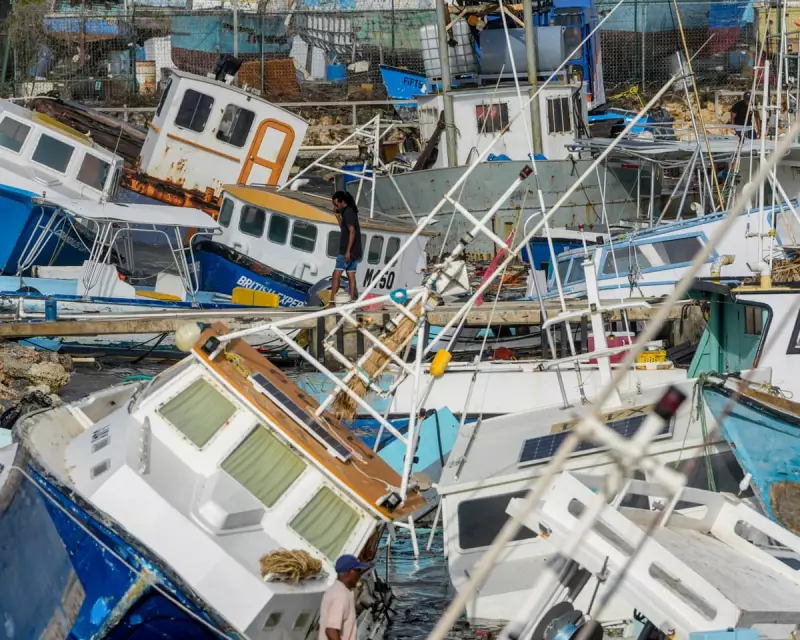
Barbados Prime Minister Mia Mottley has issued a stark warning and a call for urgent, legally mandated action against methane emissions, as the Caribbean nation reels from the damage inflicted by Hurricane Beryl.
A Climate Tipping Point Moment
The timing of the hurricane's impact on Bridgetown's fishing fleet is described as brutal. It coincides with new data showing the world is set to breach a key Paris Agreement defence. The three-year average temperature is, for the first time, projected to exceed the 1.5°C guardrail above pre-industrial levels. According to the Copernicus Climate Change Service, 2025 will join 2023 and 2024 as the three warmest years on record.
Mottley warns that with rising ocean temperatures fuelling more powerful storms, the planet is approaching irreversible tipping points. "We have already passed our first tipping point, the progressive loss of warm-water coral reefs," she states, a crisis of direct consequence to island nations. Others on the brink include the collapse of the Amazon rainforest and key ocean currents.
The Methane Solution: Fast and Effective
Prime Minister Mottley identifies cutting methane emissions as the fastest route to slow near-term warming. While reducing carbon dioxide remains vital, its effects are more long-term. Targeting easily avoidable methane emissions, starting with the oil and gas sector, could avoid nearly 0.3°C of warming by the 2040s. Combined with a tripling of renewables and doubled energy efficiency, this could halve the rate of warming by 2040.
She highlights the insufficiency of current voluntary measures. The Global Methane Pledge, launched at COP26 and supported by 160 countries, aims for a 30% cut by 2030. However, UN analysis suggests existing policies would only achieve an 8% reduction. "The urgency of the climate demands mandatory measures," Mottley insists.
Blueprint for a Binding Agreement
The Prime Minister argues it is time for a binding international agreement focused on the oil and gas industry. She is joined in this call by leaders from Micronesia, Tuvalu, and France's President Emmanuel Macron. Key elements for a potential pact are falling into place:
- Companies representing 40% of global oil and gas production pledged at COP28 to end routine flaring by 2030.
- The EU's binding methane regulation bans flaring and will soon prohibit leaks, setting a robust monitoring standard.
- Over 80 countries, led by Brazil's President Lula, are developing a fossil fuel phase-out roadmap where methane action is a logical first step.
Mottley points to the Montreal Protocol of 1987 as inspiration. That binding treaty, which healed the ozone layer, is on course to prevent 2.5°C of warming by 2100. It was negotiated swiftly by a pioneering coalition of nations. Mottley proposes a similar timeline: convene willing heads of state in 2026, begin negotiations in early 2027, and adopt an agreement as soon as possible.
Such a legally binding methane pact, she concludes, would prevent energy waste, buy crucial time to build resilience and scale decarbonisation technologies, and help finance a just transition for developing nations. "Preventing methane energy waste makes sense for industry, and it makes sense for people and the planet," Mottley writes. As the damaged boats in Bridgetown harbour testify, the cost of inaction is already being counted.



