
Invisible Plumes and 'Terrible Pollution': The Reality of US Gas Sites Rated 'Grade A'
A rapidly expanding certification scheme operated by a UK nonprofit, MiQ, may be significantly understating the methane emissions it certifies, according to an exclusive Guardian investigation. This scheme is utilized by major gas companies like BP, ExxonMobil, and EQT to demonstrate compliance with the European Union Methane Regulation (EUMR), which aims to curb energy-related emissions. The findings cast serious doubt on whether third-party certification can credibly verify exporters' adherence to the EU's new methane rules, an approach promoted by the gas industry and now backed by the European Commission.
Field Observations Reveal Alarming Leaks
MiQ, which runs the largest voluntary methane certification program globally, covering approximately 20% of US natural gas production and 7% worldwide, assigns ratings from A to F based on methane intensity—the ratio of emissions to gas produced. In July 2025, investigative group Gas Outlook, accompanied by environmental monitoring group Oilfield Witness, visited 10 MiQ-certified sites across the Permian Basin, the largest oil and gas field in the US, spanning Texas and New Mexico. Using optical gas imaging cameras, they documented what former air quality inspector Tim Doty described as "huge emissions" at multiple locations.
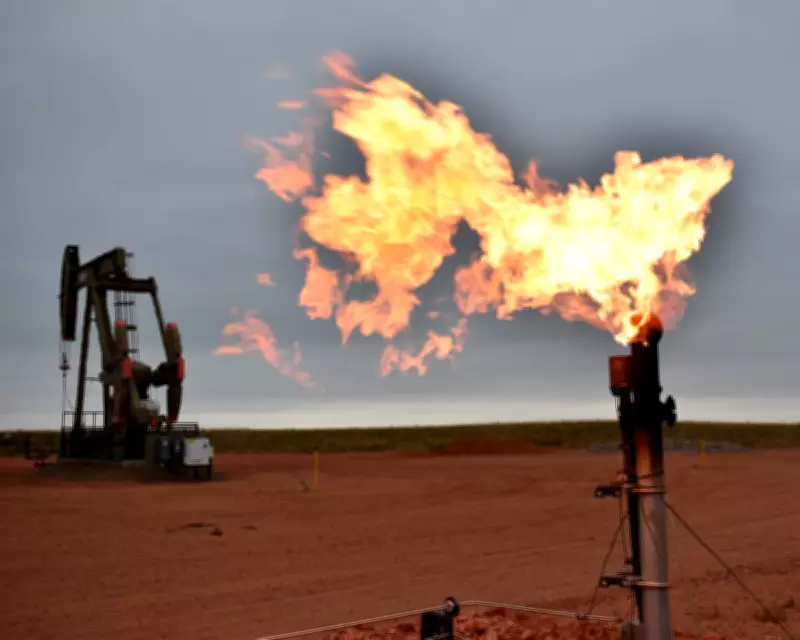
At BP's State Ella Mae Hall gas well, images showed an unlit flare malfunctioning, effectively acting as a vent pipe rather than a combustion device. Similarly, at the BP-operated Gretchen Northrup well, "significant emissions" were detected due to flaring and maintenance issues. BP claims all its onshore upstream US operations are MiQ-certified, with ratings from A to C, implying leakage rates below 0.2% of production, but the company did not respond to requests for comment.
Satellite Data Confirms Widespread Underreporting
Gunnar Schade, an atmospheric chemist at Texas A&M University, noted that flaring inherently releases methane, making emissions control challenging. This is exacerbated in the Permian Basin, where flaring is rampant. A February 2026 report from MethaneSAT, a satellite launched by Environmental Defense Fund and Harvard, found emissions in the Permian from May 2024 to June 2025 to be four times higher than US Environmental Protection Agency estimates, which rely on operator-reported data. Researchers estimate average methane emissions in the basin range between 2.4% and 4% of production, far exceeding even MiQ's C grade.
In New Mexico, similar issues were observed at ExxonMobil's Poker Lake complex, which has held an A rating from MiQ since 2022. Methane leaks were detected from tanks, inefficient flares, and faulty equipment, including a pressure relief valve emitting uncombusted gas. ExxonMobil did not reply to requests for comment. Aerial surveys by the Global Airborne Observatory in 2024 identified three "super-emitter" events at this site, yet the company reported no venting or flaring in regulatory filings.
Auditing Process Relies on Operator Data
To earn MiQ certification, operators are evaluated on methane intensity, leak prevention procedures, and monitoring technologies. Third-party auditors review these factors annually with advance notice, but they do not conduct independent emissions measurements. Instead, auditors verify the operator's emissions inventory through interviews and documentation. Elizabeth McGurk of Montrose Environmental, an MiQ audit firm, explained that auditors assess how operators track intermittent events but do not calculate emissions themselves.
Dan Zimmerle of Colorado State University highlighted the challenge: emissions occur continuously, but measurements are often snapshots, with the rest inferred statistically. He questioned how verifiers can truly know what was done, as most companies estimate emissions rather than measure them directly. Peer-reviewed studies using satellite and aerial data consistently show that nations and companies emit more methane than they report.
Certificate Trading and Decoupling Concerns
MiQ certificates can be decoupled from the facilities that generated them and traded to offset emissions, sold on platforms like CG Hub. This allows companies to attach certificates to gas with higher emissions, raising concerns about credibility. Jutta Paulus, an MEP involved in designing the EUMR, stated that MiQ's trading rules may not fully comply with the regulation, as certificates should only be sold with the certified gas. However, MiQ strategic adviser Axel Scheuer argued that transfers are controlled and limited to actual exports and imports.
In the US, where gas from multiple producers is mixed in pipelines, it is often impossible to trace whether "certified" gas comes from lower-emission facilities. Trading is increasing, with deals like Centrica Energy's 10-year agreement to buy certificates linked to Seneca Resources' A-rated gas, without physical delivery. Brandon Locke of Clean Air Task Force warned that decoupling discourages real operational changes, allowing companies to "copy someone else's homework" rather than reduce emissions.
Lobbying and Regulatory Pressures
As the EU finalizes methane requirements, lobbying intensifies, with gas producers advocating for voluntary certification. The American Petroleum Institute and FuelsEurope are pushing for certification acceptance, while MiQ has hired lobbying firm Energy & Climate Policy Advisory Europe, led by former ExxonMobil lobbyist Axel Scheuer, to promote its framework in Brussels. Scheuer has pitched MiQ as a "pragmatic compliance tool" and presented it at UN workshops, claiming equivalence to EU regulations.
In December, the European Council endorsed third-party certification, and the European Commission echoed this stance. Georges Tijbosch, MiQ's CEO, views certification as progress, emphasizing that reducing methane emissions is a cost-effective climate action. However, climate experts like Kevin Kircher of Purdue University argue that credible certification requires independent measurement by neutral parties, not companies with vested interests. The investigation underscores the urgent need for accountability in methane emissions reporting to ensure real environmental impact.



