
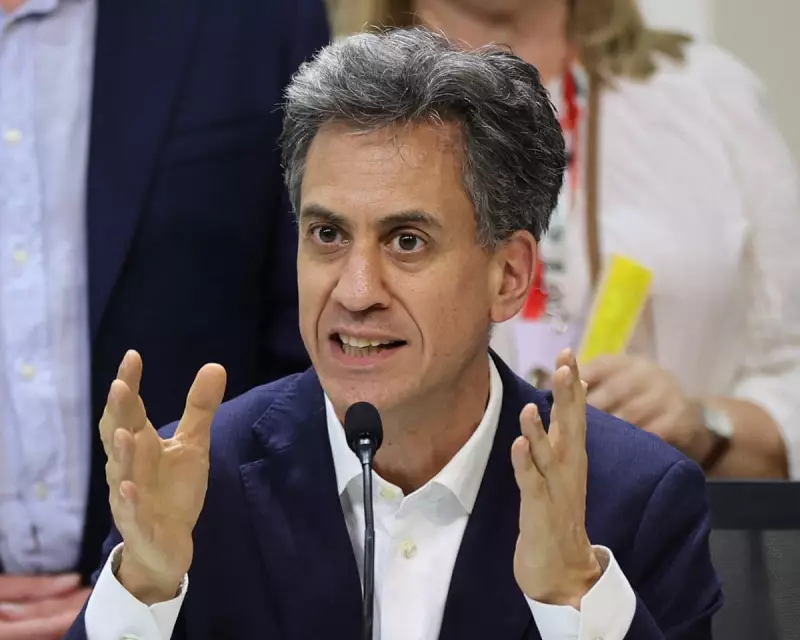
UK Energy Secretary Ed Miliband has declared that supporters of a global fossil fuel phaseout must find creative pathways to keep the proposal alive, including potentially making it a voluntary initiative, as critical UN climate talks in Brazil extended beyond their official deadline.
Deadlock Over Fossil Fuel Roadmap
As the Cop30 summit in Brazil continued past its Friday night cut-off, the prospect of nations agreeing on a definitive roadmap for a worldwide transition away from fossil fuels appeared increasingly unlikely. An initial draft of the potential summit outcome had included this crucial formulation, but it was notably absent from the updated text produced on Friday by the Brazilian presidency.
Miliband told The Guardian that one way or another the two-week summit would yield an outcome containing the pledge, though it might be in an altered form. We are fighting for the roadmap for the transition away from fossil fuels, and we’ve determined that one way or another we won’t lose the momentum that we’ve built at this Cop, he stated, highlighting a big coalition of both developing and developed countries in favour.
Global Divisions and Resistance
While more than 80 countries have backed the call for a fossil fuel transition roadmap, significant opposition remains. The Arab Group, led prominently by Saudi Arabia, has been at the forefront of the resistance. They are joined by Russia, Bolivia, several African nations, and other heavy consumers of fossil fuels who have rejected the wording.
Miliband emphasised the need for inventive thinking. We need to think creatively about the possible ways in which we could get this roadmap process going, he said. What matters to me is the outcome... There’s a critical mass of countries that want that to happen. But there’s different ways of doing it.
The European Union has also been actively urging countries to publicly support the transition. EU Climate Commissioner Wopke Hoekstra labelled the text without the commitment as unacceptable and warned of a potential no-deal situation.
Financial Demands and Accusations of Ransom
The issue has sparked tension between developed and developing nations. Richard Muyungi, envoy to the president of Tanzania and current chair of the African Group of Nations, accused wealthy countries of holding poorer nations to ransom. He claimed that the EU was opposing Africa's call for a tripling of adaptation finance to about $120bn a year because some African countries refused to back the fossil fuel roadmap.
The phaseout of fossil fuels is not an African issue, Muyungi argued. We emit only 4% of total global emissions... Why are we being held to ransom? It’s like you are trading our lives with something we never caused.
However, Panama's special representative for climate change, Juan Carlos Monterrey, offered a different perspective, suggesting that greater ambition on cutting fossil fuel emissions was linked to increased financial support from developed nations.
Behind the scenes, China is not among the countries blocking the roadmap, while India has taken a firmer stance, insisting developed countries bear responsibility for historical emissions. A few developing countries with fossil fuel interests, including Nigeria and Sierra Leone, have surprisingly backed the potential roadmap.
The Critical 1.5C Goal and The Path Forward
Also hanging in the balance at Cop30 is the urgent matter of the gap between current national climate plans and the goals of the Paris Agreement. Existing pledges would lead to around 2.5C of global heating, far exceeding the 1.5C limit critical for vulnerable nations.
A delegate from the Alliance of Small Island States confirmed this issue is paramount, yet the draft text only offered options for further discussion. Leo Roberts of the E3G thinktank provided a concluding analysis, stating that even without formal agreement, the signal from Cop30 is clear: a growing number of countries recognise that a managed, collectively navigated route to fossil fuel phaseout is essential to avoid a chaotic future.



