
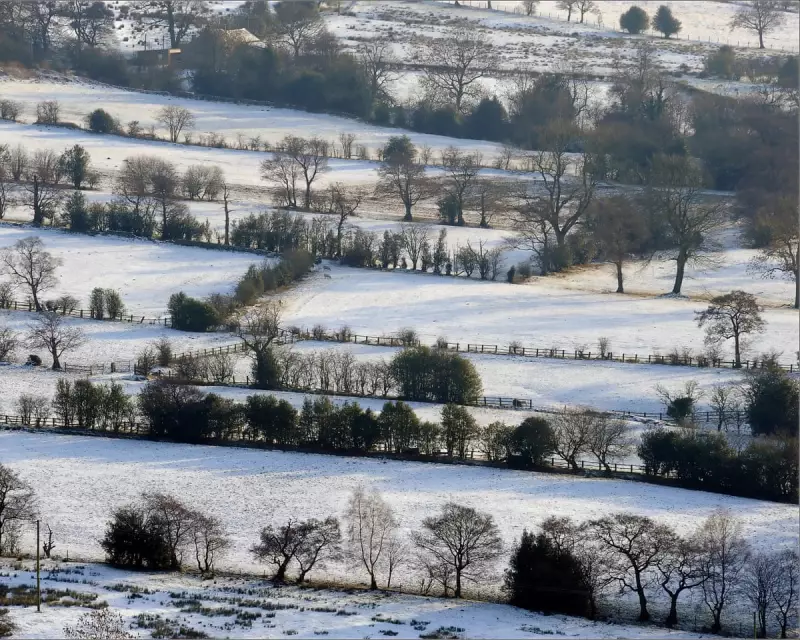
Hopes for a picture-perfect white Christmas across the UK are set to be dashed this year, according to the latest forecast from the Met Office. The national weather service has indicated that the chance of 'noteworthy' snowfall on 25 December is slim, dealing a blow to those dreaming of festive snowball fights.
Chilly but Largely Snow-Free Festive Forecast
The meteorological picture for the holiday period is being shaped by building high pressure. This will bring drier and more settled conditions to many areas, although some showers are still expected. A brisk easterly breeze will make it feel distinctly chilly, though temperatures are forecast to be fairly typical for late December.
Daytime highs on Christmas Day are predicted to reach around 7°C, with overnight lows potentially plunging to -3°C or -4°C in some spots. This means a frosty morning is more likely than a snowy one for most of the country.
Where Might We See a Flurry?
If any snow does materialise, the south coast of England—stretching down towards South Devon and Cornwall—currently has the greatest chance of seeing the odd wintry flurry. Marco Petagna, a Met Office meteorologist, tempered expectations, stating, "The chance of noteworthy snowfall is only around 10%, so nothing significant."
He also clarified the technical definition used by forecasters: for an official 'white Christmas', only a single snowflake needs to be observed falling anywhere in the UK. By this measure, it is not an unusual event, occurring 54 times in the last 66 years. However, the iconic image of snow lying thick on the ground is far rarer.
The Historical Rarity of a Snow-Covered Christmas
Data from the Royal Meteorological Society (RMetS) underscores how uncommon a proper blanket of Christmas snow has become. Since 1960, widespread settling snow has been recorded on just four occasions: in 1981, 1995, 2009, and 2010.
The winter of 2010 holds the record, with snow on the ground at 83% of UK weather stations on Christmas Day. More recently, while snow was recorded falling at 11% of stations in 2023 and 9% in 2022, it did not settle in either year.
This trend away from harsh festive winters is linked to broader climatic shifts. Met Office data shows that Decembers in the UK have become notably warmer in recent decades, reducing the overall likelihood of Christmas snowfall, though cold snaps can still occur due to natural variability.
Most of the UK's snow days actually occur between January and March, offering some consolation for snow enthusiasts after the festive season.
A Changing Climate and Historical Winters
The scarcity of deep snow at Christmas contrasts with historical periods like the 'Little Ice Age' between the 16th and 19th centuries, which may explain the frosty scenes often depicted in Charles Dickens's writings. In living memory, exceptionally severe winters like those of 1946–47 and 1962-63 saw prolonged snow cover, with much of England blanketed every day from late December until early March in 1963.
While a white Christmas remains a cherished ideal, the current forecast and long-term climate trends suggest that for most Britons this year, the festive weather will be characterised by crisp, cold air and winter sunshine rather than a flurry of snow.



