
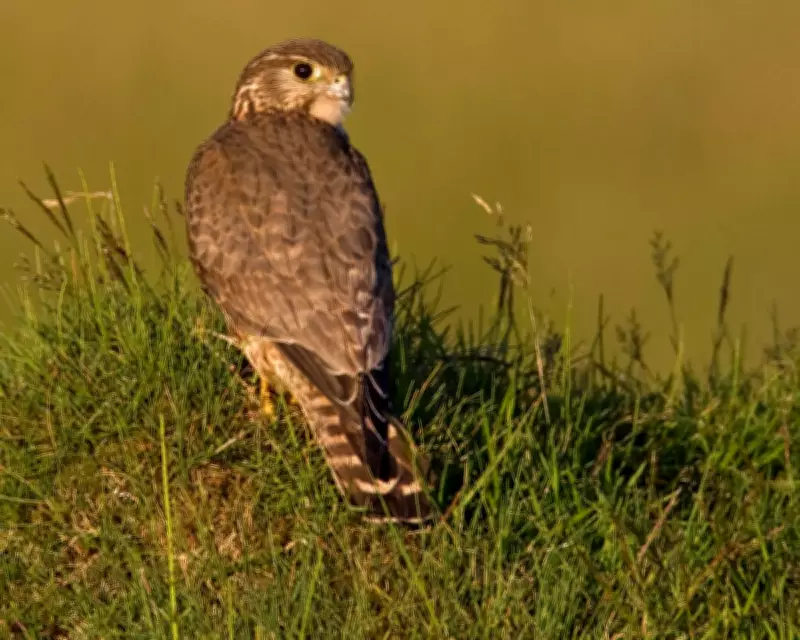
UK's Smallest Bird of Prey Among 200 Species Facing Extinction in Climate Crisis
Researchers have issued a stark warning that the United Kingdom faces a critical 20-year window for decisions on climate change and land use, which will determine the fate of over 200 native species, including the merlin, Britain's smallest bird of prey. A new study from the UK Centre for Ecology & Hydrology (UKCEH) predicts that without urgent action, the British isles could reach an ecological "point of no return" by 2050, leading to widespread biodiversity loss.
Decisive Two Decades for Biodiversity Recovery
Dr. Rob Cooke, a senior ecologist at UKCEH and lead author of the study published in Nature Communications, emphasized the urgency of the situation. "Our results show that the next 20 years will be decisive," he stated. "The choices we make now will set Britain on a path either towards accelerating biodiversity loss or towards nature recovery." The research modeled six future scenarios, ranging from best-case to worst-case outcomes based on greenhouse gas emissions and land management practices.
Worst-Case Scenario: Over 200 Extinctions
In the worst-case scenario, characterized by environmentally damaging agricultural and urban intensification and global heating of 4°C above preindustrial levels, the study forecasts the extinction of 196 plant species, 31 bird species, and seven butterfly species in Britain. This represents losses at more than three times the historical extinction rate, with many regions losing up to 20% of their local species. Cooke highlighted specific at-risk species, including the merlin, mountain ringlet and large heath butterflies, and plants like burnt orchid and Alpine gentian.
Impacts on Ecosystems and Human Life
The potential extinctions would have severe consequences for local habitats and ecological functions. Cooke warned that this would negatively affect soil health, nutrient cycling, pollination, and food production, leading to knock-on effects for both wildlife and human populations. Even under milder warming scenarios, biodiversity in Britain is expected to face significant upheaval, with many species likely beyond saving due to past habitat destruction and global heating.
Hope Through Sustainable Policies
Despite the grim outlook, the study offers a glimmer of hope. It estimates that adopting more sustainable climate and land use policies could prevent the extinction of 69 species compared to the worst-case scenario. Better-case scenarios involve strong action on emissions, sustainable land management, reduced meat and dairy consumption, and a societal shift towards valuing the environment. This underscores the importance of immediate and decisive measures to curb emissions and promote conservation efforts.
The findings serve as a critical call to action for policymakers, businesses, and the public to prioritize environmental sustainability in the coming decades to avert irreversible damage to the UK's natural heritage.



