
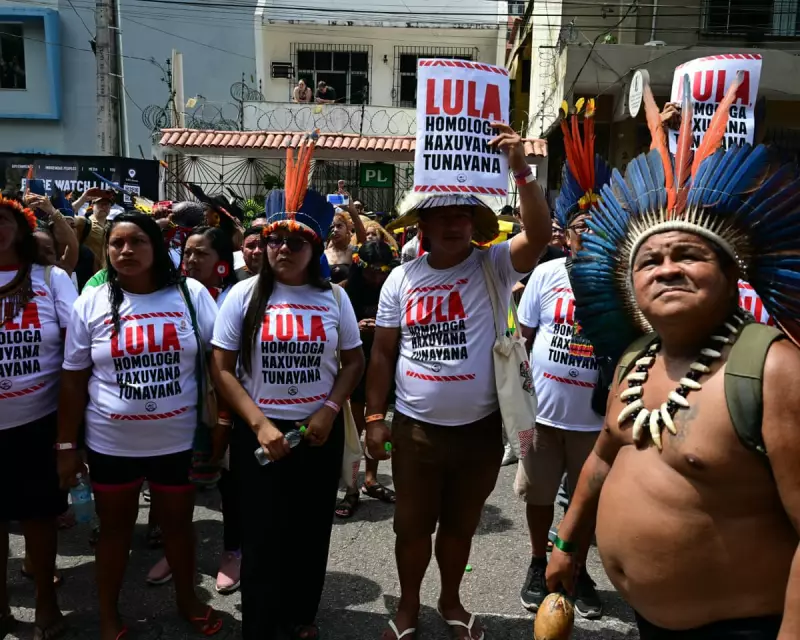
Brazilian President Luiz Inácio Lula da Silva is making a dramatic return to the COP30 climate talks in Belém on Wednesday as international support grows for including a definitive roadmap to phase out fossil fuels and end deforestation among the summit's key outcomes.
Global Support Meets Resistance
More than 80 countries have now endorsed proposals to chart a course away from the era of coal, oil and gas, though significant opposition remains from petrostates and other major economies. With negotiations entering their final days, the stage is set for crucial diplomatic manoeuvring.
The Brazilian presidency maintains that the global talks will conclude as scheduled on Friday, despite multiple critical issues remaining unresolved, including finance and trade arrangements. Achieving this would break a pattern of COP overruns that has persisted for more than two decades.
Lula's Crucial Diplomatic Mission
President Lula faces the critical task of persuading China and India to back the fossil fuel phase-out proposal while securing additional financial commitments from the European Union. Observers note that only through these diplomatic successes can what many are calling a "historical political mandate" be achieved.
Negotiators have been encouraged that the main text under discussion remains relatively "clean" compared to previous years, with fewer bracketed sections indicating areas of disagreement. Although the transition away from fossil fuels wasn't originally on the conference agenda, Lula has emphasised his commitment to this outcome in three previous speeches delivered in Belém.
The Devil in the Detail
While a roadmap for eliminating the primary sources of global emissions would represent significant progress, climate advocates express concerns that current wording may be too vague to drive meaningful action. Many are pushing for measurable goals and clear implementation plans to ensure any agreement delivers concrete results.
The success of these efforts hinges on parallel progress regarding climate finance. Wealthy industrialised nations, bearing greatest responsibility for historical emissions, have committed to supporting developing countries through the energy transition and adaptation to climate impacts. However, current commitments fall short of requirements, and much of the promised funding has yet to materialise.
The urgent need for action has been underscored by indigenous leaders and scientists participating in the conference. Forest communities have described devastating droughts affecting their territories, alongside land invasions and illegal mining operations. Climate researchers have warned that the Amazon and other vital biomes are rapidly approaching irreversible degradation points with potentially catastrophic global consequences.
New analysis from the Climate Action Tracker coalition offers hope, suggesting that simply honouring existing government commitments could reduce global heating rates by one-third within the next decade. This would require tripling renewable energy generation by 2030, doubling global energy efficiency, and making substantial cuts to methane emissions.
With Brazilian hosts describing COP30 as the "action summit," the coming days will reveal whether world leaders can translate ambition into binding agreements that match the scale of the climate challenge.



