
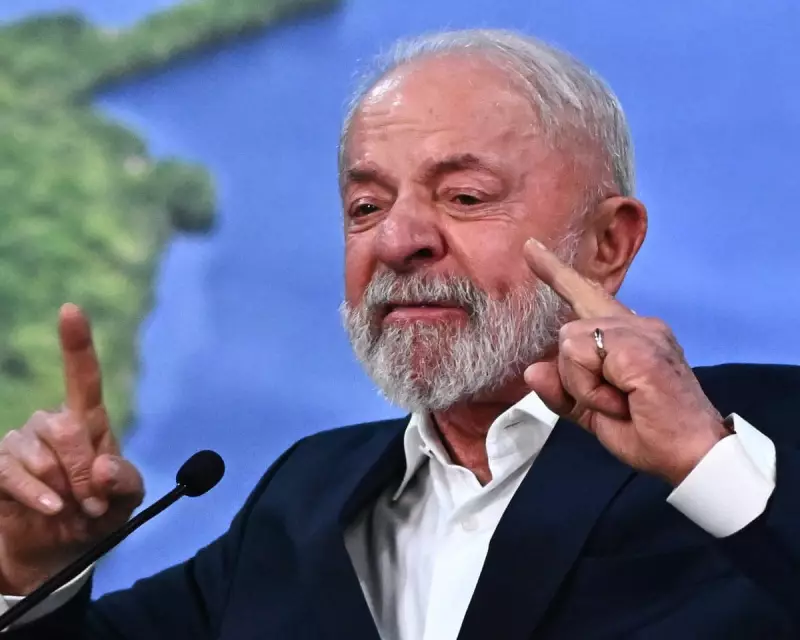
Brazilian President Luiz Inácio Lula da Silva has declared he will take his ambitious fossil fuel transition roadmap to the G20 summit in Johannesburg this week, despite facing significant opposition from major oil-producing nations.
Lula's Climate Crusade Expands
Before departing the Cop30 climate conference in Belém, the prominent global south leader told civil society representatives he was prepared to fight for the proposal to phase out oil, coal and gas in any necessary forum. Marcio Astrini, director of the Climate Observatory campaign group, revealed that Lula told him: "He was all in on the roadmap and that he would campaign for it everywhere, in the G7 and G20."
Astrini explained the president's motivation stems from genuine concern for those most vulnerable to extreme climate events. "It's his proposal. He's worried about those who are threatened by extreme climate events. That's what moves him. He understands the climate crisis is a machine that worsens poverty and inequality," Astrini stated.
International Resistance Grows
The climate conference negotiations took an unexpected turn as Lula prepared to expand his campaign to the G20, which brings together more powerful world leaders than Cop, where discussions are primarily handled by ministers. However, the proposal faces substantial challenges.
Eighty-two governments initially supported the roadmap on Tuesday, but they represent only 7% of global fossil fuel production. The plan suffered a significant setback when sources close to negotiations confirmed that Russia, China, India and South Africa jointly informed the Brazilian Cop presidency they would not accept the plan.
The "like-minded developing countries" grouping, which includes several coal and oil producers, has also expressed reservations. Consequently, the Guardian understands the proposal has been removed from the latest draft of the main negotiating text, with some observers claiming the roadmap is already effectively doomed.
Behind Closed Doors
The Brazilian presidency has adopted a more secretive approach despite earlier promises of transparent "mutirão" collective negotiations. Observers report that recent talks have mainly occurred behind closed doors, with hosts showing only portions of the text to each national group.
However, there may still be room for compromise. In private discussions outside the presidency's formal meetings, sources indicate that Saudi Arabian and Chinese diplomats have shown openness to the roadmap concept, provided each country can choose its own pathway. India has reportedly been more hesitant in its position.
Less developed countries might be persuaded to support the proposal if the European Union and other industrialised nations make clearer financial commitments. The EU has signalled that the roadmap represents a red line they're willing to defend, though they must also demonstrate willingness to provide adequate funding.
Internal Brazilian Divisions
Adding complexity to the situation are the divisions within Brazil itself, where Lula's ability to act is constrained by a powerful petrochemical and agribusiness lobby. Different ministries within his government also display varying levels of ambition for Cop30.
Environment Minister Marina Silva has been the driving force behind the roadmap, convincing Lula of its necessity and promoting the idea in Belém. In contrast, the foreign ministry, represented by Cop president André Corrêa do Lago, has taken a more cautious approach. Multiple sources told the Guardian that the foreign ministry doesn't support the roadmap due to failure risks, preferring to focus on smaller, more achievable victories that can maintain the multilateral process.
The negotiations faced additional disruption when a fire broke out in the pavilion area of the conference centre during the afternoon. Delegations meeting in nearby rooms were evacuated, and although the UN confirmed no injuries occurred, the entire venue required clearing. Firefighters contained the blaze, but officials indicated it would likely be several hours before delegates could return.
The incident severely disrupted the carefully planned meeting schedule, including cancelled sessions with the Alliance of Small Island States (Aosis) and potential delays to EU ministerial coordination meetings. The severity of this disruption at such a critical stage makes adhering to the Brazilian timetable increasingly unlikely and may push talks well into overtime.



