
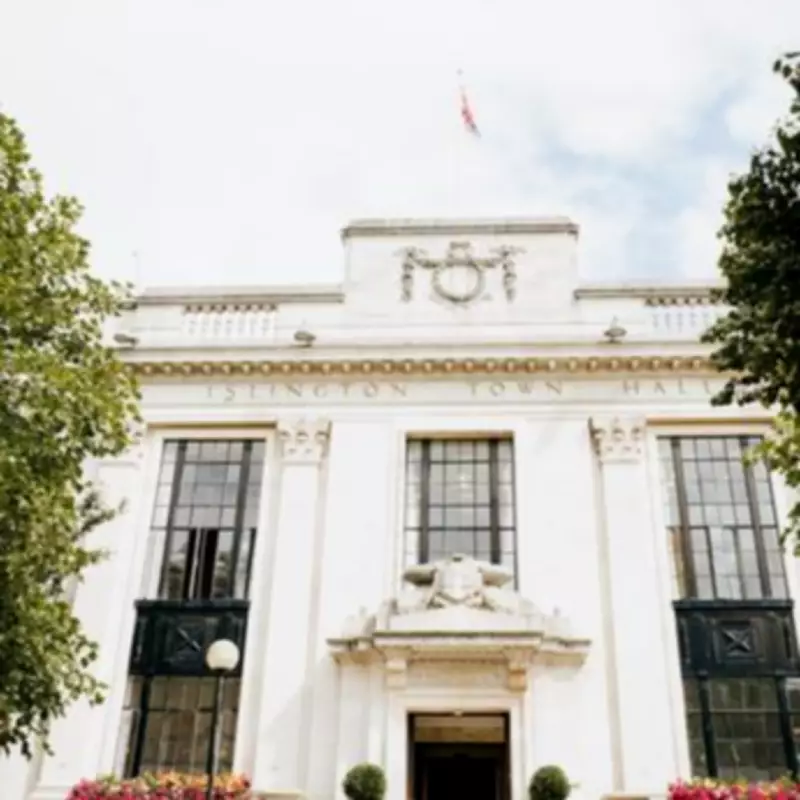
London's Leading Green Council Forced to Rethink Net-Zero Strategy
Islington Council, celebrated as one of the greenest local authorities in the country, has announced it is scaling back its net-zero initiatives this year due to mounting financial pressures. The Labour-run council, which has earned accolades for its ambitious climate targets, now faces the stark reality of government funding cuts that have left its decarbonisation efforts in jeopardy.
Funding Shortfalls Force Climate Action Pause
In a significant shift, Islington Council plans to pause several key net-zero schemes, citing a lack of government support as the primary constraint. The council, which was ranked the best single-tier local authority in the UK for climate action last year, had previously implemented pioneering projects such as decarbonising its waste recycling centre, rolling out electric vehicles, and retrofitting social housing.
Budget documents released last month reveal the "severe limits" on capital needed for essential upgrades, including replacing gas boilers with renewable alternatives and connecting civic buildings to heat networks. This financial strain has compelled the council to revise its original net-zero targets, aiming for more "realistic" goals in light of current economic challenges.
Financial Pressures Outweigh Government Support
Despite receiving approximately £4 million in additional funding from the government's Fair Funding Review for the coming financial year, Islington Council anticipates that this will be insufficient to cover a projected 10% rise in total costs. This increase is driven by inflation and heightened demand for public services, creating a budget gap that threatens climate initiatives.
The council has admitted it cannot afford the match funding required to secure specific decarbonisation grants from the government, further hampering its ability to advance environmental projects. Councillor Rowena Champion, Executive Member for Environment, Air Quality & Transport, emphasised that while the council remains committed to reducing carbon emissions "as much as possible, as quickly as possible," its efforts are being stifled by the broader "national picture."
Sustained Commitment Amid Setbacks
Islington Council continues to pursue elements of its original 'Vision 2030' climate plan, including traffic restrictions to promote "healthy streets" and expanding the innovative Bunhill heat and power network, which harnesses energy from underground railways. Additionally, the council is decarbonising its pensions and investments by 48%, with a significant portion of its pension fund directed toward low-carbon technology and sustainability-themed investments.
The council declared a climate emergency in June 2019, pledging to achieve net-zero carbon status for the borough by 2030. Progress has been notable, with transport emissions in Islington reduced by 25% since 2018, according to reports from the Local Democracy Reporting Service in 2024.
Broader Implications for Local Climate Action
Cllr Champion highlighted the dependency of net-zero targets on national factors, such as the transition to sustainable electricity sources and the high cost of electricity compared to gas. She noted that the council is engaging with local residents, businesses, and partners to develop a new climate action plan, expressing hope that government priorities on clean energy will provide future opportunities to accelerate projects.
Islington's situation underscores the challenges faced by local authorities in balancing environmental ambitions with financial realities, raising questions about the feasibility of net-zero goals without sustained government support.



