
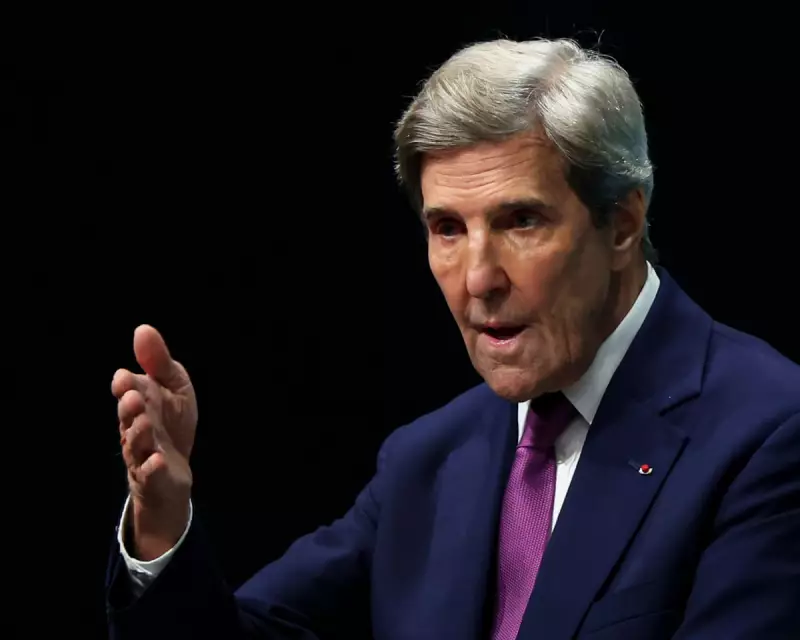
In an exclusive interview, former US Secretary of State John Kerry has delivered a stark message to Australia as it prepares to lead the world's most critical climate negotiations. He insists that only through direct confrontation with the globe's largest fossil fuel producers can genuine progress be made.
A Call for a 'Hard-Nosed' Presidency
John Kerry has urged the Australian government to adopt a more demanding stance in its role as president of the next UN climate summit, COP31. He believes Australia must immediately convene a meeting with the world's 25 biggest greenhouse gas-emitting countries and compel them to draft a concrete roadmap to end the fossil fuel era.
This 'hard-nosed' approach, as Kerry describes it, is essential for tackling the escalating climate crisis. He emphasised that reducing consumption in major economies is non-negotiable. Australia's Climate Change and Energy Minister, Chris Bowen, will helm these complex negotiations, despite the summit being hosted in Turkey, following a unique compromise between the two nations.
"We need to be more demanding, more pushy," Kerry told The Guardian. "The Australian president of the Cop31 climate summit needs to take charge. Only if you get China, Russia, the US, India, and Europe together and they decide to really do the transition to a clean economy will everyone else follow."
The Diplomatic Challenge and a Path Forward
Kerry acknowledged the immense difficulty of this task, singling out Saudi Arabia and Russia as particularly challenging partners. He also noted that a potential US administration under Donald Trump would require severe international pressure to participate constructively.
However, he remains optimistic that some fossil fuel producers will agree to set a phaseout roadmap. Merely calling such a meeting would be strategically valuable, he argued, as it would expose and isolate objectors who prefer to operate from the shadows.
"It will expose the objectors. Call them out," Kerry stated. "People need to see that if you're not part of the process, you're part of the problem. Everyone has to run out of patience with the games that are being played."
Drawing from his personal experience, Kerry recounted the marathon negotiations at COP28 in Dubai, where he helped broker a landmark deal to "transition away from fossil fuels" after an all-night session with Saudi Arabia's Oil Minister, Prince Abdulaziz bin Salman. He described the minister as a direct and honest interlocutor, revealing that a part of him was open to finding a constructive path.
Lessons from COP30 and the Road to COP31
Kerry issued a clear warning to Australia: it must learn from the shortcomings of the recent COP30 summit in Brazil and begin preparatory work early. He criticised the late emergence of the fossil fuel roadmap proposal, which was only championed by a coalition of countries midway through the conference.
"It was a shame they did not try earlier to begin the process with the fossil fuel roadmap and then build it up at COP," he said. "Australia needs to come to the table with options for what the proposal ought to be. They need to respect other countries' positions and what is possible for them."
He also pointed to the relentless impacts of climate change as an inevitable force that will compel even reluctant nations to act. "Mother Nature is going to make it crystal clear," Kerry asserted. "You will have to show your people how you will keep them alive at 50C, or where their food and water is going to come from. That is an inevitability."
Finally, Kerry stressed the need to make climate action a voting issue for the public. He advised focusing on practical benefits, such as lower energy costs and protecting property values, rather than overwhelming people with dire warnings. By framing the clean energy transition as a choice that improves daily life, politicians can be forced to take meaningful action.



