
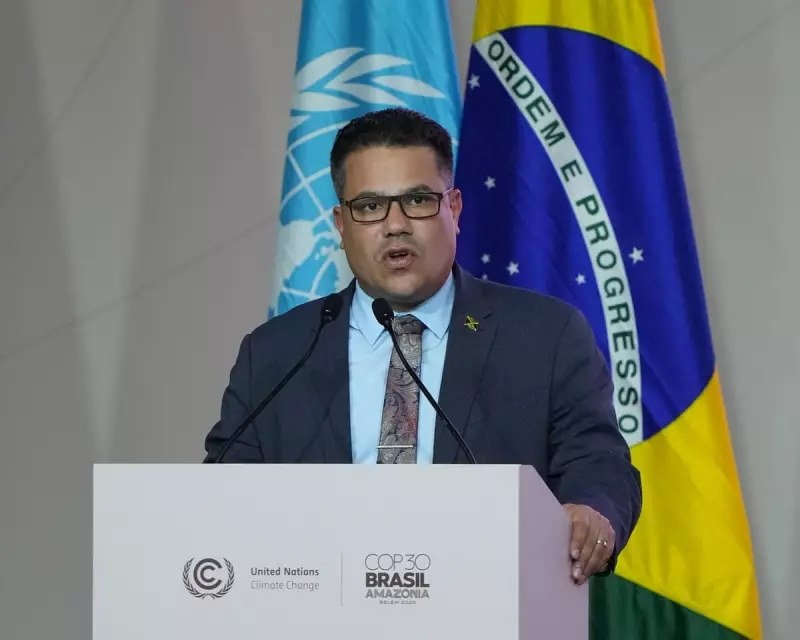
Jamaica has spearheaded urgent calls from climate-vulnerable nations at the Cop30 summit in Belém, Brazil, demanding immediate action on climate breakdown as the conference entered its critical second week.
The Survival Plea from Small Island Nations
As high-level ministers took over negotiations from technical teams, representatives from vulnerable countries lined up to deliver stark warnings about the life-or-death nature of climate action. Matthew Samuda, Jamaica's economic growth minister, presented powerful testimony about the devastation caused by Hurricane Melissa, which struck just three weeks earlier.
The category 5 hurricane caused nearly $10 billion in damage and displaced hundreds of thousands of Jamaicans, with Samuda describing it as evidence of "the new phase of climate change." He emphasised that while Jamaica didn't create the climate crisis, its people refuse to stand as victims.
"We call on the global community, especially major emitters, to honour their commitments and safeguard the 1.5C threshold for Jamaica," Samuda declared. "This is survival. It's about our people and their right to a safe and prosperous future."
United Front from Climate-Vulnerable Countries
The Jamaican minister's powerful statement was echoed by representatives from other nations facing existential threats from climate change. Armando Rodríguez Batista, Cuba's environment and science minister, reported that his country had also been severely flooded by Hurricane Melissa.
"Tomorrow it will be too late to do what we had to do a long time ago," Rodríguez Batista warned, capturing the urgency felt by many delegations.
Mauritius's foreign affairs minister, Dhananjay Ramful, delivered perhaps the most dire assessment, stating plainly: "Our very existence is at stake." He noted that a decade after the Paris agreement promises, "we realised that we have not done enough... our planet demands action now."
Several ministers described climate damage as their day-to-day reality and called ambitious emissions cutting "a moral duty" for wealthier nations.
High-Level Segment Begins Amid Stalled Talks
Monday marked the start of the summit's "high-level segment," where ministers arrived in Belém with hopes of breaking deadlocks that had stymied technical negotiators during the first week. Liliam Chagas, Brazil's chief negotiator, summarised the transition: "We have done the technical work, now the political work begins."
While some progress has been made on less contentious issues like agriculture and food security measures, along with procedural matters concerning the loss and damage fund, several critical areas remain unresolved.
Negotiations on carbon markets, gender considerations, just transition mechanisms, and adaptation efforts continue with limited movement. The most contentious issues—dubbed "the big four"—include climate finance, trade, transparency, and addressing the inadequacy of current national climate plans that would lead to 2.5C warming rather than the Paris agreement's 1.5C limit.
UN climate chief Simon Stiell highlighted the disconnect between real-world climate impacts and negotiation room progress, noting: "The pace of change in the real economy has not been matched by the pace of progress in these negotiating rooms."
Brazil's vice-president, Geraldo Alckmin, echoed the urgency, stating: "The time for promises is over. Each additional fraction of a degree of global warming represents lives at risk, greater inequality and greater losses for those who contributed least to the problem."
As the summit moves into its final days, all eyes will be on whether political leaders can overcome entrenched positions and deliver meaningful outcomes for the world's most climate-vulnerable nations.



