
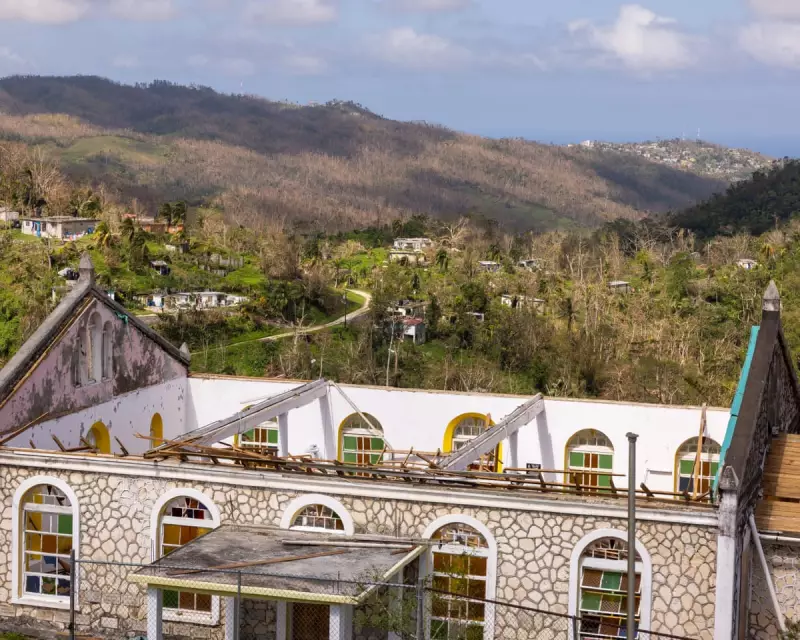
The violent winds of Hurricane Melissa have torn through Jamaica, leaving a trail of destruction that campaigners describe as a stark reminder of colonialism's enduring impact. The category 5 storm has caused an estimated $6bn-$7bn in damage, with 45 confirmed deaths and 13 people still missing.
A Historic Symbol of Resistance Destroyed
In the village of Cold Spring in Hanover, the Gurney's Mount Baptist church, which had stood for centuries as a monument to endurance, was brutally damaged. The storm ripped off the entire roof and reduced the sturdy pews to a tangled wreck of wood and debris.
This was no ordinary place of worship. The church was a living landmark to resistance, having survived the famous 1831 slave revolt led by Samuel Sharpe. Its walls still bear the names of past members, and the 'freedom stone' commemorating the abolition of slavery on 1 August 1838 remains embedded in its structure.
Reverend O'Neil Bowen expressed the profound loss to the community, noting that the destruction of both the church and the adjacent school represents a huge blow as faith groups play a crucial role in Jamaica's recovery efforts.
Colonial Legacies and Climate Vulnerability
The devastated regions of Hanover, where residents are grappling with catastrophic loss, were once plantations owned by Europeans who profited from the transatlantic slave trade. This history is central to understanding the current crisis.
At the ongoing UN Cop30 climate conference in Brazil, Jamaican economist Mariama Williams stated that climate justice cannot be separated from reparatory justice. She explained that research consistently shows Afro-descendant communities are disproportionately vulnerable to climate impacts due to historical environmental injustices.
'The same systems that enriched the north created today's vulnerabilities,' Williams declared from the conference, describing Hurricane Melissa's impact as a 'real-time case study' validating this connection.
The Call for Climate Reparations
The Global Afrodescendant Climate Justice Collaborative, where Williams serves as senior adviser, is among hundreds of groups demanding that Cop30 formally address reparations. They argue that the Industrial Revolution—funded by colonial extraction—initiated global warming, creating an ecological debt owed by wealthy nations.
Environmental justice academic Professor Kevon Rhiney criticised the current response as inadequate, noting that the $150m insurance payout Jamaica will receive and the UK's pledge of £7.5m to the loss and damage fund are embarrassingly low compared to the scale of destruction.
'We're not begging these countries. This is a debt that is owed,' Rhiney emphasised, highlighting the deep connection between calls for climate reparations and reparations for slavery.
Arley Gill of the Caribbean Community Reparations Commission reinforced this message, stating that 'a successful Cop cannot avoid a discussion about climate change and reparations'. He noted that the same islands and peoples demanding justice for historical crimes against humanity are now on the frontline of climate disaster.
As Jamaica faces the monumental task of rebuilding, the destruction of Gurney's Mount church serves as a powerful symbol of why addressing historical injustices is essential to building climate resilience for vulnerable nations.



