
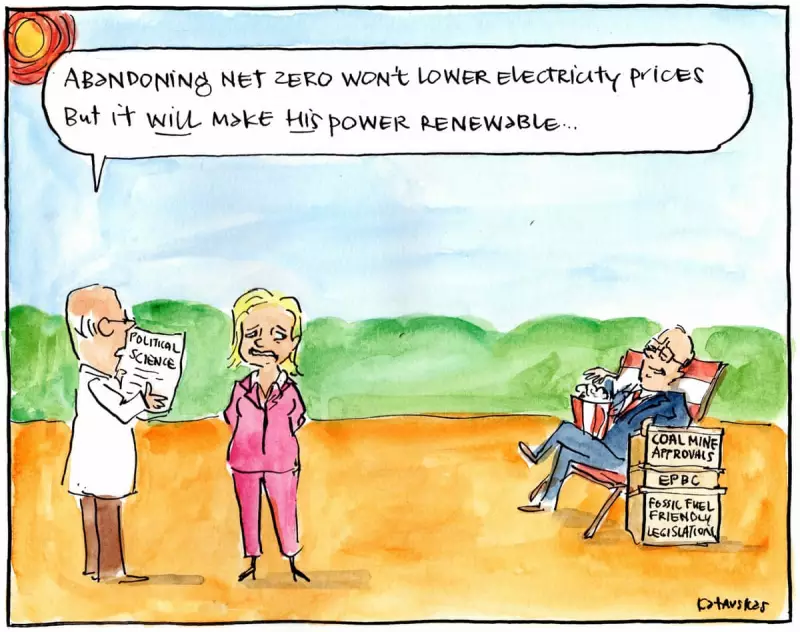
A significant political struggle over the UK's Net Zero strategy is unfolding within the coalition government, exposing fundamental disagreements about the pace and nature of Britain's green transition. The internal conflict threatens to reshape the country's environmental policy direction and could have lasting consequences for both the political landscape and the nation's climate commitments.
The Battle Lines Drawn
Senior government figures are engaged in heated discussions about how aggressively to pursue Net Zero targets. The debate centres on balancing environmental ambitions with economic considerations and public acceptance. Key ministers are taking opposing stances on whether to accelerate or moderate the transition to cleaner energy sources.
The tension reflects broader ideological differences within the governing coalition. One faction argues for maintaining ambitious climate targets, while another advocates for a more gradual approach that considers business concerns and household energy costs. This internal conflict comes at a critical moment for UK climate policy, with several key deadlines approaching.
Stakes for Britain's Green Future
The outcome of this policy battle will determine the UK's position as a global leader in climate action. Britain has committed to achieving Net Zero emissions by 2050, but the pathway to reaching this goal remains contentious. The current debate could influence everything from energy infrastructure investments to consumer behaviour changes.
Industry groups and environmental organisations are closely monitoring the situation, aware that the government's decisions will shape market conditions for years to come. The uncertainty created by the internal disagreements is already affecting investment decisions in renewable energy projects and green technology development.
Potential Winners and Losers
Depending on which faction prevails, different sectors of the economy stand to benefit or face challenges. A more ambitious approach could boost renewable energy companies and green technology firms, while a moderated strategy might provide relief to traditional industries concerned about transition costs.
The political consequences could be equally significant, with the government's environmental credentials potentially affecting its popularity among different voter demographics. The resolution of this internal conflict may also set precedents for how future governments approach the complex balance between environmental goals and economic realities.
As the debate continues behind closed doors, observers are watching for signs of which direction the coalition will ultimately take. The decisions made in the coming weeks could define the UK's climate policy for the remainder of this parliamentary term and beyond.



