
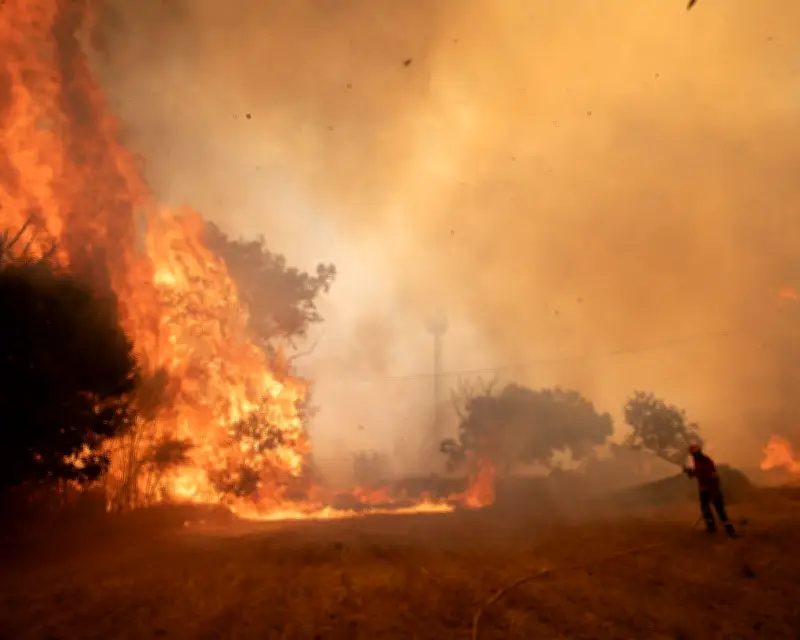
Europe is the fastest-heating continent, warming at more than twice the global average, and the Iberian peninsula has become the frontline of the climate crisis. Wildfires in Spain and France have led to the evacuation or confinement of approximately 330,000 people since last week, according to reports. The autumn of 2024 exemplifies this trend: in September, fires in northern Portugal killed nine people, injured dozens, and razed 100,000 hectares of land. João Oliveira, head of the civil protection agency in Albergaria-a-Velha, said: "The amount of energy the fire created, the amount of damage it did and the intensity and violence of the fire, were something we'd never seen before."
Floods and fires become annual fixtures
Four weeks later, floods in the Valencia region killed more than 230 people. In Utiel, Miguel Aleixandre described elderly neighbours signalling with candles as floodwaters rose to three metres. In Tábara, builder Ángel Martín died after climbing into an excavator to dig a firebreak, suffering burns to 80% of his body. His friend Montse Fernández Blanco said: "We still talk about him a lot... He would have done it again because that's what he was like."
Persistent denial hampers action
Despite these events, arguments and denial continue to hamper preparation for future climate impacts. Helena Smith, Guardian correspondent in Greece, recalled warnings from 2021 that "heat will be the story of the next decade." Angelique Chrisafis, Paris correspondent, noted that record-breaking heatwaves have exacerbated inequalities, such as a child's school classroom reaching 40°C.



