
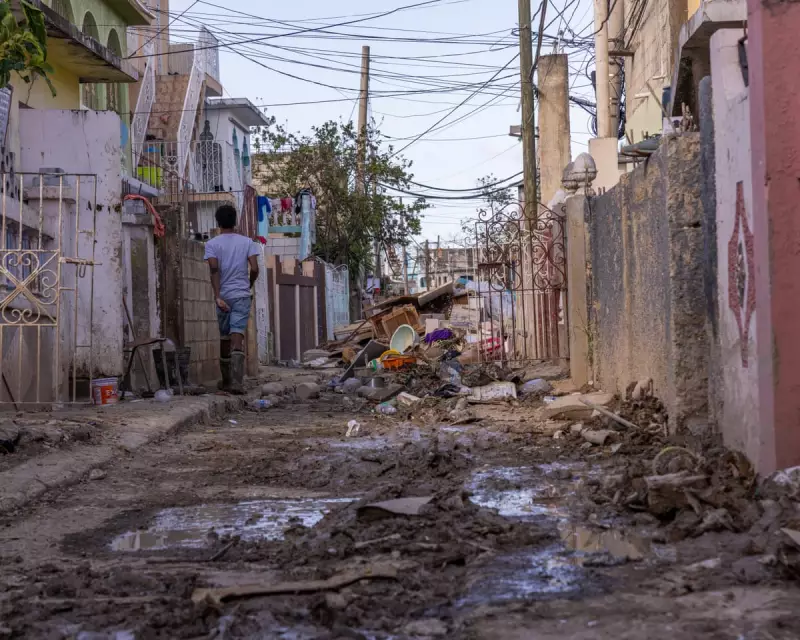
The catastrophic damage left by Hurricane Melissa in Catherine Hall, Montego Bay, Jamaica, on 4 November 2025, serves as a brutal visual testament to a world struggling to cope with a climate in crisis. The record-shattering storm, with winds reaching 252mph, was made five times more likely by human-induced global heating, according to attribution science. This event is not an isolated tragedy but a clarion call highlighting the profound and deadly gap in global preparedness for a hotter, more volatile planet.
The Science of Attribution and the Scale of the Threat
Attribution science has moved beyond general warnings to provide stark, specific evidence. It confirms that the greenhouse gas emissions warming our planet are directly responsible for the increasing frequency and severity of extreme weather events. The scorching wildfire conditions that plagued Spain and Portugal in the summer of 2025 were made 40 times more likely by climate change, while a June heatwave in England was made a staggering 100 times more likely. This is the new normal, and the consensus among adaptation experts is alarming: the world is not doing nearly enough to minimise the risks to life. This failure was paid for in blood at the end of November 2025, when floods and cyclonic storms across Thailand, Sri Lanka, and Indonesia claimed hundreds of lives.
The Political Battle for Climate Justice and Finance
The politics of adaptation reveal a deep global injustice. Poorer nations, including small island states facing existential threats from sea-level rise, rightly demand that wealthy historical polluters provide financial support for adaptation. However, the outcome of the Cop30 climate conference in Belém, Brazil, left the most vulnerable countries angry. While the projected annual adaptation budget was tripled to $120bn, the deadline was pushed back to 2035 with no clear mechanism to compel rich nations to pay. This total still falls far short of the $300bn in overall climate finance agreed at Cop29 in 2024.
This funding shortfall creates a dangerous trap for heavily indebted nations like Jamaica. Resources desperately needed for green energy transition and future-proofing infrastructure are instead diverted to disaster response, perpetuating a cycle of vulnerability. The latest UN report is unequivocal: developing countries will need over $310bn annually by 2035 for adaptation, yet received a mere $26bn in 2023.
Adaptation at Home: A Technocratic Challenge with Political Stakes
The need for preparation is not confined to the Global South. Within wealthy nations like the UK, adaptation is often treated as a technocratic issue, sidelined from mainstream political debate until disaster strikes—such as the floods in eastern Spain that led to the resignation of Valencia's president, Carlos Mazón, in November 2025. A recent report by the UK's Glacier Trust and Climate Majority Project argues for fostering an "action-oriented public understanding of climate risk." It stresses that adaptation cannot be left to market forces, as private finance retreats when risks rise.
The UK's Climate Change Committee is set to outline the vision for a "well-adapted" nation. This includes future-proofed flood defences, resilient transport links, robust supply chains, and protected coastal communities. Experts also emphasise ensuring that the 1.5 million homes pledged by the government are built to withstand the coming climate. Historian of science Leah Aronowsky rightly frames climate risk as "everyday injustice made worse," arguing that how we adapt is fundamentally a political battle.
While the urgent priority remains slashing emissions to keep the Paris Agreement's 1.5C target within reach, preparing for the inevitable impacts is not an admission of defeat. It is a prudent necessity for the rich world and a matter of survival for the poor. National Adaptation Plans, which put adaptation centre stage, must be foregrounded with real finance and real justice. They ask the critical question of our time: how do vulnerable nations survive a warming world that emissions cuts alone can no longer prevent?



