
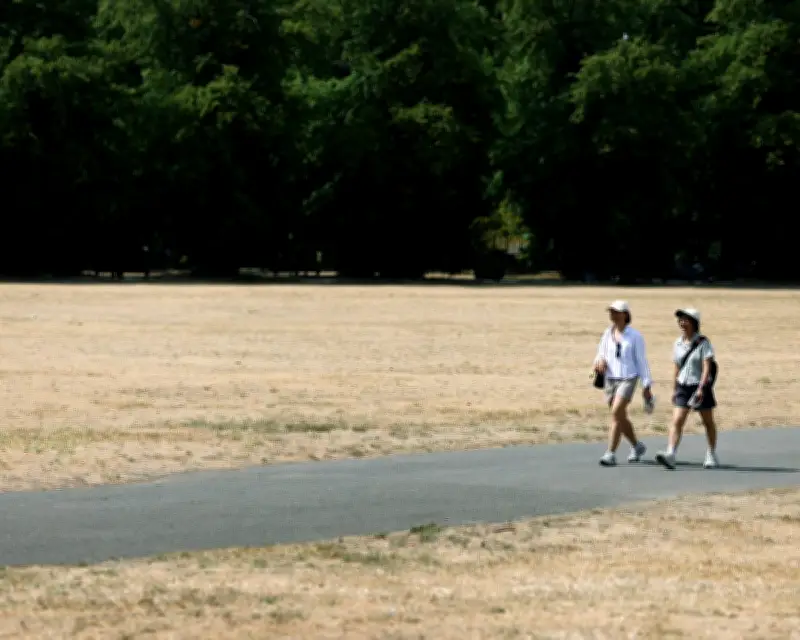
The Environment Agency has officially declared that half of England is in drought, following a flash drought driven by unusually low rainfall and high temperatures. July is set to be the driest on record, with only 7% of expected rainfall across England, and just 1% in southern England. No substantial rainfall is forecast.
Seven regions declared in drought
The seven areas officially in drought are East Anglia, Hertfordshire and the whole of London, Thames Valley, Hampshire and the Isle of Wight, Devon and Cornwall, the West Midlands, and Wessex (covering Dorset, Somerset, Wiltshire and south Gloucestershire). This marks the third drought in five years for England, following those in 2022 and 2025.
Helen Wakeham, director of water at the Environment Agency and chair of the National Drought Group, said: “The hot and dry weather means we are currently using water faster than nature can replenish it. A second consecutive summer drought is an exceptionally serious situation and one that will have long-lasting impacts on our environment, wildlife and the economy. We want everyone to stay safe and hydrated during the hot weather but every drop we can save is a drop more for nature and agriculture.”
Reservoir levels below average
Despite record winter rainfall that helped replenish reservoirs and groundwater, reservoir storage has now fallen to 7.4% below the average for this time of year. Almost half of all reservoirs are classed as below normal levels, with Wimbleball (operated by South West Water) and Blagdon (operated by Bristol Water) both “exceptionally low”. The Environment Agency stated that current water reserves “should be enough for the coming months until the next period of sustained rainfall”.
However, Will Lang, the Met Office’s chief meteorologist, said there was “little sign of the widespread, sustained rainfall that would be needed to make a significant difference to the areas most affected by the dry weather”.
Hosepipe bans and water waste
In England, 40% of the population are under a hosepipe ban, with seven water companies – Affinity Water, Anglian Water, Cambridge Water, Southern Water, South East Water, Thames Water and South West Water – all restricting water use. Recent research by Greenpeace UK found that water companies were wasting five times more water through leaky pipes than even a nationwide hosepipe ban could save.
Paul Tompkins, deputy president of the National Farmers’ Union (NFU), said this drought announcement “should matter to everyone”. “Water is a vital ingredient in food production, and without a secure supply, we cannot build resilient farm businesses or strengthen the country’s food security,” he said.
Rivers running low
The lack of rain has also caused rivers to run dangerously low. In England, 78% of rivers are now classified as below normal or lower, and 17% are classed as “exceptionally low” for this time of year. The low river flows are preventing migratory fish, such as Atlantic salmon, from moving upstream. At Tuckers Pond in Faringdon, Oxfordshire, the Environment Agency used chemical aeration to save fish from dying after algae that flourished in the hot and dry weather caused a crash in oxygen levels.
Heatwave and record temperatures
As well as drought, the UK is experiencing its fourth heatwave of the summer, with temperatures forecast to peak at 35C in the hottest places. A new England and UK June daily temperature record of 38C was verified by the Met Office’s site weather assessment team, higher than the previously reported 37.7C. The Environment Agency said the record temperatures meant water was evaporating from soils and vegetation.
Recent analysis found that record-breaking heatwaves are evaporating water from rivers, lakes, soils and plants, made 80 times more likely by global heating in western Europe and 40 times more likely in eastern Europe. This evaporation is increasing wildfire risk; there have been 110 wildfires at England’s most protected sites so far this year. France and Spain are battling “apocalyptic” wildfires, with almost 4,000 people evacuated from tourist sites near Bordeaux.
Future water needs
Waters surrounding the UK are also experiencing marine heatwave conditions, with scientists warning that high ocean temperatures could result in “mass mortality events” for some species. By 2055, England will need an additional 5 billion litres of water a day to meet public water supply demand. The NFU said the government could take simple steps to store more water, including unlocking investment and planning changes needed to build more reservoirs. No major reservoirs have been completed in England since 1992.



