
Haiti is experiencing a catastrophic convergence of gang violence and climate-induced collapse, forcing over 1.4 million people from their homes and pushing the nation towards a total systemic failure.
A Desperate Flight to the Hills
Émile Charles is one of the countless victims. He fled his farm in Kenscoff in September when armed men overran his land. Leaving everything behind, he now resides in a makeshift shelter in Turgeau, one of the few neighbourhoods in Port-au-Prince not yet controlled by gangs. To reach his new home, he scrambles up a steep path, gazing at the scattered shacks that dot the hillsides.
"They arrived without warning and burned our crops," Charles recounts. "We ran for our lives. Those who didn't leave were killed. Two of my brothers were murdered." His story is tragically common. Since January 2022, more than 16,000 Haitians have been killed in gang-related violence.
Urban Warfare and Vigilante Justice
Armed groups are now estimated to control approximately 90% of the capital. In a desperate bid for security, the few remaining free areas, such as parts of Pétion-Ville, are guarded by self-defence brigades and off-duty volunteer police officers.
Residents have erected formidable roadblocks. Lano Yves, who has staffed a checkpoint in Canapé-Vert for three years, embodies the defiant mood. "People can think what they like of us, but we'll defend our neighbourhood to the last drop of our blood," he states. Justice is often brutal and summary, with vigilante lynchings by the Bwa Kalé movement awaiting those who cannot justify their presence after curfew.
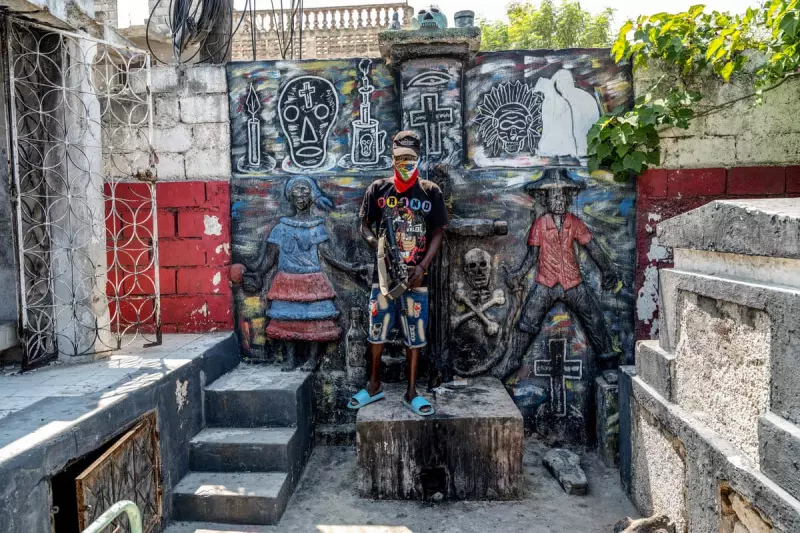
Closer to the city centre, the situation is even more dire. A gang led by a man known as Tilapli rules the area around the Grand Cemetery. Rusting school buses still operate, but passengers must pay a "tax" at each gang checkpoint. The police have escalated their response, using drones to strike armed groups. Since March 2025, the UN has recorded 559 people killed from the air, including 11 children.
The Silent Storm of Climate Collapse
Simultaneously, a quieter crisis is unravelling the nation's agricultural backbone. Haiti ranks among the world's most climate-vulnerable countries, suffering from prolonged droughts, violent floods, and erratic seasons. The Artibonite plain and Central plateau are cracking under extreme heat, leading to three consecutive failed harvests.
"The land no longer gives," explains Doudou Pierre Festile, coordinator of the Acul-du-Nord Peasant Movement. "When you can't feed your children, you leave for the cities; there, 'another storm' awaits." This exodus from rural hunger into urban violence creates what Venel Nelson, a spokesperson at the Villambetta camp, calls a "spaghetti effect: everything gets tangled."
For those displaced, conditions are hellish. Dorival Magdala, a camp resident, says plainly, "We talk, we live, but in reality we're already dead." The influx of people overwhelms cities, which struggle with waste management, sanitation, and housing. In Cap-Haïtien, deforestation for charcoal production clears hillsides, increasing erosion and worsening floods, creating a vicious cycle of environmental degradation.
A Legacy of Historical Debt and Failed Interventions
Many connect this cycle of instability to Haiti's colonial history. The massive indemnity of 150 million gold francs demanded by France in 1825 crippled the nation's public finances from its inception.
Dr Juslène Tyrésias of the Papay Peasants Movement notes, "Haiti had to cut its trees to pay the ransom." Dr Weedjney Destouches, who now runs clinics from Cap-Haïtien, confirms this legacy, stating the ransom remains "a central factor in understanding the country's fragility."
International interventions have provided little respite. A Kenya-led multinational security mission, approved in 2023 to help police retake the capital, had faltered by 2025 amid ambushes and scandals. A gang member in the Port-au-Prince cemetery summarised the mission's failure: "They came to make a bit of money, not to deal with the security problem."
From the overcrowded hills of Port-au-Prince to the deforested shores of Cap-Haïtien, Haiti is besieged by both armed men and a collapsing environment. For its people, peace will be measured not just by the silencing of guns, but by the return of life-giving rain and living soil.



