
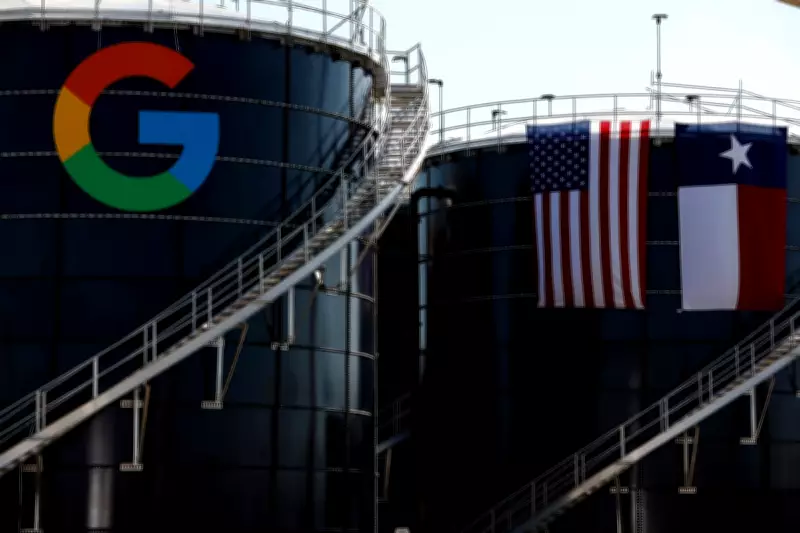
Google's Texas Gas Plant Partnership Marks Sharp Turn from Climate Goals
Google's plan to partner with a natural gas power plant in Texas, which could provide energy for one of its artificial intelligence datacenters, has been uncovered by new research and confirmed by the company. This move represents a significant shift for the tech giant, which once pledged to achieve carbon neutrality by 2030 and has long been viewed as a pioneer in clean energy initiatives.
Details of the Texas Power Plant Project
The gas power plant is scheduled for construction in Armstrong County, a sparsely populated area within the Texas panhandle. According to a report from the research organization Cleanview, the project is being led by Crusoe Energy, which has partnered with Google to develop the datacenter campus known as "Goodnight," named after a nearby town.
Crusoe filed for a permit in January to build a 933-megawatt power plant on the site of the Goodnight campus. The facility would operate off the grid and supply energy to at least two buildings on the campus, as detailed in Cleanview's findings. Satellite images commissioned by Cleanview confirm that construction is already well underway.
Significant Carbon Emissions Projected
Based on Crusoe's 465-page permit application, the power plant would emit up to 4.5 million tons of carbon dioxide annually. Carbon dioxide is a primary driver of the climate crisis. For perspective, the entire city of San Francisco emits approximately 4 million tons of carbon dioxide each year, making the plant's projected output higher than that of a major metropolitan area.
Michael Thomas, the founder of Cleanview and author of the report, stated that this power plant would be one of the first direct investments in fossil fuel infrastructure he has observed with Google. "Google has spent decades crafting an image as a clean energy leader," said Thomas. "I've always considered them to be the most committed to their climate goals. But these projects suggest a major strategic pivot at the company could be under way."
Google's Response and Ongoing Negotiations
When questioned about its partnership with Crusoe for the gas power plant, Google spokesperson Chrissy Moy did not deny the project but clarified, "We don't have a contract in place for the plant in Texas." The exact amount of electricity Google might purchase from the plant remains unclear, as negotiations appear to be ongoing. Moy directed attention to a separate partnership Google has in the region for a windfarm project with the utility provider Serena Energy. Crusoe did not respond to requests for comment.
Broader Trend in Tech Industry
The Texas power plant is the third known gas facility Google has become involved with in recent months. In October, the company announced an agreement to buy power from a gas plant in Illinois, and last month, documents obtained by Flatwater Free Press revealed that Google is exploring another substantial gas project in Nebraska.
Google maintains that its focus remains on carbon-free energy and does not view the use of natural gas as a departure from its climate objectives. The company has stated it is transitioning from a strategy of purchasing carbon credits to one of building the grid. However, when asked at an energy conference in Houston about how natural gas aligns with Google's clean energy goals, Michael Terrell, Google's head of advanced energy, responded, "We don't have anything to say on that."
From Climate Commitments to 'Climate Moonshots'
Google has historically been a climate leader in the tech sector. In 2020, it set an ambitious net-zero emissions goal to use carbon-free energy across all operations by 2030. The company has invested in various renewable energy projects, including wind, solar, geothermal, and nuclear. However, as Google has increasingly focused on AI and its high-energy demands, its emissions commitments have softened.
In 2023, Google noted in its sustainability report that it was no longer "maintaining operational carbon neutrality" but was still pushing for net zero by 2030. By 2024, the company reported a 48% increase in greenhouse gas emissions since 2019, primarily due to datacenter energy consumption.
By 2025, Google had shifted from concrete 2030 goals to framing its emissions ambitions as "climate moonshots." This term refers to speculative projects that may or may not come to fruition. In its 2025 environmental report, Google described its climate goals as "ambition-based" and highlighted that AI's rapid growth is driving "significant uncertainties" around emissions.
Industry-Wide Shift to Natural Gas
Other tech giants, including Meta, Amazon, and Microsoft, which have also long pledged net-zero carbon goals, are turning to natural gas to power their AI datacenters. Meta is constructing a large facility in Louisiana slated to run on natural gas, Amazon has several multi-gigawatt datacenters powered by gas, and Microsoft recently announced a new gas project for a datacenter in West Virginia, along with a deal with Chevron to build a 2.5-gigawatt gas power plant in west Texas.
"For years, these hyperscalers have remained committed to their climate goals and have resisted the siren call of natural gas," said Thomas of Cleanview. "But what has happened in the last few months is that the story has become more complicated ... There's this tension with the race to build AI."



